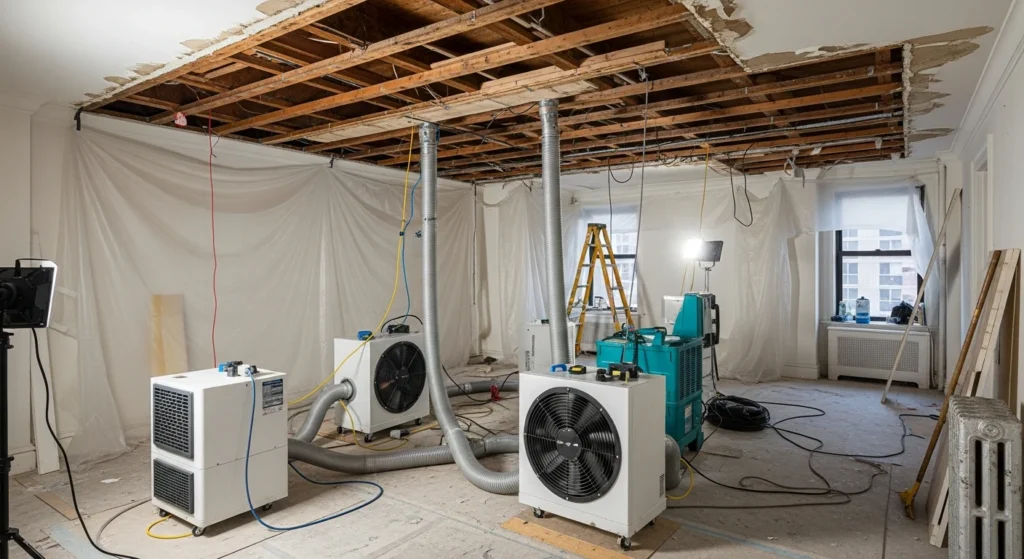
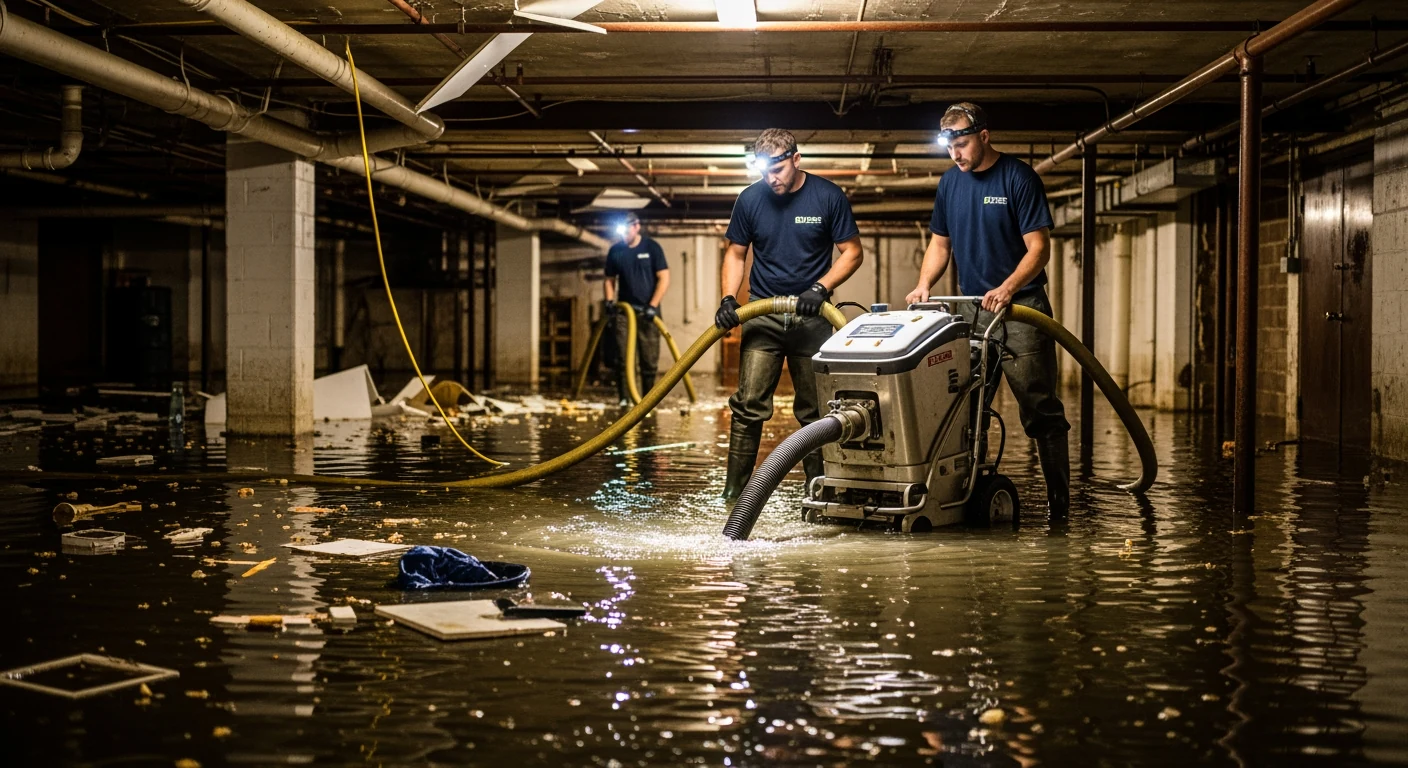
Water damage restoration in the Town of North Hempstead operates on a different axis than its Nassau County neighbors. Where Hempstead faces south shore Atlantic storm surge and Oyster Bay faces dual-shore exposure, North Hempstead’s primary water damage risk runs along its Long Island Sound shoreline — the peninsulas, harbors, and inlets that give Great Neck, Port Washington, Manhasset, and the Sound shore communities their character and their vulnerability. A 2019 Army Corps of Engineers study on flood gate options for New York Harbor explicitly identified the potential for Sound-side flooding diversion to North Hempstead communities, prompting North Hempstead Town Supervisor Judi Bosworth to publicly warn that the town does not want to become a “designated spillway” for surge redirected from Manhattan. That concern reflects the township’s genuine tidal exposure — real enough that local officials are actively engaged at the federal level on surge protection infrastructure.
This data file covers water damage restoration specific to the Town of North Hempstead across its Great Neck, Port Washington, Manhasset Bay, New Hyde Park, Roslyn, and Mineola communities. For the county-level framework, see the Long Island Water Damage Restoration Master Guide.
Building Stock Profile: Pre-War Estates to Post-War Colonials
North Hempstead’s housing stock is more architecturally diverse than Hempstead’s Cape Cod-dominant landscape. The Great Neck Peninsula contains some of Nassau County’s oldest and most architecturally significant residential construction — Tudor Revivals, Colonial Revivals, and Georgian estates built between 1900 and 1940 for the wealthy New York City commuter class that made Great Neck famous (F. Scott Fitzgerald lived in Great Neck in the early 1920s, drawing on it as the model for West Egg in The Great Gatsby). These pre-war homes carry the full spectrum of historic building material risk: original plumbing that may include lead supply pipes rather than just lead paint, pre-asbestos-era insulation materials including vermiculite that may contain asbestiform tremolite, and original plaster-on-lath wall systems that behave very differently from modern drywall when water damaged.
Port Washington and Manhasset also contain significant post-war Colonial construction from the 1950s and 1960s, and the interior communities of New Hyde Park, Mineola, and Williston Park have housing stock largely contemporaneous with Hempstead’s Cape Cod era. For water damage purposes, New Hyde Park’s older neighborhoods carry the same galvanized pipe replacement risk as Levittown, and the sewer laterals serving New Hyde Park’s oldest neighborhoods are approaching the same age-related failure threshold as central Nassau’s mid-century infrastructure.
Environmental Risk: Sound Shore Tidal Exposure
The Long Island Sound experiences tidal ranges of approximately 7 feet at the western Sound — significantly greater than the near-zero tidal range at the Atlantic Ocean beaches to the south. This tidal range, combined with nor’easter wind-driven surge from the northeast, produces recurring tidal flooding along North Hempstead’s Sound shore that has a different character than south shore Atlantic flooding: it is slower to rise and slower to recede, producing prolonged inundation events that extend the effective drying window and elevate mold initiation risk compared to the faster-moving bay surge events common on the south shore.
Port Washington sits on Manhasset Bay, which connects to the Sound through Hempstead Harbor. During Sandy, the USGS recorded major coastal flooding along the Sound shore of North Hempstead, with water levels approaching the FEMA 10-year stillwater elevation at Kings Point — a near-record for the northern Nassau shore. The Kings Point monitoring station recorded levels within 0.5 feet of the previous site record set in a 1992 nor’easter. Port Washington waterfront properties and Manhasset Bay-adjacent homes face this tidal surge risk during every significant nor’easter that tracks the Sound corridor.
The interior of North Hempstead — New Hyde Park, Mineola, Garden City Park, Herricks — faces a different water damage profile driven by surface water drainage from the township’s higher terrain to the north. Manhasset Creek and its tributaries drain a significant watershed through the interior of the township, and culvert and catch basin capacity limitations in older neighborhoods produce localized flooding during heavy rainfall events that is unrelated to coastal surge.
Regulatory Context: Town of North Hempstead
The Town of North Hempstead Building Department (210 Plandome Road, Manhasset, NY 11030; (516) 869-7600) handles permit applications for all structural restoration work within the township’s unincorporated areas. North Hempstead contains numerous incorporated villages — Great Neck Village, Kings Point, Sands Point, Flower Hill, Plandome — each with their own village building departments. Water damage restoration requiring structural permits in an incorporated village must apply to the village building department, not the town.
This jurisdictional complexity is one of North Hempstead’s defining regulatory characteristics for restoration contractors. A water damage project in Sands Point requires a permit from the Incorporated Village of Sands Point’s building authority. A project in Great Neck Plaza requires a permit from the Village of Great Neck Plaza. Upper Restoration navigates North Hempstead’s multi-jurisdiction permit landscape as standard project management on all restoration work in the township.
Cost Benchmarks: Water Damage in North Hempstead
- Sound shore tidal flooding (Port Washington, Manhasset Bay waterfront): $14,000–$35,000 for typical residential Category 1 or Category 2 tidal surge scope. Sound water, while not carrying the sewage contamination levels of south shore bay water, may qualify for Category 2 classification if the Sound water contains moderate contamination from harbor and marina activity.
- Pre-war Great Neck or Kings Point historic home — supply line failure: $12,000–$35,000 for water damage repair in older construction with plaster walls, original hardwood, and historic material preservation requirements. Original plaster-on-lath drying requires different protocols than modern drywall — plaster can often be dried in place rather than demolished, preserving historic character while eliminating moisture.
- Post-war Colonial, interior North Hempstead (pipe failure, single room): $6,500–$16,000 for a standard Category 1 residential scope in New Hyde Park, Williston Park, or Mineola construction.
Seasonal Risk: North Hempstead
Sound shore flooding peaks during nor’easters from October through April, when northeast winds pile Sound water against North Hempstead’s harbor communities. The township’s interior creek and drainage flooding peaks in spring snowmelt and heavy spring rainfall events. Summer hurricane season is lower-risk for North Hempstead than south shore communities, but a direct-track hurricane or post-tropical system can produce Sound surge that rivals nor’easter levels. Pipe failure risk in older pre-war North Shore construction concentrates in January and February when extended cold snaps affect original steam and hot water heating systems that may have reduced circulation in unused wings.
Frequently Asked Questions
Does North Hempstead’s Sound shore flooding require flood insurance?
Properties in designated FEMA flood zones along North Hempstead’s Sound shore — Port Washington waterfront, Manhasset Bay communities, Hempstead Harbor areas — require flood insurance if they carry federally backed mortgages. Many Sound shore properties are in Zone AE or Zone A. The township’s multiple incorporated villages each participate in NFIP; contact the relevant village building department or North Hempstead Town Building Department to confirm your property’s flood zone status.
How does water damage in a pre-war Great Neck home differ from standard restoration?
Pre-war Great Neck homes require modified protocols at several points in the restoration process. Plaster walls can often be dried in place rather than demolished, preserving historic character — but drying requires moisture meter verification through the plaster’s full depth. Older hardwood floors in 1920s and 1930s construction may require longer drying times and different airflow positioning than modern flooring. Any asbestos-containing materials identified during inspection must be abated before demolition work begins — these homes predate the post-war asbestos era but may contain asbestos added during 1940s–1960s renovations.