What to Do in the First 24 to 48 Hours After Water Damage
The first 24 to 48 hours after water hits your Long Island property determine whether you’re dealing with a repair job or a mold remediation project. FEMA, in collaboration with the CDC, instructs property owners to remove standing water and dry the structure “as quickly as you can, within 24 to 48 hours if you can,” because mold colonies establish themselves fast on wet drywall, insulation, and subflooring.
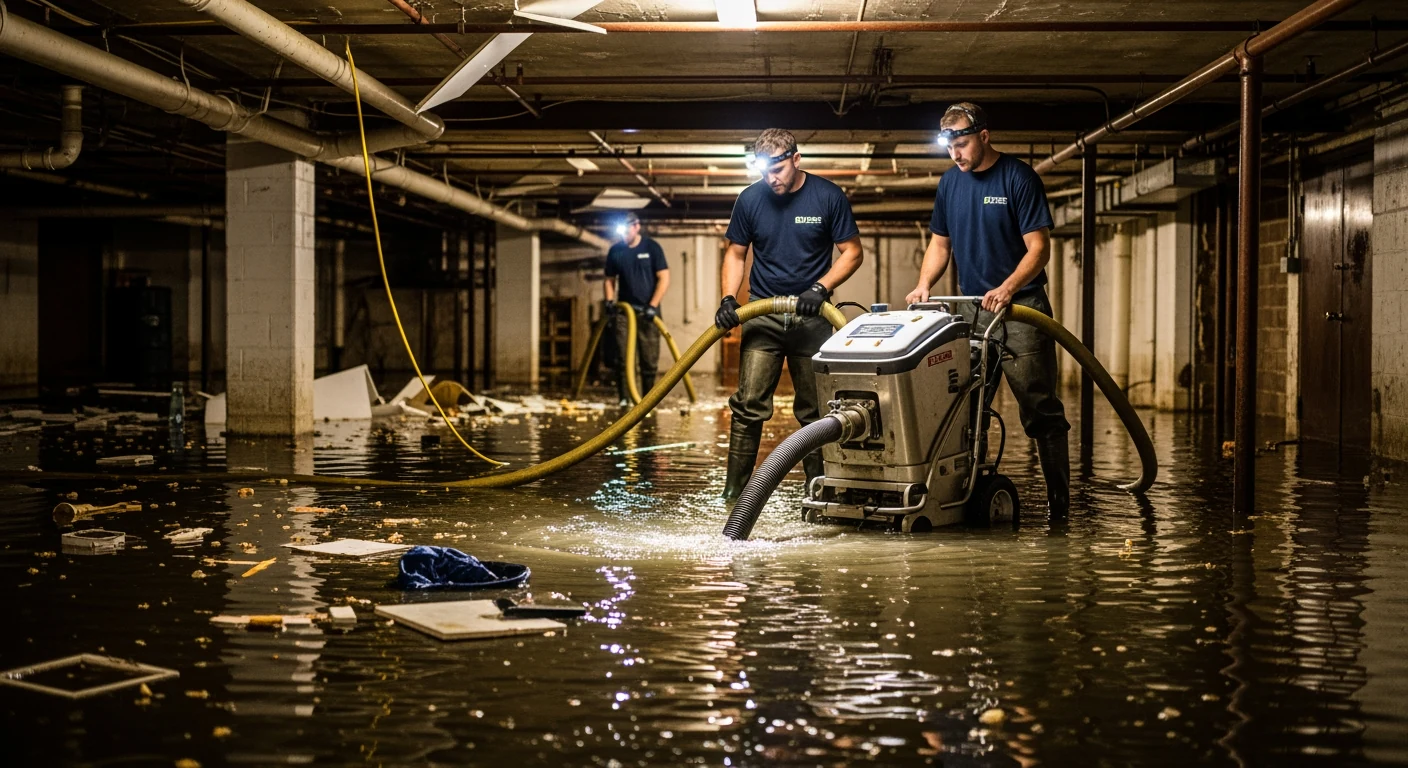
That window isn’t a suggestion, it’s biology. Mold spores are already present in nearly every home; they just need moisture and time. Once materials stay wet past two days, you’re no longer just drying a room, you’re managing a fungal growth problem layered on top of the original water damage. So the sequence matters: confirm safety, stop the water source if you can do so without risk, start extraction and air movement, and get a restoration professional on-site if the affected area is larger than a small, contained spill.
Skip the instinct to paint or seal over any mold you spot while you’re assessing the scene. FEMA and the CDC are explicit that “painting or caulking over mold will not prevent mold from growing” if the underlying moisture problem hasn’t been fixed. Sealing wet material only traps the moisture and hides the growth, it doesn’t solve anything.
Is It Safe to Re-Enter? Utility and Structural Safety Checks
Before anyone walks back into a flooded home or building, confirm electricity and gas are shut off, and have a licensed electrician inspect the property before power is restored. This is standard FEMA recovery guidance for any structure that has taken on standing water, particularly basements and ground-floor units common across Nassau and Suffolk County housing stock.
Coastal and low-lying Long Island properties, from Long Beach to the South Shore bay communities, carry additional risk after storm surge or heavy rain events: saturated electrical panels, waterlogged HVAC systems, and compromised structural framing aren’t always visible from a doorway. If water reached outlets, breaker panels, or gas appliances, treat the space as unsafe until a professional confirms otherwise. Don’t rely on a flashlight scan of the basement to make that call yourself.
If you smell gas, see sparking, or notice standing water anywhere near an electrical source, stay out and call your utility provider or 911 before attempting any cleanup, documentation, or salvage. Everything else on this page waits until the space is confirmed safe.
Document Everything Before You Touch Anything (Insurance Prep)
Before you remove a single wet item, photograph and video the damage, room by room, both inside and outside the structure. FEMA’s 2025 guidance, “Don’t Wait to Clean Up or Make Repairs,” is direct on this point: documentation has to happen before cleanup, not after, because insurance adjusters and disaster-aid reviewers need to see the damage in its original state.
Go beyond wide shots of a flooded room. Record the make, model, and serial number of damaged appliances, electronics, and mechanical systems, since that level of detail speeds up claims processing and disaster-aid applications considerably. Keep a simple room-by-room log as you shoot: “basement, southeast corner, water line 14 inches on drywall” is more useful to an adjuster six weeks from now than your memory of that day.
Before you clean up: Photos and video first, room by room, inside and out. Note make/model/serial numbers on damaged items. Do this before FEMA’s 24 to 48 hour drying window closes, not after.
Once documentation is done, move fast into extraction and drying. Don’t let the desire for a “complete” photo record delay the mitigation clock past the 24 to 48 hour threshold, the two goals work together, not against each other.
Understanding Water Categories: Why Coastal and Storm Flooding on Long Island Needs a Professional
Restoration professionals classify water damage into three categories, and the category determines whether a homeowner can safely handle cleanup or needs certified remediation. Category 1 is clean water (a supply line break). Category 2 is “gray water” with some contamination (a washing machine overflow). Category 3 is grossly contaminated water, including storm surge, floodwater, and sewage backup, all of which are common outcomes of Long Island’s nor’easters and coastal flooding events.
The Institute of Inspection, Cleaning and Restoration Certification (IICRC) sets the industry benchmark for how each category should be handled through its S500 Standard for Professional Water Damage Restoration, currently in its ANSI/IICRC S500-2021 edition. The standard “describes the procedures to be followed and the precautions to be taken when performing water damage restoration” across residential, commercial, and institutional buildings, and the IICRC confirmed in a 2025 press release that this edition has seen international adoption as the reference standard for the industry.
Category 3 water, the kind that comes off Long Sound, Great South Bay, or a backed-up municipal sewer line, carries bacteria, pathogens, and debris that no amount of home cleaning solution safely neutralizes. If your water damage originated from a storm, coastal flood, or sewage source, treat it as a job for certified professionals, not a weekend DIY project, regardless of how the water looks once it recedes.
How to Choose a Qualified Water Damage Restoration Company on Long Island
A legitimate restoration contractor should be able to answer four questions without hesitation: are your technicians IICRC-certified to the S500 standard, are you licensed to operate in New York State, are you insured, and can you respond 24/7. If a company can’t produce certification numbers or licensing information on request, keep calling.
Storm season on Long Island reliably brings out fly-by-night operators who show up after a nor’easter, take a deposit, and disappear before the job is finished. Watch for these warning signs: no local business address, demands for full payment upfront before any work begins, no written scope of work, and reluctance to discuss which IICRC S500 procedures they’ll follow for your specific water category.
| What to Ask | Qualified Contractor | Red Flag |
|---|---|---|
| Certification | IICRC S500-certified technicians, cites the 2021 edition | Vague answer, no certification numbers |
| Licensing | Licensed and insured in NY, will provide documentation | Refuses or delays sharing license/insurance info |
| Response Time | True 24/7 dispatch, on-site within hours | “We’ll try to get there this week” |
| Payment | Written scope of work, insurance billing assistance | Demands full cash payment upfront |
Ask, too, whether the company handles the full scope, extraction, drying, structural repairs, and mold remediation if needed, or whether you’ll be re-hiring a second contractor midway through the job. A single accountable team working from one moisture-mapping plan is generally faster and more consistent than handing a job off between separate extraction and repair crews.
DIY Cleanup vs. When You Must Call a Professional
A small, contained Category 1 spill, a few gallons from a burst supply line caught within an hour, cleaned and dried immediately, is often manageable without a professional crew. Anything beyond that scope shifts the calculation quickly.
Call a professional if any of the following apply: water covered more than roughly 100 square feet, water sat for more than a few hours before discovery, the source was floodwater, storm surge, or a sewage backup, water reached electrical systems or HVAC ductwork, or you already see visible mold growth. If you’re cleaning up mold yourself in a limited, already-professional-cleared area, FEMA and the CDC recommend, at minimum, an N-95 respirator, gloves, and goggles, standard drugstore dust masks aren’t sufficient protection.
When in doubt, the cost of a professional assessment is almost always lower than the cost of a mold problem that develops because drying wasn’t thorough enough. Moisture meters and thermal imaging, standard tools for IICRC-certified crews, catch trapped moisture behind walls and under flooring that a visual inspection alone will miss.
Not sure if your situation needs a professional crew? Get a free same-day consultation and find out before the 24 to 48 hour drying window closes.
Insurance, FEMA Assistance, and Mold Coverage: What Property Owners Should Know
Standard flood insurance through the National Flood Insurance Program generally does not cover mold damage except in limited circumstances, which means prompt mitigation matters regardless of what your policy covers. Don’t wait on a claims decision to start drying out your property, that delay is exactly what turns a water claim into a mold problem.
FEMA’s Individuals and Households Program may provide Home Repair funds for cleanup, removal, or remediation of disaster-caused mold, but eligibility requires FEMA to verify the applicant genuinely cannot afford remediation on their own. This is disaster assistance for individuals facing financial hardship, not a general reimbursement program, so don’t assume it will cover your remediation costs before you’ve confirmed eligibility directly with FEMA.
Because coverage details vary significantly by policy, disaster declaration, and individual circumstances, talk to your insurance adjuster and, if applicable, FEMA directly about what your specific situation qualifies for. This article can’t tell you what your policy covers, only your carrier and FEMA can make that determination.
Who to Call: 24/7 Emergency Response for Long Island Properties
Once you’ve confirmed the property is safe, documented the damage, and identified the water category involved, the next call should be to a licensed, IICRC-certified restoration company that can dispatch to your Nassau or Suffolk County property immediately, not “sometime this week.” Upper Restoration provides 24/7 emergency response for residential and commercial water damage across Long Island and the broader tri-state area, with technicians certified to IICRC S500 standards and licensed per New York State requirements.
Every hour a wet structure sits unaddressed narrows your options and widens the eventual scope of repair. Getting a certified crew on-site within that first critical window is the single most effective thing a property owner can do to control both the damage and the cost.
Frequently Asked Questions
How fast does mold start growing after water damage?
Mold can begin growing within 24 to 48 hours after materials become wet, according to FEMA and CDC guidance on mold cleanup after disasters. This is why removing standing water and drying affected materials as quickly as possible is the priority immediately after any water damage event, before mold has a chance to establish.
Is it safe to enter my home after flooding before checking anything?
No. FEMA recovery guidance recommends confirming electricity and gas are shut off before re-entering a flooded structure, and having a licensed electrician inspect the property before power is restored. Standing water near electrical systems or gas lines poses a serious hazard that isn’t always visible on a quick walkthrough.
Should I take photos before or after cleaning up water damage?
Before. FEMA’s 2025 guidance, “Don’t Wait to Clean Up or Make Repairs,” instructs property owners to photograph and video damage, room by room, including make/model/serial numbers of damaged items, before beginning any cleanup or repairs. This documentation is important for insurance claims and disaster-assistance applications.
Does homeowners or flood insurance cover mold damage?
Coverage varies by policy. Standard flood insurance through the National Flood Insurance Program generally does not cover mold damage except in limited circumstances, per FEMA guidance. Homeowners should confirm specific coverage details directly with their insurance carrier, since this varies by policy and situation and cannot be generalized.
What certification should a water damage restoration company have?
Look for technicians certified under the IICRC S500 Standard for Professional Water Damage Restoration, currently the ANSI/IICRC S500-2021 edition. This standard, set by the Institute of Inspection, Cleaning and Restoration Certification, describes the accepted procedures and precautions for water damage restoration in residential, commercial, and institutional buildings.
Can I clean up water damage myself, or do I need a professional?
Small, contained clean-water spills caught quickly can often be handled without a professional. Water from floods, storm surge, or sewage backup, water that sat for hours, or water that reached electrical or HVAC systems should be handled by certified professionals due to contamination risk and the difficulty of fully drying hidden moisture without specialized equipment.
What protective gear is needed to clean up mold safely?
FEMA and CDC guidance recommends at minimum an N-95 respirator, gloves, and goggles for anyone cleaning mold or disaster debris. Standard dust masks do not provide adequate protection. Larger mold-affected areas, or any area involving Category 3 contaminated water, are best handled by certified remediation professionals rather than DIY cleanup.
Water Damage Doesn’t Wait, Neither Should You
Upper Restoration provides 24/7 emergency water damage response across Long Island and the tri-state area, with IICRC S500-certified technicians ready to assess your property today.
Sources
- FEMA, in collaboration with the CDC, “Homeowner’s and Renter’s Guide to Mold Cleanup After Disasters”
- FEMA, “Don’t Wait to Clean Up or Make Repairs,” 2025
- FEMA, recovery and technical guidance on utility safety and re-entry, 2025
- FEMA, “FAQ: Is Damage from Mold Covered?,” 2025
- Institute of Inspection, Cleaning and Restoration Certification (IICRC), S500 Standard for Professional Water Damage Restoration
- ANSI/IICRC S500-2021, official standard record
- IICRC, 2025 press release on international adoption of ANSI/IICRC S500
This content is for general informational purposes only and is not legal, medical, or insurance advice. Remediation scope, timelines, and costs vary by site conditions. Contact Upper Restoration for a professional assessment. Licensing and certifications apply per jurisdiction.