What Causes Water Damage in Long Island Homes
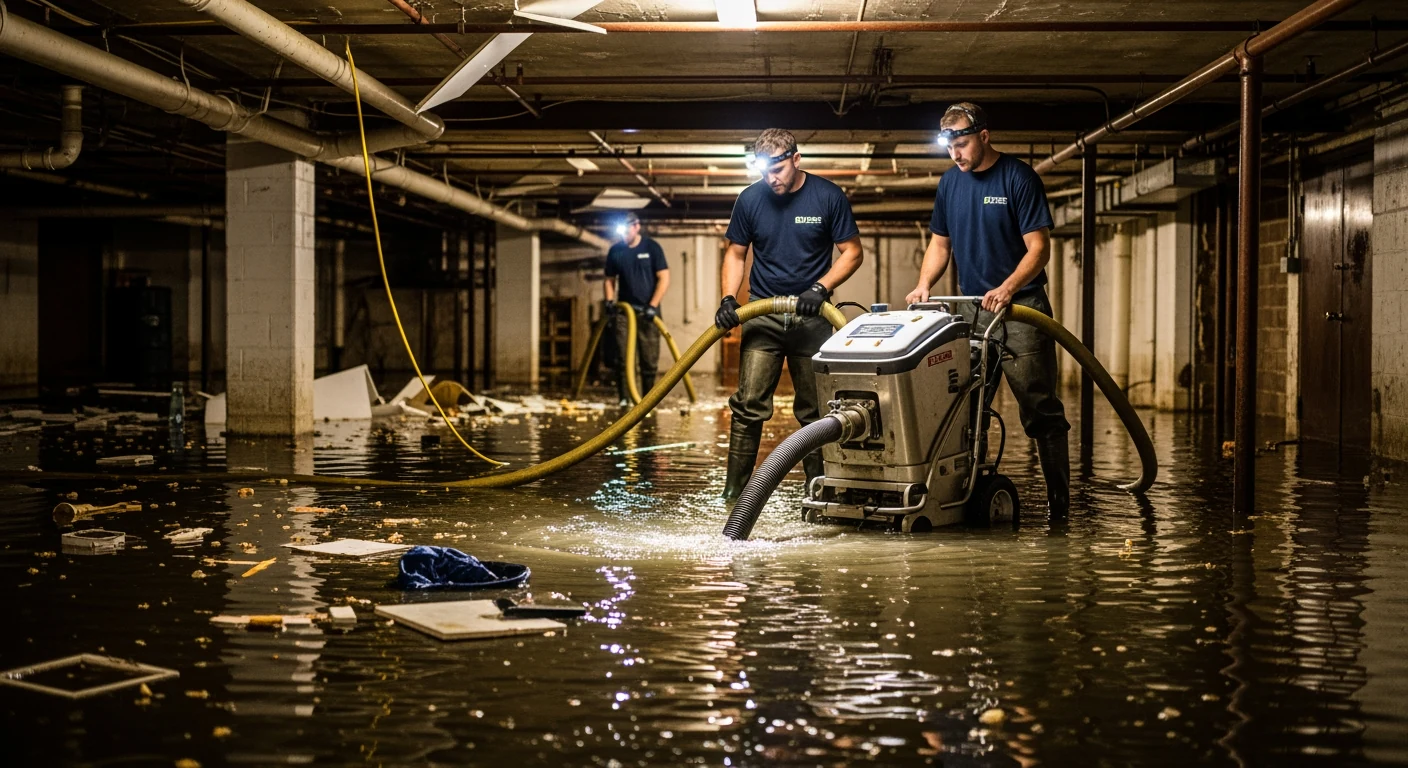
Long Island homeowners face water damage risk from coastal storm surge, aging plumbing infrastructure, sump pump failure during power outages, seasonal humidity, and proximity to designated flood zones. Nassau and Suffolk County properties near the shoreline face compounding risk from both storm surge and groundwater intrusion during heavy rain events.
Nor’easters and the tail end of Atlantic hurricanes bring the most dramatic water events, but they’re not the most common cause of claims. Most calls Upper Restoration receives during a normal week trace back to something far less cinematic: a failed sump pump during a power outage, a supply line that finally gave out behind a washing machine, or a sewer backup after a heavy rain saturates aging municipal lines. Long Island’s housing stock skews older in towns like Rockville Centre, Massapequa, and Babylon, and homes built before the 1980s often carry original galvanized or early copper plumbing that’s simply reaching the end of its service life.
Flood zone designation matters more here than in most of the country. FEMA’s floodplain mapping identifies large stretches of the South Shore and North Shore as Special Flood Hazard Areas, meaning storm surge and tidal flooding are a designed-for risk, not a freak occurrence.[1] If you’re unsure whether your property sits in a mapped flood zone, that’s worth confirming before storm season, not after.
Humidity plays a slower, quieter role. Long Island’s summer dew points regularly push indoor relative humidity above the range where building materials stay dry, which is a practical reason finished basements and crawl spaces here tend to run damp even without an active leak. That ambient moisture doesn’t cause damage on its own, but it shortens the runway once an actual leak or flood event happens.
The First 1-24 Hours: Your Immediate Response Checklist
The first 24 hours after discovering water intrusion determine whether damage stays contained or spreads into structural and mold problems. FEMA’s post-flood guidance prioritizes safety first, then containment, then documentation, in that order, before any cleanup begins.[2]
Work through this sequence in order. Skipping ahead to cleanup before confirming safety is the most common mistake homeowners make under pressure.
- Confirm electricity is off to any affected area before you step into standing water. Never enter a room with visible water if outlets or a panel are still live.
- Shut off the water source if the damage is plumbing-related. Know where your main shutoff valve is before you need it.
- Photograph and video everything before you touch or move anything. Wide shots of each room, then close-ups of damaged items and materials.
- Begin extraction and drying only after documentation is complete, using fans, a wet/dry vacuum, or a dehumidifier if you have one.
- Call your insurer to open a claim and get a claim number while damage is fresh.
- Call a licensed restoration professional if the water is from an unknown or contaminated source, or if the affected area is larger than a small, contained spot.
Two things not to do: don’t vacuum standing water with a household shop vac not rated for water pickup, and don’t lift tacked-down carpet before an assessment, since doing so can spread contamination into unaffected areas.[12] If a hurricane or major storm has passed, inspect your foundation, exterior walls, and any gaps from outside the structure before re-entering, since structural compromise isn’t always visible from indoors.[13]
The 24-48 Hour Mold Window: Why Fast Drying Matters
Mold growth on wet building materials can begin within roughly 24 to 48 hours under the right conditions, which is why the EPA and CDC both frame prompt drying as a primary defense against indoor mold after a flood or leak.[3][4] This window is the reason “I’ll deal with it this weekend” is the single most expensive sentence a homeowner can say after a leak.
The EPA’s mold guidance is direct about the mechanism: mold spores are present in essentially all indoor and outdoor air, and they only need moisture and time to establish a colony on organic material like drywall paper, wood framing, or carpet backing.[3] The CDC’s post-flood guidance echoes this, noting that materials that stay wet longer than one to two days are considered at meaningfully higher risk for mold colonization.[4]
On Long Island specifically, summer humidity and poorly ventilated basements can work against you here. A basement that’s already running at elevated ambient humidity gives a fresh leak less margin before conditions favor mold, which is a practical reason this region treats the 24-48 hour window as non-negotiable rather than a rough guideline. For a deeper look at how mold colonization actually progresses room by room, see Upper Restoration’s dedicated mold remediation guide.
The window that matters: Materials wet longer than 24-48 hours face substantially higher mold risk per EPA and CDC guidance. If you can’t fully dry an area within that window, plan for professional drying equipment rather than waiting to see what happens.[3][4]
When Drying Is Enough vs. When Demolition Is Needed
Whether wet materials can be dried in place or must be removed depends on the water’s contamination category under the IICRC S500 standard. Category 1 (clean water) is often dryable; Category 2 (gray water) generally requires removal of affected porous materials once wet longer than 24-48 hours; Category 3 (black water) requires removal and professional remediation regardless of time.[5][10]
This is the framework licensed restoration professionals actually use to make removal decisions, and it’s worth understanding even if you never touch a moisture meter yourself. It removes the guesswork from “is this drywall salvageable” and replaces it with a source-based, time-based decision.
| Category | Typical Source | Contamination Level | Typical Response |
|---|---|---|---|
| Category 1 | Clean supply line, appliance overflow, rainwater | Clean, no significant contaminants | Often dryable in place if addressed within 24-48 hours |
| Category 2 | Washing machine discharge, dishwasher overflow, some sump failures | Gray water with some contaminants | Porous materials wet over 24-48 hours generally require removal |
| Category 3 | Sewage backup, storm surge, groundwater flooding | Grossly contaminated, may contain pathogens | Affected porous materials require removal regardless of drying time |
Dry it or demo it? Ask three questions: What was the water source? How long has the material been wet? Is the material porous (drywall, carpet padding, insulation) or non-porous (tile, sealed concrete, most metal)? Category 1 water on a non-porous surface, caught within a day, is usually a drying job. Anything Category 2 or 3, or anything porous that’s been wet more than two days, generally needs removal, not just drying.[5][10]
Homeowners without moisture-mapping equipment frequently underestimate how far water has traveled behind walls and under flooring. A surface that looks dry to the touch can still be saturated a few inches deeper, which is one reason a professional assessment matters even when the visible damage looks minor.
Documenting Water Damage for Your Insurance Claim
Solid insurance documentation means photographing and video-recording all damage before cleanup begins, keeping a written inventory of affected items, saving all receipts related to mitigation, and contacting your insurer promptly to open a claim. FEMA and the New York State Department of Financial Services both point to early, thorough documentation as the foundation of a smooth claims process.[2][9]
Photograph rooms wide before you move anything, then get close-up shots of specific damaged items, water lines on walls, and any visible mold. Video walkthroughs narrated in real time, describing what you’re seeing as you record, tend to hold up better than static photos alone because they capture context an adjuster can’t get from a single frame.
Keep a running written list of damaged personal property with approximate purchase dates and values where you can recall them. Save every receipt tied to emergency mitigation, whether that’s a hardware store run for a shop vac or an invoice from a restoration company, since New York’s DFS consumer guidance notes that documented mitigation costs are typically part of a standard claim submission.[9]
Contact your insurer as soon as the immediate safety steps are handled, ideally within the same day. Ask for a claim number, the adjuster’s direct contact information, and a written summary of next steps. For a closer look at navigating adjuster visits and claim timelines specific to storm damage, see Upper Restoration’s insurance claims resource.
Documentation checklist: Wide-angle photos of every affected room before touching anything, close-up photos of damaged items and water lines, a narrated video walkthrough, a written inventory of damaged property, and saved receipts for any mitigation expenses.
This content is general information, not legal or insurance advice. Coverage, scope, and claim outcomes depend on your specific policy and site conditions. Contact your insurer directly for guidance on your claim, and contact Upper Restoration for a professional damage assessment.
When to Call a Licensed Restoration Professional
Call a licensed restoration professional when water contamination category is unknown or elevated (Category 2 or 3), when the affected area exceeds a small, contained spot, when water has been standing more than 24 hours, or when you see visible mold growth. Outside contractors trained in IICRC remediation protocols are the standard resource for water, mold, and sewage cleanup beyond basic DIY scope.[11]
Small, clean-water incidents caught within hours, like a dishwasher overflow you found and mopped up the same evening, are often within a capable homeowner’s ability to handle with fans and a dehumidifier. The math changes fast once you’re dealing with basement flooding, sewage backup, or any water that sat for more than a day.
Licensed teams bring moisture-mapping equipment that finds hidden saturation behind walls and under subfloors, industrial-grade extraction and drying equipment that moves faster than consumer fans, and EPA, IICRC, and NYS-credentialed protocols for handling contaminated water safely. That last point matters more than it sounds: improperly handled Category 3 water exposes occupants to contaminants that a well-meaning DIY cleanup can actually spread rather than contain.
Dealing with active water intrusion right now? Upper Restoration provides 24/7 emergency response across Nassau and Suffolk County.
Reducing Future Risk Before Next Storm Season
Homeowners can reduce future water damage risk by testing sump pumps and backup batteries before storm season, grading soil away from the foundation, sealing basement cracks, installing check valves on sewer lines, and confirming flood zone status through FEMA’s floodplain mapping tools. None of these steps eliminate risk entirely, but each closes off a specific, common failure point.[1]
Test your sump pump manually every spring and again before hurricane season, not just when the power’s already out. A battery backup is worth the investment on Long Island specifically, since power outages during nor’easters and hurricanes are exactly when you need pump function the most and exactly when the grid is least reliable.
Walk your property’s perimeter after a dry stretch and check that soil slopes away from your foundation rather than toward it. Standing water pooling near your foundation after every rain is a slow, predictable path to basement seepage, and it’s usually fixable with regrading rather than a full waterproofing project.
Check basement walls for hairline cracks and seal them before they widen. A backflow or check valve on your main sewer line prevents municipal system backups from pushing sewage into your home during heavy rain, which is a meaningfully worse Category 3 event than most homeowners plan for. Confirm your property’s flood zone status through FEMA’s mapping resources so you know your actual exposure rather than a guess based on how far you think you are from the water.[1] New York State’s Division of Homeland Security and Emergency Services also publishes flood safety guidance specific to state residents worth bookmarking ahead of storm season.[6]
Nassau and Suffolk County Emergency Resources
Nassau County residents can reach the Office of Emergency Management for storm preparedness and active-event updates, while Suffolk County residents should contact the Department of Fire, Rescue and Emergency Services. Both agencies coordinate local storm response and publish preparedness guidance ahead of hurricane and nor’easter season.[7][8]
Bookmark these before you need them, not during an active event when cell service and power may be unreliable.
- Nassau County Office of Emergency Management: coordinates county-wide storm response and preparedness resources.[7]
- Suffolk County Department of Fire, Rescue and Emergency Services: manages emergency response coordination across Suffolk towns.[8]
- NY State Division of Homeland Security and Emergency Services: publishes statewide flood safety guidance.[6]
- FEMA Floodplain Management: confirms flood zone designation and federal flood risk resources.[1]
Frequently Asked Questions
How fast does mold grow after water damage?
Mold can begin colonizing wet building materials within roughly 24 to 48 hours under favorable conditions, according to EPA and CDC guidance. This is why prompt water extraction and drying are considered the primary defense against mold growth after a leak, flood, or storm event.
Do I need a professional or can I dry water damage myself?
Small, clean-water (Category 1) incidents caught within a few hours are often manageable with fans and a dehumidifier. Larger areas, water that’s been standing over 24 hours, or any water from a contaminated source (Category 2 or 3, such as sewage or storm surge) generally requires a licensed restoration professional with moisture-mapping and industrial drying equipment.
What is Category 1, 2, and 3 water damage?
These categories come from the IICRC S500 standard and classify water by contamination level. Category 1 is clean water from sources like supply lines. Category 2 (gray water) includes appliance discharge and some sump failures. Category 3 (black water) includes sewage backups and storm surge, and requires professional remediation regardless of drying time.
What should I photograph for my insurance claim?
Take wide-angle photos of every affected room before moving or cleaning anything, close-up photos of damaged items and visible water lines, and a narrated video walkthrough. Keep a written inventory of damaged property and save all receipts tied to emergency mitigation. Contact your insurer promptly to open a claim while documentation is fresh.
Is my Long Island home in a flood zone?
FEMA maintains floodplain maps that designate Special Flood Hazard Areas across Nassau and Suffolk County, particularly along the South Shore and North Shore. Homeowners can check their specific property’s flood zone designation through FEMA’s floodplain management resources to understand actual storm surge and flood risk exposure.
What’s the first thing I should do when I find water damage?
Confirm electricity is off before entering any room with standing water, and shut off the water source if it’s plumbing-related. Only after safety is confirmed should you photograph the damage, begin extraction and drying, and contact your insurer. Avoid vacuuming standing water with non-rated equipment or lifting tacked-down carpet before assessment.
Should I test my sump pump before hurricane season?
Yes. Testing sump pumps and backup batteries manually each spring and again before hurricane season helps confirm they’ll function during a power outage, which is common during nor’easters and hurricanes on Long Island. A battery backup is a practical addition since grid reliability tends to drop exactly when pump function matters most.
Active Water Intrusion or Storm Damage Right Now?
Upper Restoration provides 24/7 emergency response across Nassau and Suffolk County, with EPA, IICRC, and NYS-credentialed teams ready to assess and begin mitigation the same day.
Sources
- [1] FEMA. “Floodplain Management.” https://www.fema.gov/floodplain-management
- [2] FEMA. “After a Flood.” https://www.fema.gov/flooding-and-severe-weather/after-flood
- [3] U.S. Environmental Protection Agency. “Mold Course, Chapter 2.” https://www.epa.gov/mold/mold-course-chapter-2
- [4] Centers for Disease Control and Prevention. “Mold After a Flood.” https://www.cdc.gov/mold-health/about/mold-after-flood.html
- [5] Institute of Inspection, Cleaning and Restoration Certification. “IICRC S500 Standard Overview.” https://iicrc.org/s500/
- [6] New York State Division of Homeland Security and Emergency Services. “Flood Safety.” https://www.dhses.ny.gov/flood-safety
- [7] Nassau County, NY. “Office of Emergency Management.” https://www.nassaucountyny.gov/3986/Office-of-Emergency-Management
- [8] Suffolk County, NY. “Department of Fire, Rescue and Emergency Services.” https://www.suffolkcountyny.gov/Departments/Fire-Rescue-and-Emergency-Services
- [9] New York State Department of Financial Services. “Homeowners Insurance Consumer Resources.” https://www.dfs.ny.gov/consumers/homeowners_insurance
- [10] Upper Restoration. “Category 1, 2, and 3 Water Damage: The Long Island Classification Guide.” https://upperrestoration.com/water-damage-categories-long-island-guide/
- [11] Northern Arizona University. “Water Damage Restoration Guideline.” https://in.nau.edu/wp-content/uploads/sites/226/2020/03/Water-Damage-Guideline.pdf
- [12] Hands On Restoration. “Water & Flood Damage Cleanup and Restoration.” https://handsonrestoration.com/restoration/water-flood-damage-restoration-long-island-nyc/
- [13] Diamond Basement Waterproofing. “Hurricane Flood Restoration LI: Post-Storm Recovery Guide.” https://diamondbasementwaterproofing.com/post-hurricane-restoration-a-long-island-guide/
This content is for general informational purposes only and is not legal, medical, or insurance advice. Remediation scope, timelines, and costs vary by site conditions. Contact Upper Restoration for a professional assessment. Licensing and certifications apply per jurisdiction.