If you suspect you have mold in your Long Island home, you might be tempted to call a single company to handle everything from inspection to cleanup. However, doing so could put you at financial risk and may even be illegal. New York State has a specific law designed to protect homeowners from conflicts of interest in the mold industry, and understanding it is crucial for anyone in Nassau or Suffolk County.
What is Article 32 of the NYS Labor Law?
Commonly known as the NYS Mold Law, Article 32 establishes a clear rule: the company that performs the mold assessment (inspection) cannot be the same company that performs the mold remediation (cleanup) on the same project.
The purpose of this law is simple: to protect you, the consumer. It prevents a scenario where a company might exaggerate the extent of a mold problem during an inspection in order to sell you a larger and more expensive remediation job. By requiring two separate, unaffiliated companies, the law ensures an honest, unbiased assessment of your situation.
The Correct, Legal Process for Mold Removal on Long Island
To comply with state law and protect your interests, you must follow a specific three-step process:
Step 1: Hire a NYS-Licensed Mold Assessor
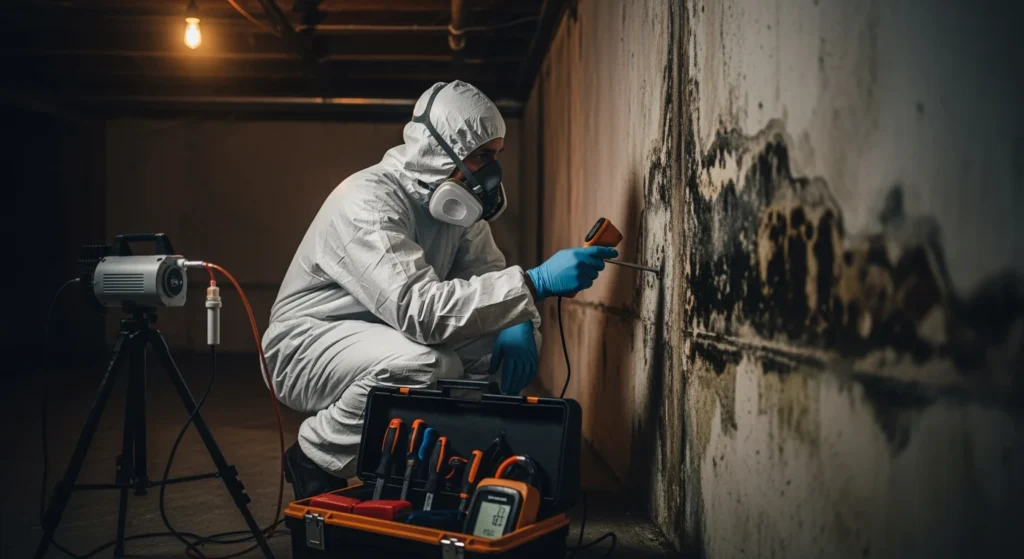
Your first call should be to an independent, licensed mold assessment contractor. This professional will:
- Conduct a thorough visual inspection of your property.
- Identify the moisture source that is causing the mold.
- Take samples (air or surface) for lab analysis if necessary.
- Provide you with a detailed, written Mold Remediation Plan (MRP). This document outlines the exact scope of work required to fix the problem.
Step 2: Hire a Separate NYS-Licensed Mold Remediator
With the Mold Remediation Plan in hand, you can now contact one or more licensed mold remediation companies for quotes. Because every company is bidding on the exact same scope of work defined in the MRP, you can compare their prices on an “apples-to-apples” basis. The remediator you hire is legally required to follow the assessor’s plan precisely.
Step 3: Post-Remediation Verification
Once the cleanup is complete, the original mold assessor must return to the property to conduct a post-remediation assessment. This is a final inspection and clearance test to verify that the remediation was successful and that the area now meets safety standards. The assessor provides a written report confirming the job was completed properly.
Red Flags to Watch For
Any company on Long Island that offers to perform both the initial mold inspection and the subsequent cleanup on your home is violating state law. Be wary of any contractor who:
- Offers a “free” inspection with the condition that they also do the removal work.
- Downplays the need for a separate assessor or an independent clearance test.
- Cannot provide you with their valid New York State Mold Assessor or Mold Remediator license.
Upper Restoration provides professional mold removal and remediation services across Nassau County, Suffolk County, and all five NYC boroughs — available 24/7.
Navigating a mold issue can be stressful, but the NYS Mold Law is in place to ensure the process is fair and transparent. By hiring two separate, licensed professionals, you guarantee an unbiased diagnosis and a verified solution, giving you peace of mind that the job was done right.
2026 Update: NYS Article 32 Enforcement Is Active
New York State’s Mold Law (Labor Law Article 32), which took full effect in 2016, prohibits the same entity from performing both mold assessment and mold remediation on the same project. In 2026, the NYS Department of Labor has increased enforcement activity, and homeowners who unknowingly hire a single company to do both face voided remediation work and potential HPD violations in New York City.
Why the Law Exists
The separation requirement eliminates a fundamental conflict of interest: a mold remediator who also performs the assessment has financial incentive to find more mold and recommend a larger scope of work. Requiring independent assessment protects homeowners from unnecessary remediation and inflated costs.
What Each License Covers in 2026
- Licensed Mold Assessor: Inspects, collects samples, writes the remediation protocol. Cannot perform remediation.
- Licensed Mold Remediator: Executes remediation per the assessor’s protocol. Cannot write the protocol.
- Post-Remediation Verification: Must be performed by the licensed assessor (or another independent assessor) after remediation is complete — not the remediator.
How to Verify Licenses in 2026
Search both the assessor’s and remediator’s license numbers at the NYS Department of Labor license verification portal: labor.ny.gov/licensing. Both licenses must be active and the licensee name must match the company or individual you’re hiring. Upper Restoration works exclusively with independent licensed assessors — we do not conduct our own assessments.
Red Flags to Watch For
- A company that offers to “test and remediate” in a single visit for one flat price
- No written remediation protocol provided before work begins
- Verbal-only assessment with immediate upsell to remediation
- Post-remediation clearance performed by the same company that did the remediation