Smoke odor elimination is one of the most technically demanding aspects of fire restoration — and one of the most frequently misapplied. The three primary deodorization technologies used after Long Island fire events — thermal fogging, hydroxyl generation, and ozone treatment — operate on different principles, reach different surfaces, and are appropriate for different smoke types and occupancy situations. Applying the wrong technology to a specific odor scenario produces poor results; applying the right technology to the right scenario produces complete deodorization. Understanding the differences helps Long Island homeowners evaluate contractor proposals and ask the right questions about the proposed approach.
Thermal Fogging
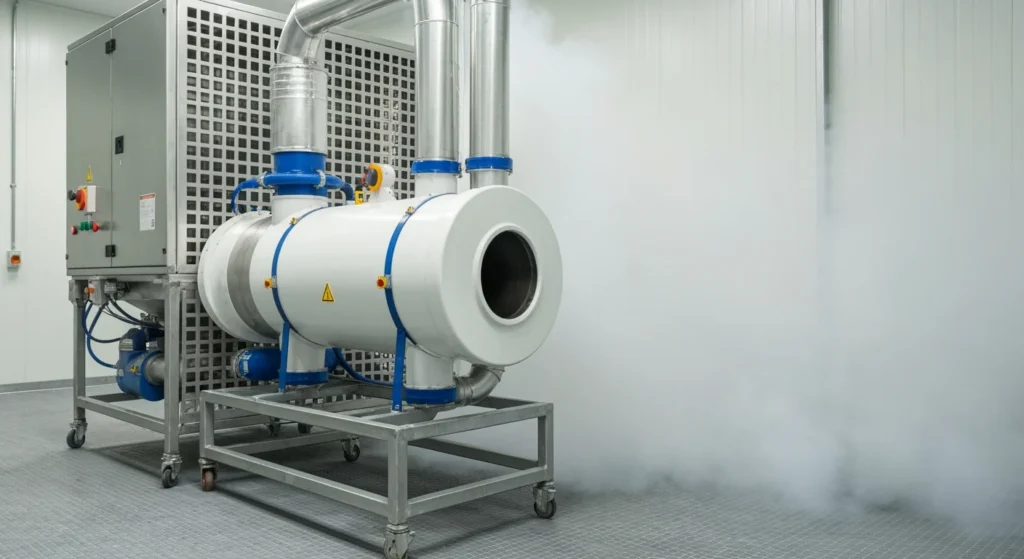
Thermal fogging uses heat to vaporize a deodorizing solvent into a fog of submicron particles that penetrate wherever smoke penetrated — into wall cavities, behind trim, into furniture stuffing, and into porous building materials. The fog particles carry deodorizing agents that neutralize odor compounds through chemical reaction. Thermal fogging is highly effective for petroleum-based odors (puffback events) because the solvent-based fogging agent has chemical affinity for oil-soot odor compounds. It is one of the more aggressive deodorization techniques and requires the structure to be vacated during treatment and ventilated afterward. Thermal fogging does not kill mold or bacteria — it addresses chemical odor compounds through neutralization.
Hydroxyl Generation
Hydroxyl generators use UV light to produce hydroxyl radicals (OH radicals) from water vapor in the air — the same radicals that occur naturally in the atmosphere through sunlight interaction with water. Hydroxyl radicals are powerful oxidizing agents that break down odor-causing volatile organic compounds (VOCs) at the molecular level. Unlike ozone, hydroxyl radicals are not toxic to occupants at the concentrations used by hydroxyl generators — the technology is frequently cited as safe for occupied spaces, though Upper Restoration follows manufacturer guidance and maintains appropriate standoff conditions during treatment. Hydroxyl generation is effective for protein smoke odor, general organic odors, and as a follow-up treatment after surface cleaning to address residual odors in porous materials. It works more slowly than ozone — requiring extended treatment periods — but can be operated concurrently with workers in the space.
Ozone Treatment
Ozone generators produce ozone (O3), an unstable molecule that oxidizes odor compounds on contact. Ozone penetrates deeply into porous materials and reaches areas that surface cleaning cannot address. It is highly effective for pervasive odors in unoccupied structures. The critical limitation is occupant safety: ozone at treatment concentrations is toxic to humans, pets, and plants. Ozone treatment requires complete evacuation of the structure, cannot be used when any living occupants or sensitive materials (rubber, elastic, latex paint) are present, and must be followed by complete ventilation before reoccupancy. Ozone is also not appropriate for items that will be present during treatment — it degrades rubber compounds and can bleach fabrics. Despite these limitations, ozone is the most effective tool for severe pervasive smoke odor in unoccupied Long Island structures.
Which Technology for Which Scenario
Puffback in an occupied Long Island Cape Cod: thermal fogging after surface cleaning, with hydroxyl generation as follow-up during reconstruction. Protein smoke from kitchen fire: enzymatic surface cleaning followed by hydroxyl treatment. Severe structural fire odor in a vacant structure: ozone treatment as primary deodorization, followed by hydroxyl treatment during reconstruction to address residual odors. Smoke odor in soft goods and contents: ozone chamber treatment in a controlled environment at the pack-out facility.
Frequently Asked Questions: Smoke Odor Removal
Which smoke odor removal method is most effective?
No single method works for all fires. Thermal fogging is most effective for protein fires (kitchen) and light smoke. Hydroxyl generators are safest for occupied spaces and work on a broad range of odors. Ozone is the most powerful oxidizer for heavy char odor but requires full evacuation. Professional restorers often use a combination — hydroxyl during active restoration, thermal fog for final treatment, and ozone as a last resort for persistent odor.
Is ozone treatment safe for my home?
Ozone (O₃) is effective but requires complete evacuation of all people, pets, and plants during treatment. Ozone levels used in restoration (3–6 ppm) are well above the OSHA permissible exposure limit (0.1 ppm). After treatment, the space must be ventilated for 2–4 hours before re-occupancy. Hydroxyl generators are the preferred alternative when occupants cannot vacate.
How long does professional smoke odor removal take?
Timeline depends on fire severity and home size. Light smoke odor from a kitchen fire: 1–2 days. Moderate whole-house smoke from a contained room fire: 3–5 days. Heavy structural fire with charring: 1–3 weeks, often requiring multiple treatment cycles and HVAC duct cleaning. Upper Restoration performs air quality testing after treatment to verify odor elimination.
Does insurance cover smoke odor removal?
Yes. Smoke odor deodorization is a standard covered item in fire damage claims. Xactimate includes specific line items for thermal fogging, hydroxyl treatment, ozone generation, and HVAC deodorization. Upper Restoration documents the method, equipment hours, and chemical usage for full insurance reimbursement.