Water damage in New York City and Long Island properties is not a single problem — it’s a sequence of problems that each requires a different response, different expertise, and different documentation. A burst pipe on the 14th floor of a Queens co-op and a flooded basement in Massapequa both produce water damage, but the contamination level, structural failure mode, regulatory requirements, and insurance claim pathway are entirely different. This guide covers the complete restoration sequence from emergency response through final reconstruction, with specific detail on the NYC and Long Island context that shapes how every step works.
Phase 1: Emergency Response (Hours 0–24)
The first priority is stopping the water source. For supply-side failures — burst pipes, appliance failures, failed supply lines — this means shutting the water supply to the affected fixture or, if the isolation valve is inaccessible or inoperative, the building main. In NYC co-op and condo buildings, this requires notifying building management immediately because the supply shutoff for upper-floor units typically requires building staff access to the riser shutoff in a mechanical room. Know your building’s protocol before you need it.
For exterior infiltration — roof leaks, window leaks, foundation seepage — stopping the source requires either emergency temporary repairs (tarping, sealant) if conditions allow, or simply waiting out the storm and beginning mitigation immediately after. Document everything before moving anything: photos and video of the water source, the extent of flooding, and all affected materials are required for insurance claims and determine the adjuster’s baseline for the claim scope.
Phase 2: Water Mitigation (Days 1–10)
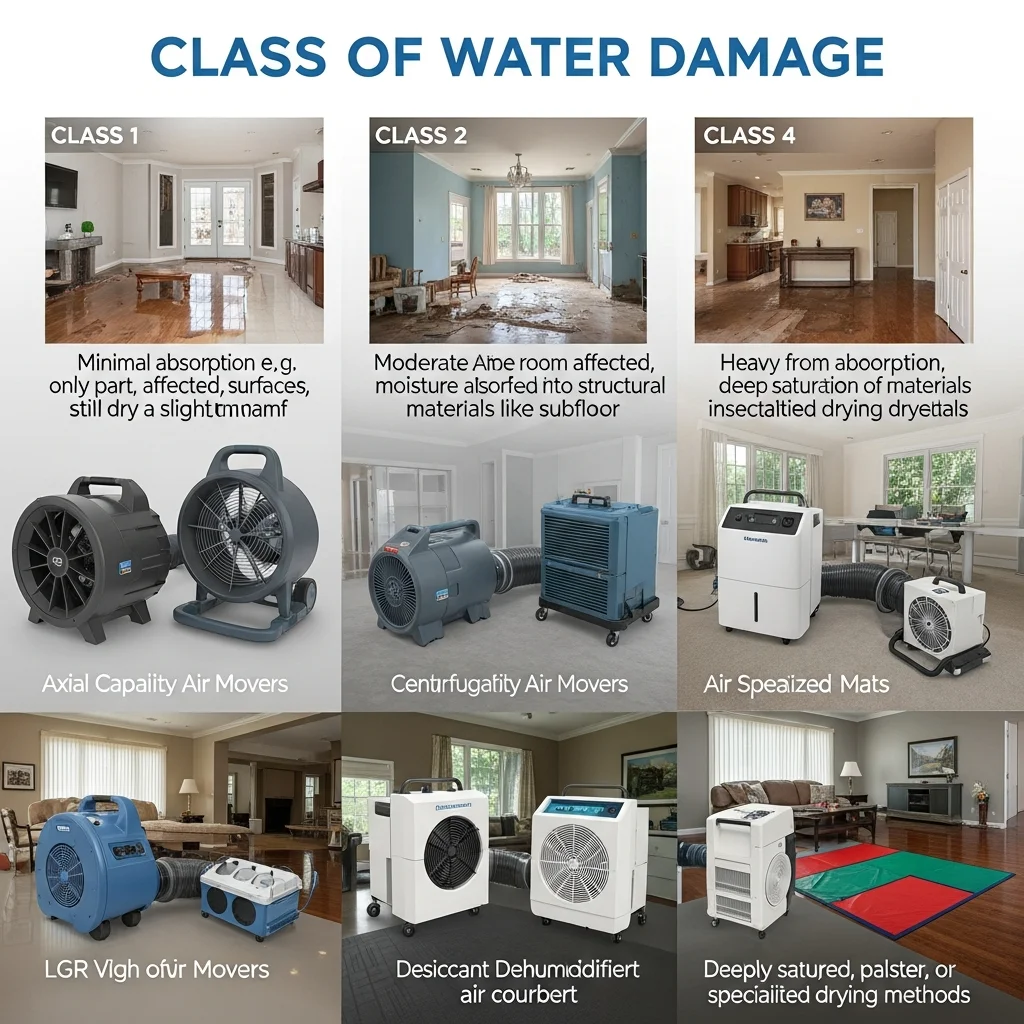
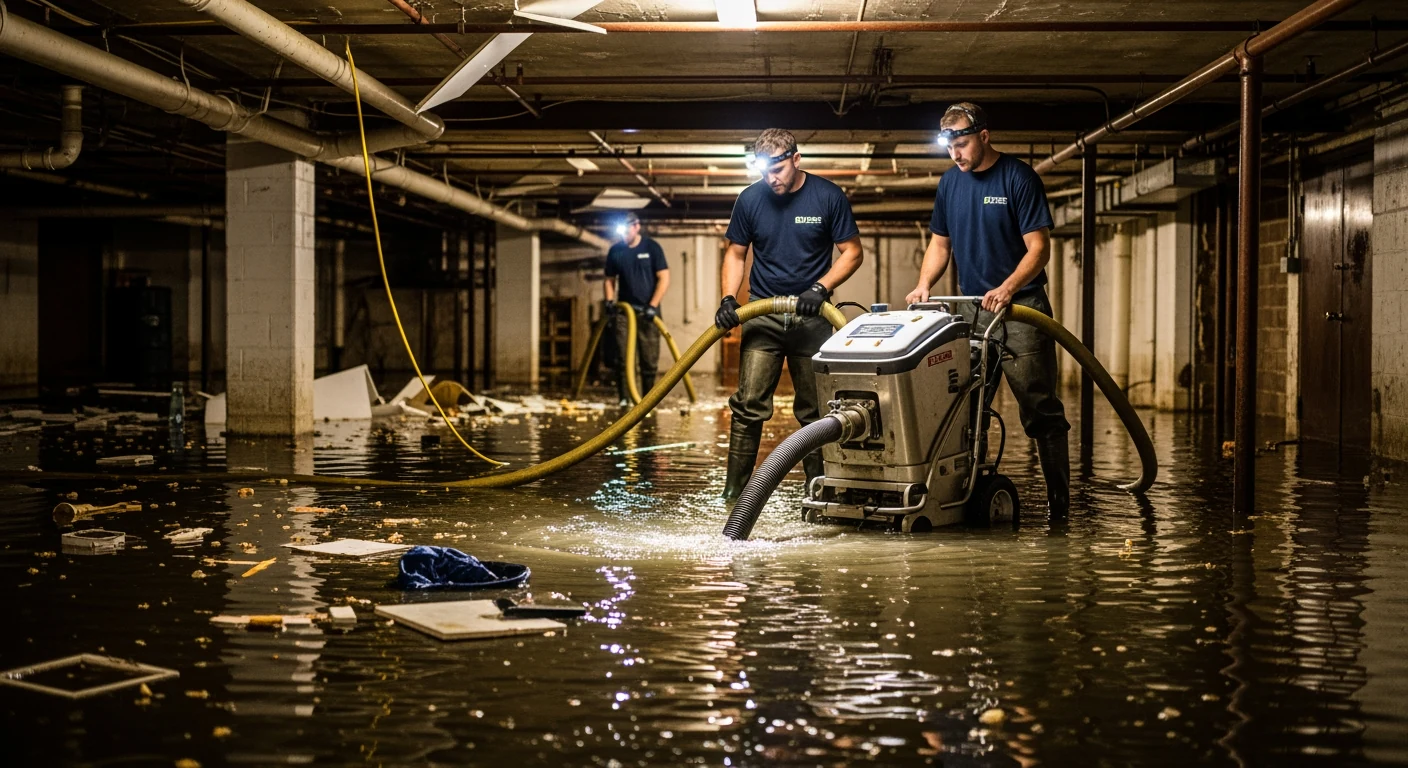
Water mitigation is the emergency stabilization phase — it stops progressive damage but does not repair it. The IICRC S500 Standard defines the scope: extraction of standing water, structural drying using commercial LGR dehumidifiers and air movers, moisture mapping and daily drying logs, and removal of materials that cannot be dried to standard within the drying window. A typical NYC Class 2 residential mitigation (one to two rooms, water wicked up walls) takes 3–5 days of continuous mechanical drying and produces a documented drying log that insurance adjusters require to validate the claim.
The contamination category of the water determines what must be removed versus what can be dried in place. Category 1 (clean supply water) allows selective drying in place if addressed within 24–48 hours. Category 2 (gray water from appliances or fixtures) requires evaluation of each porous material. Category 3 (sewage, floodwater, Category 2 water left more than 48 hours) requires removal of all porous materials in contact with the water — drywall, carpet, insulation, pad. This is not a contractor preference; it is the industry standard and the insurance industry standard for validated claims.
Phase 3: Mold Assessment (If Applicable)
Mold colonization begins within 24–48 hours of moisture exposure under normal indoor temperature conditions. For any water event that was not addressed within 48 hours, or any Class 3–4 drying event, mold assessment should precede reconstruction. In New York State, mold remediation affecting more than 10 square feet requires a licensed mold assessor (separate entity from the remediator) under Article 32 of the Labor Law. The assessor writes a Mold Remediation Protocol; the remediator executes it; the assessor performs post-remediation clearance testing. Skipping this sequence in a New York residential property creates both regulatory liability and potential personal injury exposure if occupants are subsequently affected.
Phase 4: Reconstruction
Reconstruction begins after the affected area is confirmed dry (all moisture readings within acceptable range), cleared of any mold contamination, and documented. In NYC, reconstruction that affects structural elements, plumbing systems, or electrical systems requires NYC Department of Buildings permits and licensed contractors. On Long Island, similar requirements apply through the relevant municipal building departments. Skipping permits for significant post-water-damage reconstruction creates problems at sale — unpermitted work discovered during a title search or buyer inspection is a transaction-stopper that’s expensive to remediate after the fact.
For insurance purposes, reconstruction is typically handled under a separate estimate from mitigation. The mitigation scope is agreed first (often on a time-and-materials basis per the IICRC unit cost schedule); the reconstruction scope is estimated after the space is dried and opened up, because the full extent of structural damage is often not visible until drywall is removed during mitigation.
NYC-Specific Regulatory Considerations
HPD violations: Water damage in tenant-occupied NYC buildings triggers HPD violation classifications. Roof and exterior wall leaks affecting tenant units are Class B (hazardous) violations — 30-day correction deadline, $50/day civil penalty. Sewage backup affecting tenant units is Class C (immediately hazardous) — 24-hour correction deadline. Documentation of professional mitigation and repair is required for HPD violation certification.
Pre-1978 construction: Any demolition or renovation work in pre-1978 NYC buildings requires an asbestos survey under NYS Rule 56 before materials are disturbed. Water damage mitigation that involves drywall removal, flooring removal, or pipe insulation disturbance in pre-1978 buildings must be preceded by testing. Similarly, disturbance of painted surfaces in pre-1978 buildings requires compliance with EPA RRP lead-safe work practice rules.
Co-op and condo considerations: In NYC co-op and condo buildings, water damage that originates in one unit and migrates to adjacent or lower units creates complex liability questions governed by the building’s proprietary lease or offering plan. The general rule: damage originating within the unit owner’s maintenance responsibility is the owner’s liability; damage originating in building common elements (risers, main drain lines, roof) is the building corporation’s liability. Get clarity on this from your building’s managing agent before authorizing repairs — the liability determination affects whose insurance claim applies.
Long Island-Specific Considerations
Long Island’s predominantly single-family housing stock creates different water damage patterns than NYC’s multi-unit buildings. Crawlspace construction — common throughout Nassau and Suffolk — concentrates moisture damage risk in the building’s lowest structural level, where ground moisture during snowmelt and heavy rain seasons saturates soil and creates the conditions for both structural wet rot and significant mold colonization in floor framing. Crawlspace encapsulation (vapor barrier installation over all soil surfaces plus sealed venting) is the standard remediation for chronic crawlspace moisture problems.
Septic system backflow is a Long Island-specific Category 3 water damage source that has no NYC equivalent — municipal sewer service is universal in NYC, while much of Long Island still relies on private septic. When drain field soils reach saturation during spring snowmelt, effluent backpressure can enter building drains. Properties with known septic backflow history should have backwater prevention valves installed on all building drain connections at or below grade.
Frequently Asked Questions
What’s the difference between water mitigation and water damage restoration? Mitigation is the emergency phase — stopping progressive damage through extraction, drying, and materials removal. Restoration is the repair phase — replacing removed materials and returning the property to pre-loss condition. They are sequential and typically billed separately.
How long does full water damage restoration take in NYC? Mitigation alone takes 3–10 days depending on drying class. Full reconstruction after a significant water event typically takes 2–6 weeks after mitigation is complete, depending on scope, permit requirements, and contractor availability. Total timeline from event to restored: 3–8 weeks for typical residential events.
Does homeowners insurance cover all phases of water damage restoration? Standard policies cover sudden and accidental water events — burst pipes, appliance failures, roof leaks from storm damage. They typically cover both mitigation and reconstruction for covered events. Flood damage (external water entering the building) is excluded without a separate flood policy. Long-term slow leaks attributed to maintenance neglect are typically excluded.
See also: Disaster Preparedness & Storm Damage Guide