What Happens in the First 24 Hours After You Report Damage
The first 24 hours set the tone for the entire claim. You call your insurance carrier to report the loss, the carrier opens a claim file and assigns an adjuster, and you call a restoration contractor to stop the damage from spreading. These two calls happen on parallel tracks, not one after the other. Waiting for adjuster approval before extracting standing water or boarding a broken window almost always makes the damage worse, and most policies require you to take reasonable steps to prevent further loss regardless of when the adjuster arrives.
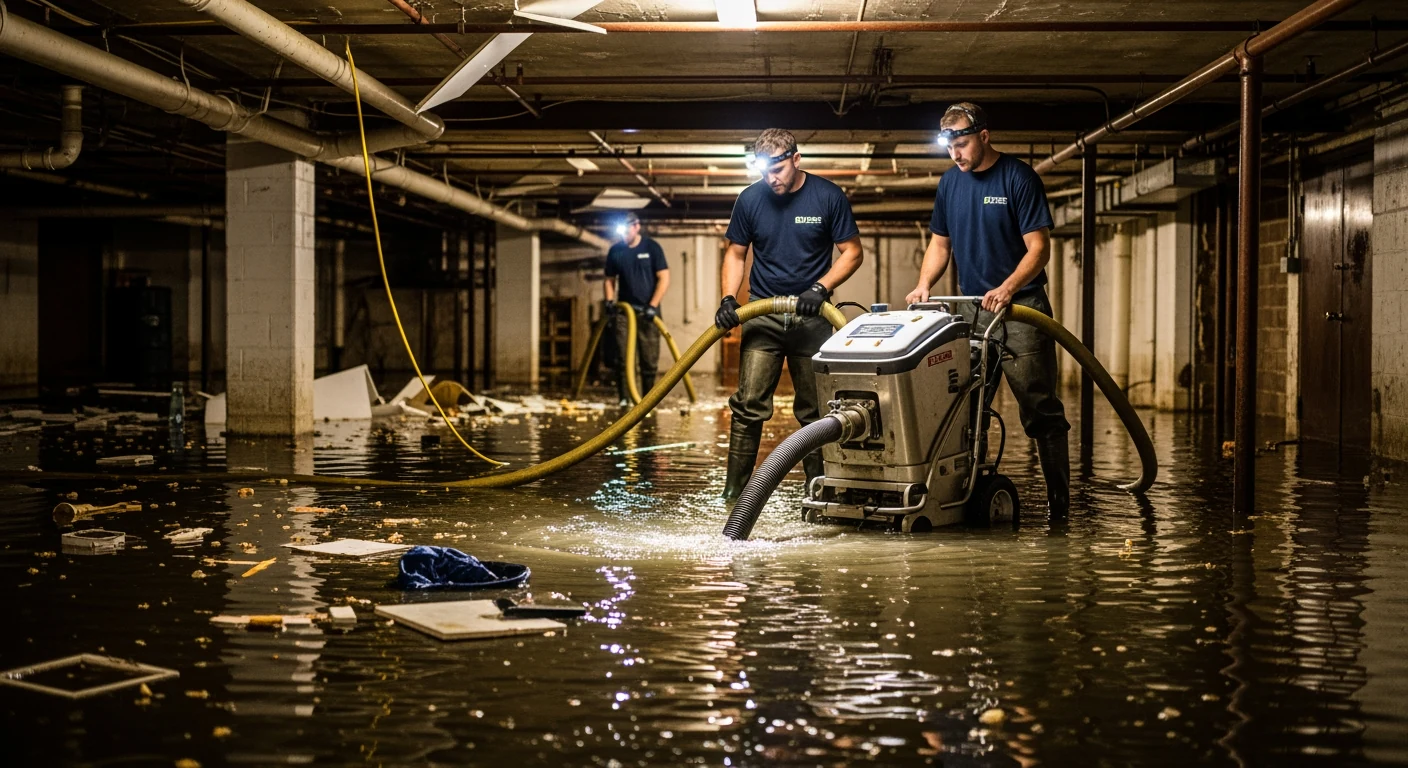
A restoration crew that responds within hours, not days, can begin water extraction, containment, or emergency board-up immediately under what’s often called an “emergency mitigation” scope. This work is typically covered under your policy’s duty-to-mitigate clause, separate from the larger repair estimate that comes later. The National Association of Insurance Commissioners advises policyholders to document the damage and take steps to prevent additional loss as soon as it’s safe to do so, which is exactly the window a same-day restoration response is built to cover.
The Insurance Adjuster’s Role vs. the Restoration Contractor’s Role
The adjuster and the restoration contractor have different jobs, and confusing the two is where homeowners lose money. The adjuster represents the insurance company and determines what the policy covers, what it will pay, and whether the loss meets the policy’s terms. The restoration contractor works on site, documents the physical damage, performs mitigation and repairs, and, when hired independently, represents the homeowner’s interests during that process.
This separation matters because an adjuster’s initial estimate is a starting offer, not a final verdict. Adjusters often work multiple claims a day across a wide territory and may not catch secondary damage hidden behind walls, under flooring, or in HVAC systems. A restoration contractor who inspects the property in person, with moisture meters, thermal imaging, and direct access to affected materials, frequently identifies scope the adjuster’s initial walkthrough missed. The Insurance Information Institute notes that claim estimates can be revised as additional damage is discovered during the repair process, which is precisely why thorough documentation from day one carries weight later.
Step-by-Step: From First Call to Final Payment
Every claim moves through the same general sequence, though timelines shift depending on the carrier, the type of loss, and how quickly documentation gets submitted. Understanding each stage helps you recognize where delays happen and where you have leverage.
| Stage | Who Drives It | What Happens |
|---|---|---|
| 1. Report the loss | Homeowner | Claim opened, claim number issued, adjuster assigned |
| 2. Emergency mitigation | Restoration contractor | Water extraction, drying, board-up, containment begins |
| 3. Adjuster inspection | Insurance carrier | Adjuster reviews damage, drafts initial estimate |
| 4. Contractor documentation | Restoration contractor | Moisture logs, photos, scope of work, line-item estimate |
| 5. Estimate reconciliation | Adjuster and contractor | Scope and pricing compared, supplements submitted if needed |
| 6. Repair or remediation | Restoration contractor | Approved work performed to industry standards |
| 7. Final payment | Insurance carrier | Depreciation released, final invoice paid |
Step 5 is where most claim disputes originate. If the contractor’s line-item estimate exceeds the adjuster’s number, the contractor submits a supplement with supporting documentation, photos, moisture readings, and industry pricing data, asking the carrier to reconsider. This back-and-forth is routine, not adversarial, and it’s a normal part of how restoration companies and insurers work together on nearly every significant claim.
Do You Have to Use Your Insurer’s “Preferred Vendor”?
No. Insurance companies frequently offer a list of “preferred” or “network” contractors, but policyholders in New York, New Jersey, Connecticut, and Pennsylvania retain the right to choose their own restoration company. The New York State Department of Financial Services advises consumers that they are not obligated to use a contractor recommended by their insurer and can select any licensed contractor they trust.
Preferred vendor programs exist primarily to give carriers pricing consistency and faster turnaround, which benefits the insurer’s claims volume more than it benefits any single homeowner. That doesn’t make preferred vendors bad contractors. It does mean their financial relationship runs through the carrier, which can shape incentives around scope and pricing. An independent contractor’s only contract is with you, the property owner, which is the structural reason Upper Restoration operates as an advocate rather than a network vendor. You sign the work authorization, you approve the scope, and the contractor answers to you throughout the claim, not to the company writing the check.
Dealing with water, fire, mold, or storm damage right now and unsure where to start with your claim?
How Documentation Determines Whether Your Claim Gets Fully Paid
Claims are paid based on evidence, not on the severity of what you experienced. An adjuster working from a five-minute walkthrough and a homeowner’s verbal description has far less to work with than one reviewing moisture maps, timestamped photos, air quality readings, and a room-by-room scope of work. The gap between those two claim files is often the gap between a partial payout and a full one.
The Institute of Inspection Cleaning and Restoration Certification (IICRC) maintains the S500 standard for water damage restoration, which sets benchmarks for moisture measurement, drying verification, and documentation that adjusters and contractors both recognize. When a restoration company documents to that standard from the first visit, the paperwork does the arguing later, not the homeowner. This is also where hidden damage gets caught, wet insulation behind drywall, moisture wicking into subfloor, or mold colonization starting in wall cavities within 24 to 48 hours per guidance from the Environmental Protection Agency on mold growth conditions. Catching it early and logging it properly is what turns “the adjuster didn’t see that” into an approved supplement instead of an out-of-pocket repair.
What to Do If the Adjuster’s Estimate Falls Short
A low initial estimate is common and rarely final. The first move is not to argue verbally with the adjuster but to request the itemized estimate in writing (usually an Xactimate or similar line-item report) and compare it line by line against your contractor’s scope of work. Differences usually fall into three categories: missing line items, incorrect quantities, or outdated unit pricing.
Once the discrepancy is identified, your restoration contractor typically submits a written supplement with photos, measurements, and material or labor pricing to support the requested change. If the carrier still disputes the scope, most policies include an appraisal clause allowing each side to name an appraiser, with a neutral umpire resolving disagreements, an option the Insurance Information Institute describes as a standard dispute-resolution path built into most homeowners policies. Homeowners uncomfortable navigating that process alone can also engage a licensed public adjuster, though restoration contractors and public adjusters serve different functions and shouldn’t be treated as interchangeable.
Frequently Asked Questions
How soon after damage occurs should I call a restoration company?
Call as soon as it’s safe to do so, ideally within the first few hours. Water and fire damage worsen quickly, and mold can begin developing within one to two days under the right conditions according to the EPA. Early mitigation limits the scope of damage and creates the documentation adjusters rely on to process the claim.
Am I required to use my insurance company’s preferred contractor?
No. State insurance regulators, including New York’s Department of Financial Services, confirm that policyholders can choose any licensed contractor for repairs. Preferred vendor lists are optional recommendations, not requirements, and selecting an independent contractor does not affect your coverage or claim validity.
What is the difference between an insurance adjuster and a restoration contractor?
The adjuster works for the insurance carrier and determines what the policy covers and how much it pays. The restoration contractor performs the physical mitigation and repair work and, when hired independently, documents damage and advocates for the property owner’s interests during the claims process.
What happens if the adjuster’s estimate is lower than the contractor’s estimate?
The contractor typically submits a written supplement with photos, measurements, and pricing documentation showing the additional scope. Most policies also include an appraisal clause allowing both sides to resolve pricing or scope disputes through a formal appraisal process if the supplement request is denied.
Does filing a claim with an independent restoration company slow down the process?
Not typically. Independent contractors and insurance adjusters coordinate routinely, since most claims involving significant property damage require professional mitigation and repair regardless of who performs the work. Detailed documentation from an independent contractor often speeds up adjuster review rather than slowing it.
Will my insurance rates go up if I file a claim and use my own contractor?
Rate impacts depend on your carrier’s underwriting rules, claim history, and state regulations, not on which contractor you choose. Using an independent contractor instead of a preferred vendor does not itself affect premiums; consult your policy documents or agent for specifics on your coverage.
Can a restoration company negotiate directly with my insurance company?
Restoration contractors regularly communicate with adjusters to clarify scope, submit documentation, and request supplements on the homeowner’s behalf. This is standard practice and different from legal representation or formal claim negotiation, which typically requires a licensed public adjuster or attorney.
Filing a Claim and Not Sure What Happens Next?
Upper Restoration documents damage, coordinates with your adjuster, and works only for you, 24/7 across the tri-state area.
Sources
- National Association of Insurance Commissioners (NAIC), consumer guidance on filing a homeowners insurance claim
- Insurance Information Institute (III), guidance on the homeowners claims process and appraisal clauses
- New York State Department of Financial Services, consumer guidance on contractor selection and insurance claims
- Institute of Inspection Cleaning and Restoration Certification (IICRC), S500 Standard for Professional Water Damage Restoration
- U.S. Environmental Protection Agency (EPA), mold growth and moisture guidance
This content is for general informational purposes only and is not legal, medical, or insurance advice. Remediation scope, timelines, and costs vary by site conditions. Contact Upper Restoration for a professional assessment. Licensing and certifications apply per jurisdiction.