If you suspect mold is growing in your Long Island attic, hiring a licensed mold assessor is the critical first step. But what does a professional inspection actually involve? Knowing what to expect can help you ensure you’re hiring a thorough professional and can demystify the process.
Here is a step-by-step walkthrough of what a comprehensive attic mold inspection should look like in Nassau and Suffolk County.
Step 1: The Initial Consultation and Visual Inspection
The process begins the moment the inspector arrives. They should start by discussing your concerns, asking about any musty odors, past water leaks, or health symptoms you may have noticed.
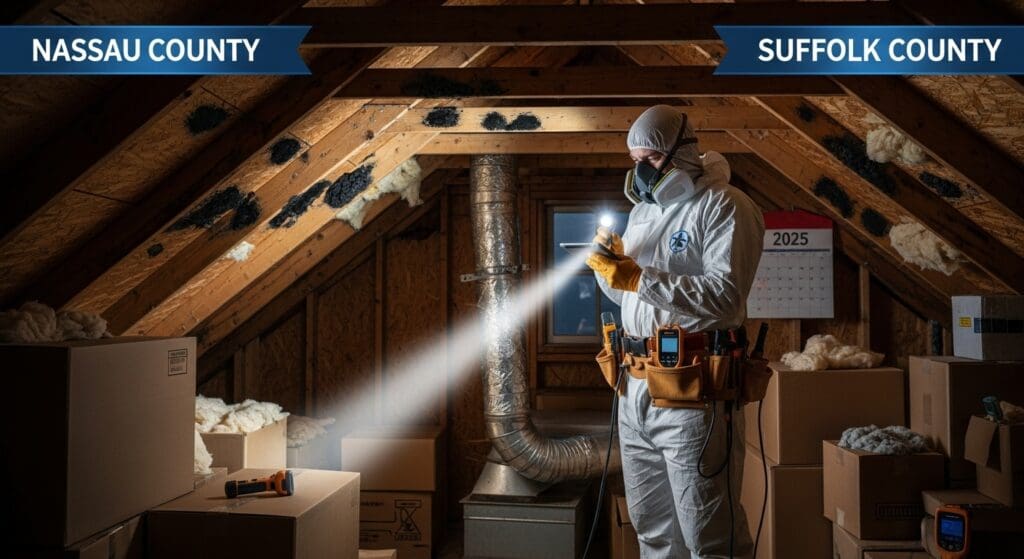
Following this conversation, they will conduct a detailed visual assessment of the attic space. This is a hands-on investigation where the inspector will look for:
- Visible Mold Growth: Checking roof sheathing, rafters, insulation, and joists for discoloration or fuzzy growth.
- Water Staining and Damage: Looking for evidence of past or current leaks on the underside of the roof deck and around vents or chimneys.
- Structural Issues: Checking for poor ventilation, blocked soffit vents, or improperly installed bathroom fans that vent into the attic instead of outside.
Step 2: Using Advanced Diagnostic Tools
Visible evidence only tells part of the story. Professional assessors use specialized equipment to uncover hidden moisture that the naked eye can’t see.
- Moisture Meters: These devices have probes that are pressed directly into materials like wood or drywall to measure their moisture content. High readings indicate a water problem, even if the surface feels dry.
- Thermal Imaging (Infrared) Cameras: This is one of the most valuable tools. An infrared camera detects temperature differences on surfaces. Wet areas are typically cooler than dry areas, and they show up differently on the camera’s screen, allowing the inspector to pinpoint hidden leaks or pockets of condensation behind walls and insulation without causing any damage.
Step 3: Mold Sampling (When Necessary)
In many cases, if mold is clearly visible, sampling isn’t required—the priority is to remove it. However, an inspector may recommend sampling to:
- Identify the Mold Type: Determine the specific species of mold present, which can be important for health considerations.
- Confirm a Hidden Problem: If there is a strong musty odor but no visible growth, air sampling can determine if elevated mold spore levels are present in the air.
The two common types of samples are air samples, which capture airborne spores, and surface samples (using a swab or tape lift), which collect a sample of visible growth. These are sent to an accredited third-party laboratory for analysis.
Step 4: The Formal Report and Mold Remediation Plan (MRP)
After the inspection is complete and lab results are back, the assessor will compile all their findings into a detailed report. This report will include photos, moisture readings, lab results, and a conclusion.
Upper Restoration provides professional mold removal and remediation services across Nassau County, Suffolk County, and all five NYC boroughs — available 24/7.
Most importantly, if mold is confirmed, the assessor will provide you with a formal Mold Remediation Plan (MRP). As required by NYS law, this is the official “blueprint” for cleanup. It outlines the moisture source that needs to be fixed, the exact locations of the mold, and the specific procedures a remediation company must follow to remove it safely. This is the document you will provide to licensed remediation contractors to get accurate, comparable quotes for the cleanup job.