
Mold Remediation in Dix Hills, NY
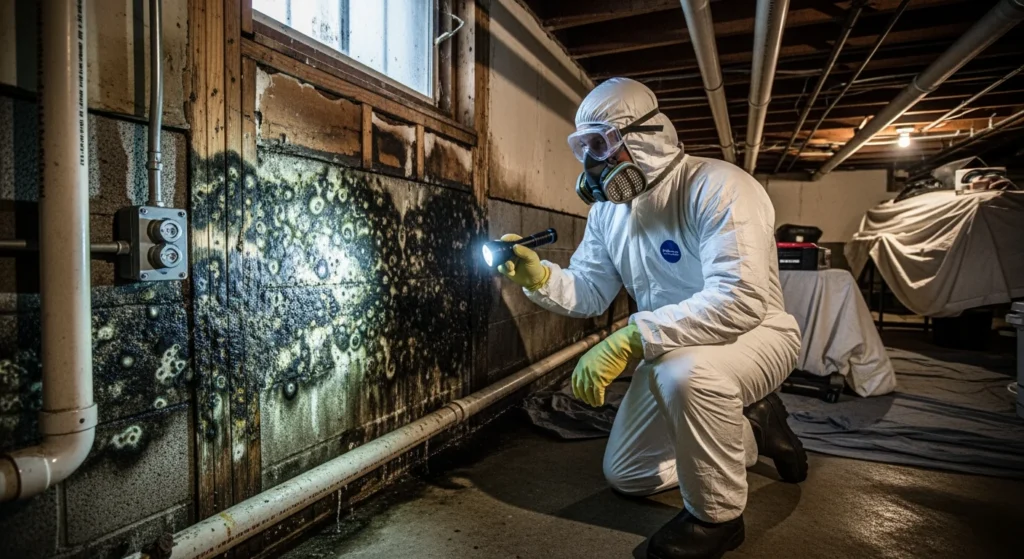
Dix Hills’ wooded, large-lot character creates mold risk from tree canopy shade that reduces exterior drying on north-facing building surfaces, combined with the standard 1960s-1980s below-grade family room condensation mold pattern that defines Huntington’s interior communities.
Water Damage Restoration in Dix Hills, NY
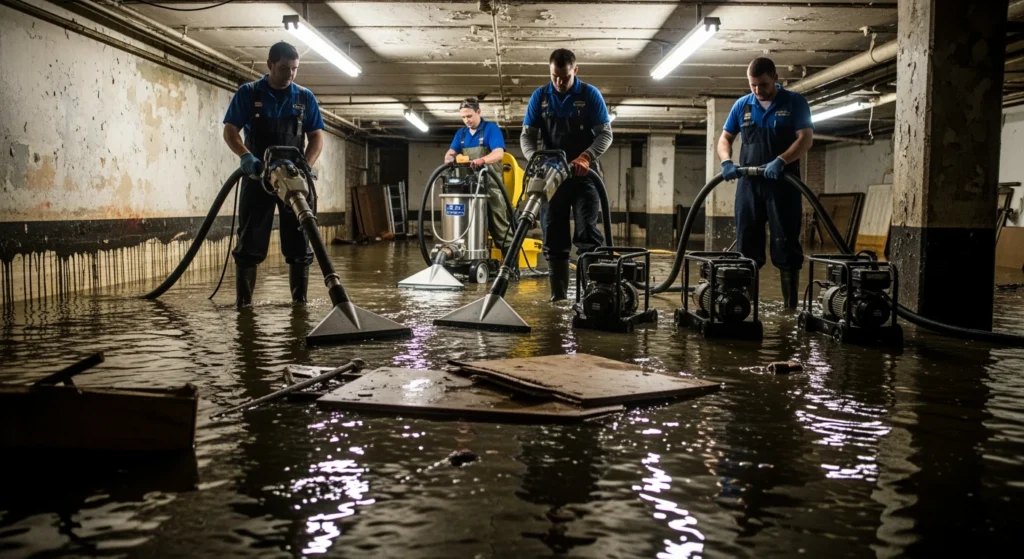
Dix Hills — 23,991 residents in the Town of Huntington — is one of Suffolk County’s most affluent hamlets, its 1960s-1990s higher-end Colonial and split-level construction on large wooded lots carrying water damage risk from aging plumbing in older sections, mature tree canopy that produces above-average tree-impact storm damage, and interior flooding from the Huntington Creek watershed.
Fire & Smoke Damage Restoration in Deer Park, NY
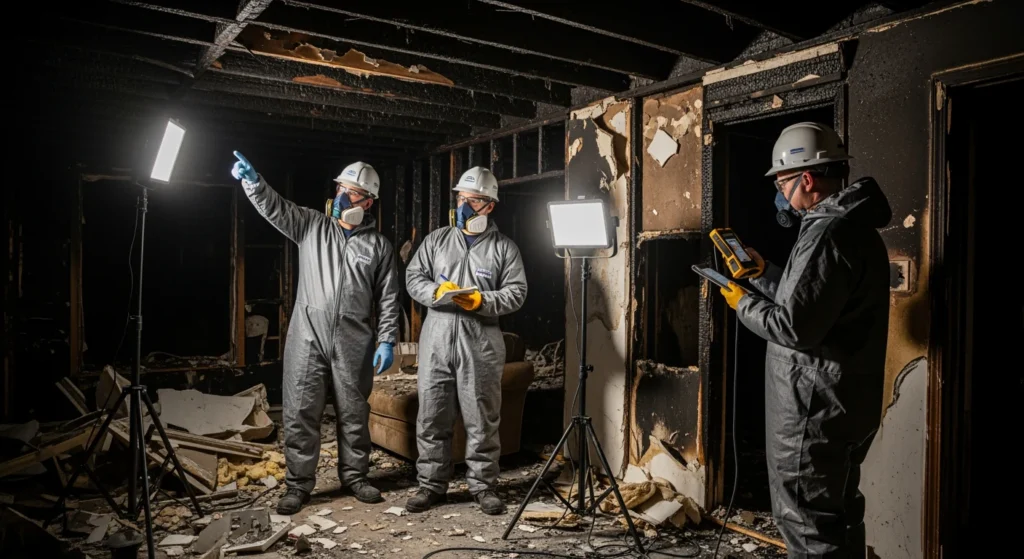
Deer Park’s fire restoration profile is standard western Suffolk — oil-heat puffback in 1960s-1970s residential stock, mandatory pre-1980 asbestos assessment for structural fires with joint compound and floor tile ACM throughout the hamlet’s predominantly pre-1980 construction.
Mold Remediation in Deer Park, NY
Deer Park’s split-level and Colonial housing stock from the 1960s-1970s carries the standard western Suffolk below-grade mold pattern — condensation against uninsulated block foundation walls producing seasonal Penicillium and Cladosporium colonization that recurs without assembly correction.
Water Damage Restoration in Deer Park, NY
Deer Park’s 27,745 residents live in a hamlet that sits between Babylon’s south shore flooding zone and the interior suburban pattern — far enough from Great South Bay to avoid direct storm surge, but carrying the same aging 1960s-1970s infrastructure and split-level below-grade water intrusion that defines western Suffolk’s interior community water damage profile.
Fire & Smoke Damage Restoration in Coram, NY
Coram’s fire profile follows Brookhaven’s interior suburban standard — oil-heat puffback in 1970s-1990s residential stock, mandatory pre-1980 asbestos assessment for structural fires, and the standard pre-demolition protocol that applies across Long Island’s pre-1980 construction.
Mold Remediation in Coram, NY
Coram’s shallow water table drives a persistent basement mold pattern — hydrostatic seepage through foundation walls and floor slabs creates chronic moisture that initiates mold on concrete surfaces, wood framing, and finished basement materials each spring, producing a recurring mold cycle that requires both remediation and drainage correction to break.
Water Damage Restoration in Coram, NY
Coram’s 39,308 residents live on Long Island’s central outwash plain where the water table is unusually shallow — as close as 3-5 feet below grade in low-lying positions — producing hydrostatic basement water intrusion from groundwater pressure rather than storm events, an interior flooding pattern distinct from both coastal bay flooding and standard infrastructure failure.
Fire & Smoke Damage Restoration in Commack, NY
Commack’s fire profile reflects western Suffolk’s oil-heat puffback pattern and the mandatory pre-1980 asbestos assessment for structural fires in the hamlet’s predominantly pre-1980 residential stock.
Mold Remediation in Commack, NY
Commack’s 1960s-1980s split-level stock carries endemic below-grade family room condensation mold — fiberglass batts against uninsulated block producing seasonal mold that recurs without assembly correction — alongside Cape Cod attic mold in the hamlet’s older housing.
