The sump pump is the single most important piece of mechanical infrastructure in most Long Island basements — more important than the water heater, more important than the HVAC system, because its failure during a storm event can produce $15,000 to $50,000 in water damage in hours. This is not hyperbole: Nassau County’s south shore communities sit on a water table that ranges from 4 to 10 feet below grade, the FEMA flood maps show 65,000 Hempstead homes in Special Flood Hazard Areas, and every one of those homes depends on a sump pump to manage groundwater during the multiple storm events that occur every year.
Why Long Island Sump Pumps Fail
Power outage: The most common cause of sump pump failure in Long Island flooding events is the power outage that accompanies the storm. Sandy left 945,000 Long Island customers without power. A sump pump with no battery backup is useless during the power outage that coincides with the peak storm surge or rainfall event. Battery-backup sump pump systems are not optional equipment in Long Island south shore and flood-zone communities — they are structural necessities.
Pump age: Average sump pump service life is 7 to 10 years. Many Long Island Cape Cods have original or early-replacement pumps well past this threshold. A pump that runs reliably during the 10 routine pumping cycles per month in dry weather may fail under the continuous load of a major storm event.
Float switch failure: The float switch activates the pump when water rises in the sump pit. Float switches fail in two modes: stuck on (pump runs continuously, burning out the motor) or stuck off (pump doesn’t activate when needed). Long Island homeowners should manually test their float switch annually by pouring water into the pit and confirming activation.
Discharge line freezing: In Nassau County’s colder winters, the sump pump discharge line running through an unheated space or exterior wall can freeze and block pump output — causing water to back up into the basement even with a functioning pump motor. Discharge line routing should be inspected each fall before freeze season.
What Happens When It Fails
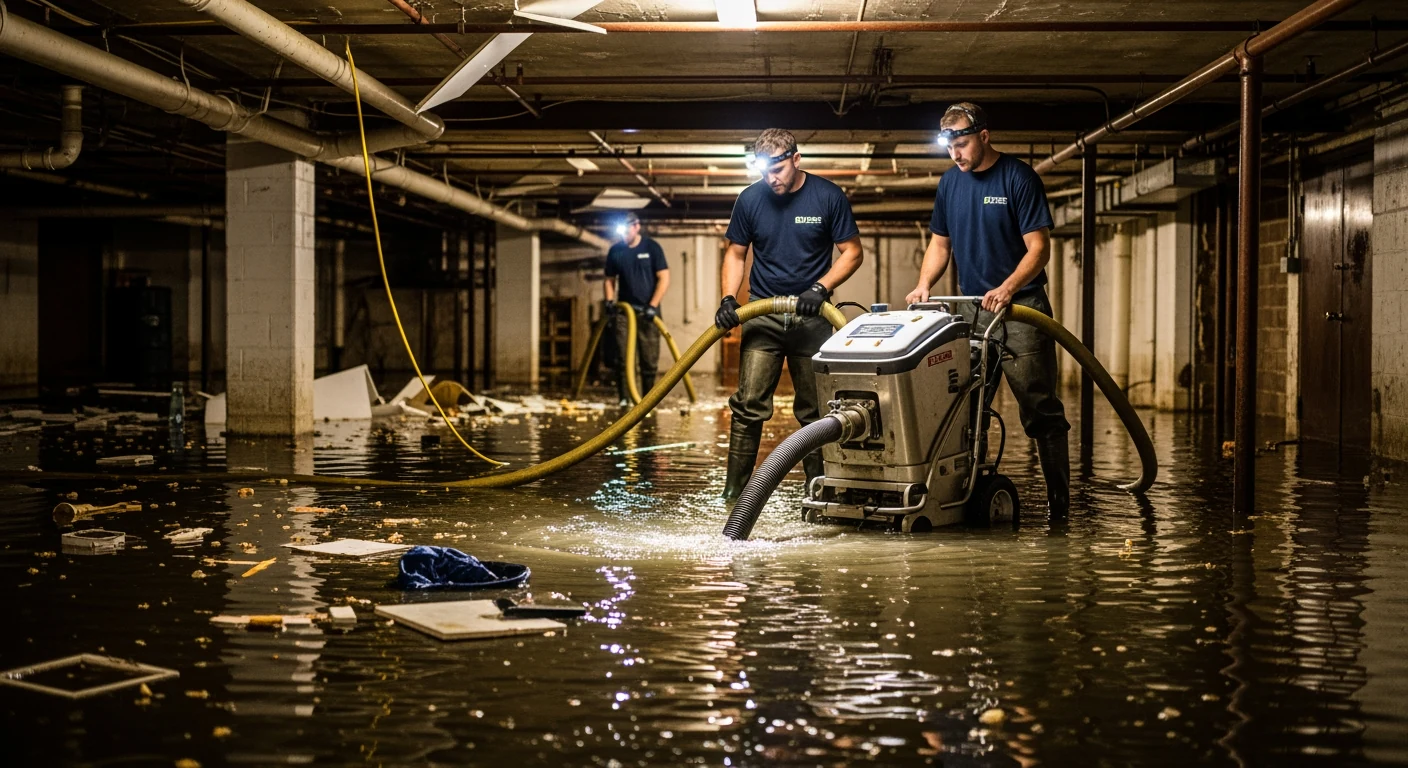
In a south shore Nassau County home during a nor’easter, sump pump failure produces 1 to 4 feet of basement water within 2 to 6 hours depending on storm intensity and water table proximity. At 4 feet of basement flooding, the entire finished basement is a Category 2 or Category 3 total loss: all drywall, insulation, flooring, cabinetry, and mechanical equipment in the flooded zone must be removed. The cost is $15,000 to $45,000. A battery-backup sump system that costs $800 to $2,000 installed is the single highest-return investment a Long Island flood-zone homeowner can make.
After a Sump Pump Failure
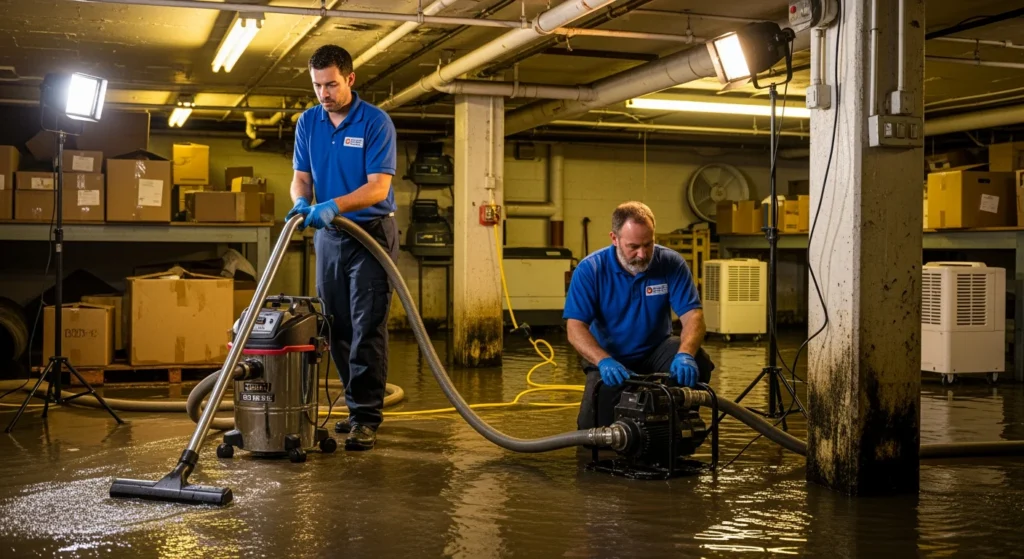
Once flooding has occurred from sump pump failure, the restoration clock starts immediately. Category determination, extraction, and structural drying must begin within 24 hours to maintain the best chance of Category 1 classification and minimum demolition scope. Upper Restoration responds to Long Island sump pump failure emergencies 24 hours a day with extraction equipment capable of handling the volumes typical in Nassau County south shore events.