Finding a pool of water in your basement in Levittown or watching water drip through the ceiling of your Brooklyn brownstone is more than a household nuisance—it is a high-stakes financial emergency. As a homeowner in the New York metropolitan area, your house is likely your most significant asset. When water starts destroying your drywall, flooring, and personal belongings, the first question that flashes through your mind isn’t just “How do I fix this?” but “Is my insurance going to pay for it?”
In my decade of experience as an insurance claims specialist and restoration professional, I have seen thousands of homeowners navigate the complex landscape of property claims. The difference between a fully funded restoration and a devastating out-of-pocket expense often comes down to two words: Sudden vs. Gradual. Understanding how insurance carriers in New York and Long Island define these terms is critical to protecting your financial future.
The Golden Rule: Sudden and Accidental
When you read through your homeowners insurance policy—a document most people only open during a crisis—you will notice a recurring phrase: “Sudden and Accidental.” This is the cornerstone of water damage coverage. According to the Insurance Information Institute (III), standard homeowners policies are designed to protect you against “perils” that are unexpected and happen in an instant.
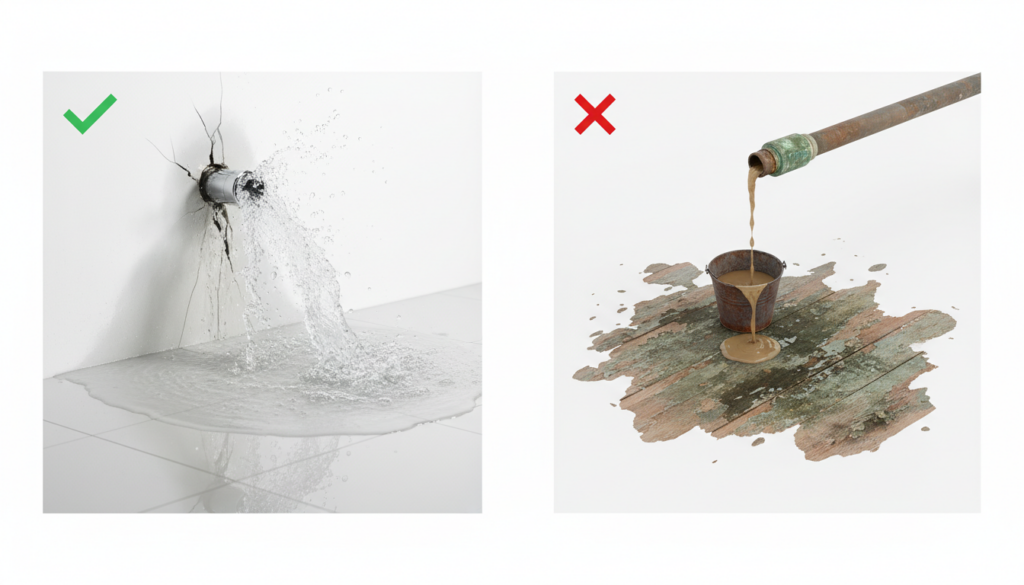
From a claims perspective, “sudden” means the damage occurred without warning. There was no way for you to foresee the event or prevent it through routine maintenance. “Accidental” means the event was not intentional. If a pipe freezes during a brutal Suffolk County winter and bursts while you are at work, that is a sudden and accidental event. The timeline is measurable in minutes or hours, not weeks or months.
Why does this distinction matter so much? Because insurance is essentially a “maintenance contract” in the eyes of many carriers. They are there to help you recover from disasters, not to pay for the upkeep of an aging home. If the water damage is the result of a singular, violent event, the carrier is much more likely to issue a check for the full scope of repairs, including professional Residential Restoration services.
Examples of Covered Losses
To help you identify where your situation might fall, let’s look at common scenarios that typically qualify as sudden and accidental. These are the claims where we, as restoration specialists, have the highest success rate in securing coverage for our clients:
- Burst Pipes: Whether due to a drop in temperature or a sudden surge in pressure, a pipe that splits open and floods a room is the “textbook” covered claim.
- Appliance Failures: If your washing machine supply hose snaps or your dishwasher’s internal pump fails suddenly, the resulting floor and cabinetry damage is usually covered.
- Water Heater Explosions: While the heater itself might not be covered (due to age), the thousands of gallons of water it releases into your basement certainly are.
- Roof Damage from Storms: If a Nor’easter rips shingles off your roof in Nassau County and rain pours into your attic, this is considered sudden storm damage.
The common thread here is the timeline. You can point to the exact day—and often the exact hour—the damage began. This clarity makes it very difficult for an insurance adjuster to argue that the damage was caused by neglect.
The ‘Gradual’ Exclusion Trap
This is where things get difficult for many Long Island and NYC homeowners. “Gradual” damage refers to water issues that have been developing over a long period. In the eyes of an insurance company, if a leak has been happening for weeks, months, or years, you should have caught it and fixed it as part of your “duty to maintain” the property.
Common examples of gradual damage that often lead to claim denials include:
- Slow Seepage: A tiny drip under a kitchen sink that eventually rots out the floorboards and causes structural decay.
- Foundation Seepage: Water slowly migrating through concrete basement walls over several seasons. (Note: This is often classified as “groundwater” or “flooding,” which requires a separate flood insurance policy).
- Worn-out Roofing: A roof that is 30 years old and has slowly started to “weep” water into the attic because the materials have reached the end of their life.
- Corroded Plumbing: Pipes that have been rusting for years and eventually develop pinhole leaks that go unnoticed behind a wall.
The “Gradual Exclusion” is the most common reason for a denied claim. Insurance companies will often send an adjuster who looks for signs of “pre-existing” conditions. If they see rusted nails, rotted wood, or extensive corrosion, they may conclude the damage has been occurring for a long time, thus labeling it as a maintenance issue rather than an insurance event.
Comparison of Coverage Scenarios
| Scenario | Typical Coverage | Classification |
|---|---|---|
| Burst Pipe | Covered | Sudden & Accidental |
| Slow Sink Leak | Denied | Gradual/Maintenance |
| Storm Roof Leak | Covered | Storm Damage |
| Seepage thru Foundation | Denied | Flood/Groundwater (Need Flood Policy) |
How We Document ‘Sudden’ Events
As an expert with over 10 years in the restoration field, I can tell you that the “truth” of your claim isn’t just what happened—it’s what you can prove happened. When we arrive at a home in Queens or Suffolk County, our job is to act as forensic investigators. To ensure your claim is classified as “sudden,” we use several high-tech tools and documentation methods:
Thermal Imaging and Moisture Mapping
We use infrared cameras to see water behind walls. If the moisture is concentrated and hasn’t yet caused structural rot, it supports the “sudden” narrative. If the thermal image shows a massive, deep-set pattern of decay, we know we have a more complex conversation ahead with the adjuster.
Plumbing Forensics
If a pipe failed, we keep the failed section. An “accidental” break looks very different from a pipe that has been slowly corroding for decades. By preserving the evidence, we provide the “financial savvy” necessary to challenge a potential denial.
Timeline Correlation
We correlate the damage with local events. Did a deep freeze hit Nassau County 24 hours before the leak? Did a massive thunderstorm roll through Long Island? Linking the damage to a specific weather event is one of the strongest ways to secure coverage.
The Role of Mold in Denials
Mold is the ultimate “tattletale” in the insurance world. Generally, mold takes 24 to 48 hours to begin growing under the right conditions. If an adjuster walks into your basement and sees colonies of black mold covering the studs, their immediate assumption is that the water has been there for a long time. This triggers the “gradual damage” exclusion.
However, it is important to know that many modern policies include a “Mold Endorsement” or “Limited Fungi Coverage.” This rider can provide a specific dollar amount (often $5,000 to $10,000) for mold remediation, even if the damage is somewhat gradual. Furthermore, if we can prove that a *sudden* event (like a burst pipe) occurred and the mold grew quickly because the water was trapped in a warm, dark space, we can often still fight for coverage.
The key takeaway? Do not wait for mold to appear. If you find water, call a professional immediately. The presence of mold significantly complicates the claims process and gives the insurance company a “loophole” to deny the entire claim based on neglect.
Filing a Successful Claim
If you find yourself standing in water, follow these steps to protect your home and your wallet:
- Stop the Source: Turn off your main water valve. Insurance companies expect you to “mitigate” the damage. Failing to turn off the water can lead to a denial for any damage that occurred *after* you discovered the leak.
- Document Everything: Take photos and videos before you start cleaning. Capture the source of the water and the extent of the spread.
- Call a Restoration Specialist Before the Adjuster: This is a trade secret. Having an expert (like our team) on-site when the insurance adjuster arrives ensures that the “sudden” nature of the damage is professionally communicated. We speak their language and can point out the evidence of accidental loss that an untrained eye might miss.
- Review Your Policy Riders: Check if you have “Hidden Seepage and Leakage” coverage. Some high-quality policies offer an endorsement that covers gradual damage if the leak was hidden behind a wall or under a floor and could not have been detected by a reasonable person.
Navigating the “Sudden vs. Gradual” divide is stressful, especially when you are dealing with the immediate mess of a flooded home. By understanding that insurance is designed for the unexpected, and by documenting your maintenance and the event itself, you put yourself in the best position to have your claim honored.
Frequently Asked Questions
Q: Does insurance cover rot from a leak?
A: Rot usually indicates long-term moisture exposure and is often excluded as a maintenance issue or negligence. However, if the rot is a secondary result of a recent, hidden sudden leak, you may have a path to coverage via specific policy endorsements.
Q: My water heater is 15 years old and it just leaked. Will insurance pay?
A: Typically, the insurance company will not pay to replace the water heater itself, as that is considered wear and tear. However, they will usually cover the “ensuing damage”—the cost to dry out your basement, replace ruined drywall, and clean the floors—because the failure was sudden.
Need help documenting your claim? We work with all adjusters to ensure your “sudden” loss is handled fairly. Contact us today for a professional assessment.