The Golden Rule Insurers Use: Sudden vs. Gradual
Every homeowners insurance decision on a water claim comes down to one question: did the damage happen suddenly, or did it develop over time? Standard policies cover water damage that is “sudden and accidental.” They exclude damage caused by gradual leaks, deferred maintenance, or wear and tear, according to the Texas Department of Insurance (TDI, 2025). This single distinction, not the amount of water or the cost of repair, decides whether a claim gets approved or denied.
The Golden Rule: Sudden and accidental water damage (burst pipes, appliance failures, storm-driven leaks) is usually covered. Gradual, neglected, or maintenance-related water damage (slow leaks, worn seals, chronic seepage) is usually denied.
We’ve walked into homes across Nassau County, Bergen County, and Fairfield County where the homeowner assumed the damage was obviously an emergency, only to find out their adjuster classified it as a maintenance issue. The water was real. The drywall was ruined either way. What changed the outcome was how the cause and timeline got documented, and that’s the part homeowners can actually control.
What Counts as “Sudden and Accidental” Water Damage (Covered)
Sudden and accidental water damage refers to loss that happens unexpectedly, without warning, rather than developing slowly, per Allied Public Adjusters. Insurers generally cover this category through standard dwelling and personal property coverage because there was no reasonable way for the homeowner to catch it in advance.
Common examples that typically qualify:
- A supply line or pipe that bursts overnight, flooding a floor before anyone wakes up
- A washing machine hose that snaps mid-cycle
- A dishwasher or water heater that fails catastrophically rather than slowly weeping
- A toilet that overflows unexpectedly
- Storm-driven water entering through a roof damaged by wind, hail, or the weight of snow or ice, as cited by John Bailey Company
Progressive’s guidance is direct on this point: if the damage is sudden, accidental, and comes from inside the home, a standard homeowners policy is likely to respond. The word “inside” matters, because water that enters from outside often falls into a different coverage category entirely, which we cover further down.
What Counts as “Gradual” Water Damage (Usually Denied)
Gradual water damage happens slowly and is often the result of the homeowner not keeping the property in good repair, per John Bailey Company. Insurers treat this as a maintenance failure rather than an insurable accident, and Investopedia confirms that policies exclude damage tied to negligence or lack of upkeep.
Examples that typically get denied:
- A bathroom sink or supply line that has been leaking for months before anyone noticed the ceiling below stain
- Worn or missing shingles that let water seep in during every rainstorm for a season
- Grout or caulking failure around a shower pan that allows chronic seepage into subfloor over years
- A slow drip inside a wall cavity that goes undetected until mold or rot surfaces
Progressive uses almost this exact scenario as its go-to example: a bathroom sink leaking for several months is unlikely to be covered, even though the resulting damage looks identical to a sudden pipe failure once the drywall comes down. Allstate is blunt about the underlying logic, stating that damage from ongoing maintenance issues, neglect, or failure to maintain heat in a property is typically excluded.
Side-by-Side Comparison: Covered vs. Not Covered
The table below lines up common sudden events against their gradual counterparts. Notice that the water source is often similar, a pipe, an appliance, a roof, but the timeline is what separates a paid claim from a denied one.
| Sudden (Usually Covered) | Gradual (Usually Denied) |
|---|---|
| Pipe bursts overnight from freezing | Pipe has a pinhole leak dripping for months inside a wall |
| Washing machine hose snaps mid-cycle | Washing machine connection has seeped slowly for a year |
| Water heater tank ruptures suddenly | Water heater has a slow corrosion leak unnoticed for weeks |
| Storm rips off roof shingles, rain pours in immediately | Worn shingles allow seepage during every rainstorm for a season |
| Toilet supply line fails and floods the bathroom | Toilet base seal has been leaking slowly under the floor |
This table is a starting point, not a verdict. Adjusters look at physical evidence, not just the category the damage seems to fit. A pipe that “burst” could still be reclassified as gradual if the insurer finds corrosion or long-term deterioration at the failure point, which is exactly why documentation matters before you file, not after.
Why Insurers Draw This Line (Maintenance & Neglect Explained)
Homeowners insurance is designed to cover unpredictable accidents, not the cost of upkeep. Insurers reason that gradual damage is something a reasonable homeowner should have caught through routine inspection, so the responsibility for prevention (and repair) shifts to the property owner rather than the insurer.
This line gets contested more often than most homeowners expect, and courts have weighed in on close cases. Advocate Magazine describes how insurers sometimes argue that even a small pipe breach should be reclassified as gradual if water leaked over time, regardless of when the homeowner actually discovered it. In one cited case, a court found no coverage because the “incremental effects of the water” on the house made it impossible to call the discharge sudden, even though the homeowner only became aware of the problem once visible damage appeared.
That’s the trap: discovery date and cause date are not the same thing to an insurer, and the gap between them is where claims get denied. The way to close that gap is documentation, which we cover in the next section.
Flood Water Is a Different Category Entirely
Flood damage, water entering a home from outside due to rising water, storm surge, or overflowing bodies of water, is excluded from standard homeowners policies regardless of whether the damage was sudden. This is a separate category from the sudden vs. gradual distinction covered above.
What About Flood Water? Standard homeowners insurance does not cover flood damage, even when it happens instantly during a storm, according to Allstate. Coverage for flooding requires a separate policy, typically through the National Flood Insurance Program (NFIP). TDI notes that mold resulting from flood water isn’t covered either, since the underlying flood exclusion applies. For tri-state homeowners in coastal zones across Long Island, the Jersey Shore, and coastal Connecticut, this distinction matters every hurricane season.
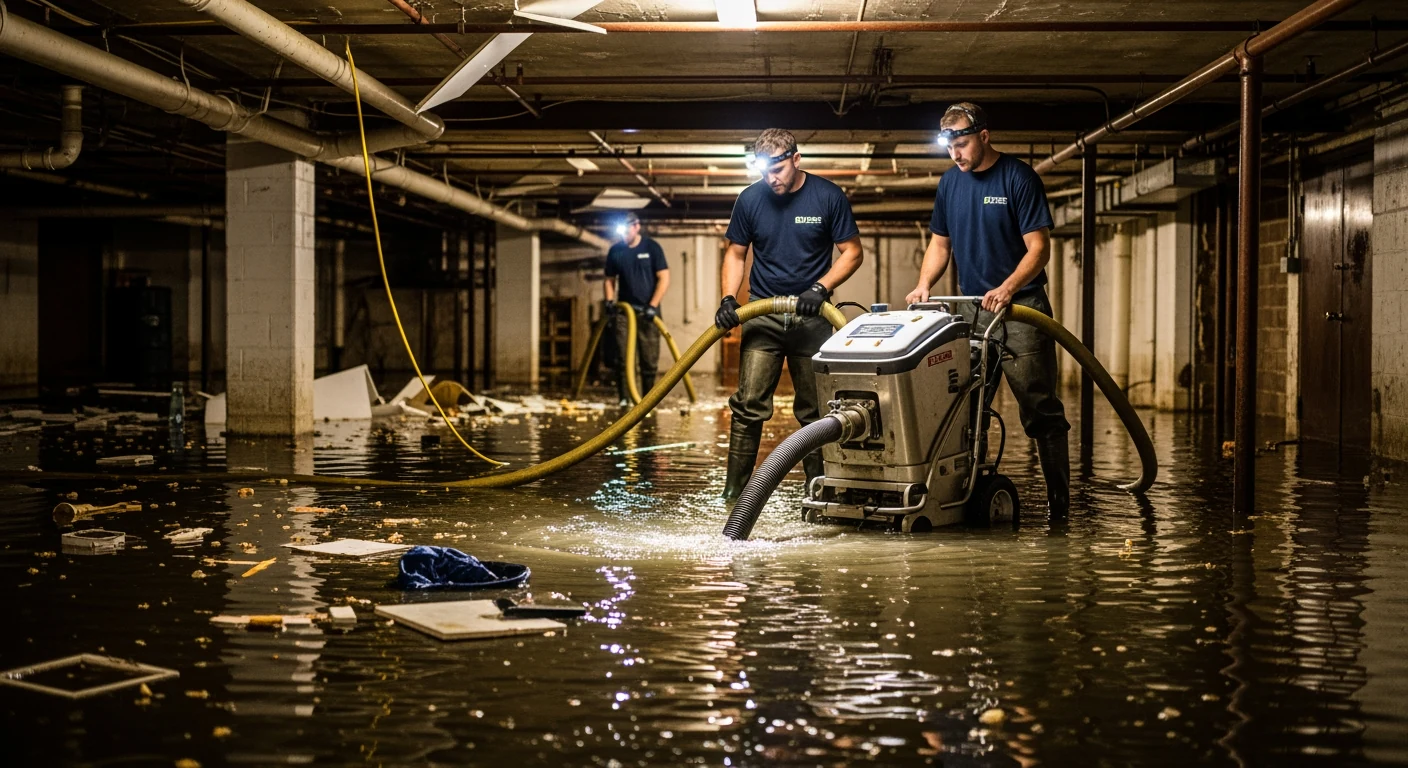
The practical takeaway: a burst pipe that floods your basement from the inside is a homeowners insurance question. A storm surge or overflowing creek that floods your basement from the outside is an NFIP question. If you’re not sure which one applies to your situation, that uncertainty is itself a reason to get a professional assessment before you file, so the cause gets documented correctly the first time.
How to Protect Your Claim: Documentation & Timing Tips
The gap between “sudden” and “gradual” is often decided by paperwork, not physics. Homeowners who document immediately and thoroughly give their claim the best chance of landing in the covered category, or at minimum avoid a denial based on incomplete information.
Document your claim before you file:
- Photograph and video the damage immediately, including the source if visible (pipe, appliance, roof)
- Note the exact date and time you discovered the damage, and write down what alerted you to it
- Pull together maintenance records showing the affected system was inspected or serviced recently
- Avoid starting cleanup or demolition before the cause and origin are documented, unless it’s needed to prevent further damage
- Call a certified restoration company to inspect and document cause, timeline, and scope before you submit paperwork
That last step is the one homeowners skip most often, and it’s the one that carries the most weight with an adjuster. A dated, photographed, professionally documented inspection report showing moisture patterns, source location, and estimated onset is far harder for an insurer to dismiss than a homeowner’s memory of when they “first noticed something.”
When to Call a Professional Before You File
Call a restoration professional before you file your claim whenever the cause of the water isn’t obvious, when you’re unsure how long the leak has been active, or when there’s any chance an adjuster could argue the damage developed gradually. Early professional documentation creates the evidentiary record insurers actually look for.
Upper Restoration technicians are trained to identify moisture patterns, pinpoint source and origin, and produce documentation that speaks the language adjusters expect, without promising a specific outcome on your claim. We can’t guarantee coverage or payout; no restoration company can. What we can do is make sure the physical evidence of cause and timeline is captured accurately, before cleanup disturbs it and before memory of the discovery date gets fuzzy.
Not sure if your water damage will be classified as sudden or gradual? Upper Restoration provides same-day assessments across NYC, Long Island, NJ, PA, and CT that document cause, timeline, and scope, the exact details insurers review when deciding a claim.
Our technicians hold EPA, IICRC, and NYS certifications relevant to water and mold remediation, and every assessment is documented in writing so you have a record to bring to your insurer or agent, whatever they ultimately decide.
Frequently Asked Questions
Is a burst pipe covered by homeowners insurance?
Yes, in most cases. A burst pipe is generally classified as sudden and accidental damage, which standard homeowners policies typically cover through dwelling and personal property coverage. However, if an insurer determines the pipe had been leaking or corroding gradually before it failed, coverage can be denied or reduced. Documentation of the sudden failure supports the claim.
Does insurance cover a slow leak?
Generally, no. Most homeowners policies exclude damage from slow, ongoing leaks because insurers classify them as maintenance issues rather than sudden accidents. If a leak developed over weeks or months before detection, the resulting water damage is typically not covered, regardless of how severe the damage eventually became.
Is flood damage covered under homeowners insurance?
No. Standard homeowners insurance policies exclude flood damage, meaning water entering from outside due to storm surge, overflowing rivers, or rising groundwater. Coverage for flooding requires a separate policy, most commonly through the National Flood Insurance Program (NFIP). This exclusion applies even when flood water enters suddenly during a storm.
Why did my insurer deny my water damage claim?
The most common reason is that the insurer classified the damage as gradual rather than sudden and accidental. This can happen even with pipe bursts if inspectors find evidence of long-term corrosion or prior leaking at the failure point. Lack of documentation about discovery date and maintenance history can also contribute to a denial.
How do I prove my water damage claim was sudden and not gradual?
Photograph the damage and source immediately, record the exact date and circumstances of discovery, and gather maintenance records showing the affected system was in good working order beforehand. A professional restoration assessment documenting moisture patterns and probable onset timing, completed before cleanup begins, provides strong supporting evidence for an adjuster’s review.
What’s the difference between sudden and gradual water damage for insurance purposes?
Sudden water damage happens unexpectedly, without warning, such as a burst pipe or ruptured appliance hose. Gradual water damage develops slowly over time, such as a chronic leak or worn roofing, and is typically tied to deferred maintenance. Insurers cover the former under standard policies and generally exclude the latter.
Can a restoration company guarantee my claim will be approved?
No. No restoration company can guarantee insurance coverage, claim approval, or a specific payout, since that decision rests with the insurer based on policy terms and adjuster review. A restoration company can document cause, timeline, and scope of damage accurately, which strengthens the evidence available when a claim is submitted.
Sources
- Texas Department of Insurance, “When are water damage and mold covered by insurance?” (2025), https://www.tdi.texas.gov/tips/when-are-water-damage-and-mold-covered-by-insurance.html
- Allstate, “Does Homeowners Insurance Cover Water Damage?”, https://www.allstate.com/resources/home-insurance/water-damage
- Investopedia, “Water Damage Insurance: What It Means, How It Works, Types”
- Progressive, “Does homeowners insurance cover water damage?”
- Allied Public Adjusters, “What Type of Water Damage Is Covered by Homeowners Insurance?”
- John Bailey Company, “Water Damage Claim, Sudden vs. Gradual”
- Advocate Magazine, “Water-damage claims: ‘Sudden and accidental'”
This content is for general informational purposes only and is not legal, medical, or insurance advice. Remediation scope, timelines, and costs vary by site conditions. Contact Upper Restoration for a professional assessment. Licensing and certifications apply per jurisdiction.