Storm damage restoration on Long Island is not a seasonal concern — it is a year-round operational reality shaped by the island’s geographic position at the confluence of Atlantic hurricane tracks and the nor’easter corridor that runs the full length of the northeastern United States coast. Long Island’s 118-mile length and dual-shore exposure to both the Atlantic Ocean and Long Island Sound means that no single storm pattern defines the island’s risk: a nor’easter in February, a remnant tropical system in October, and a severe convective storm in July can each produce significant structural damage requiring professional restoration response. The island’s building stock — aging, dense, and in many areas built within FEMA high-risk flood zones — amplifies that risk at every event.
This guide is the county-level authority document for storm damage restoration across Long Island’s 13 townships. It covers the storm types that affect Long Island, how damage patterns vary by shore and township, the restoration sequence for common storm damage scenarios, the regulatory requirements that govern emergency repairs in Nassau and Suffolk, cost benchmarks, and the insurance claim dynamics specific to Long Island storm losses.
Long Island’s Storm Damage Landscape: Four Distinct Threat Types
Atlantic Hurricanes and Tropical Remnants
Long Island’s south shore faces direct Atlantic hurricane exposure that distinguishes it from interior northeastern markets. The island sits at the right-turn point where Atlantic hurricanes recurving northward make their closest approach to the Northeast’s most densely populated suburban corridor. The historical record is instructive: the 1938 Long Island Express hurricane — a Category 3 storm at landfall — produced storm tides as high as 16.75 feet at Willets Point and remains the benchmark for catastrophic Long Island storm damage. Hurricane Sandy in 2012, while arriving as a post-tropical cyclone, produced a storm surge that exceeded FEMA 100-year flood levels at every monitoring station on the south shore of Nassau and western Suffolk, damaging or destroying 95,534 buildings across the two counties.
The restoration implication of hurricane and tropical damage on Long Island is its compounding nature. A significant hurricane produces simultaneous wind damage, storm surge flooding, and freshwater rainfall flooding — three distinct damage types that often require different restoration protocols, involve different insurance coverage triggers, and create competing restoration priorities on the same property. Upper Restoration’s emergency response planning for Long Island hurricane events accounts for all three damage streams from the first site visit.
Nor’easters
Nor’easters are the bread-and-butter of Long Island storm damage restoration — high-frequency, moderate-to-severe events that occur multiple times each year from October through April and produce a predictable portfolio of structural damage. A nor’easter approaching Long Island from the northeast tracks up the coast with counterclockwise rotation that drives wind directly onshore along the south shore and piles water against the barrier beach communities that bore the worst of Sandy’s impact. Nor’easters that coincide with high astronomical tides — the most damaging combination — can produce storm surge flooding that rivals minor hurricane events in Long Island’s south shore flood zones.
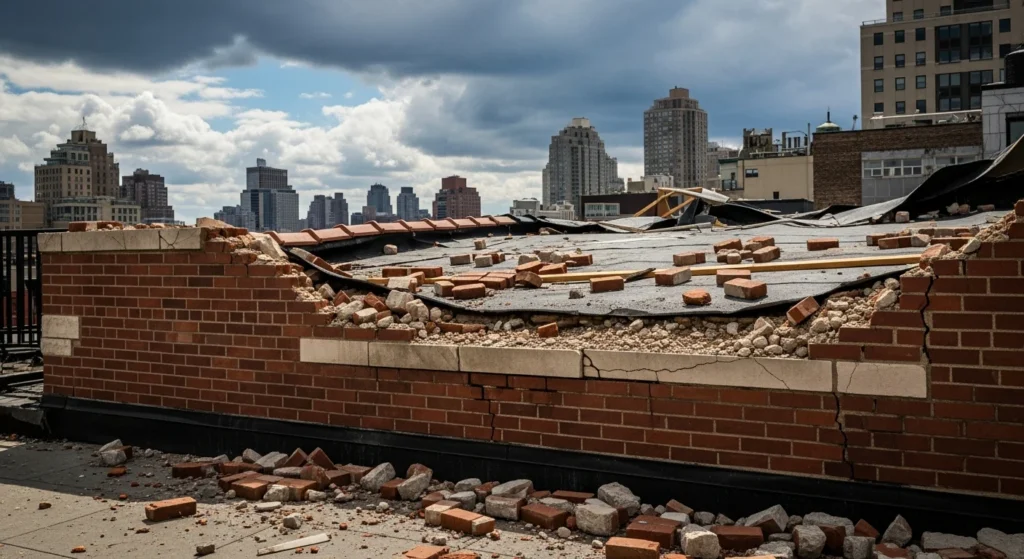
Wind damage from nor’easters follows the island’s building stock profile: Cape Cod roofs with original 1950s asphalt shingles and aged roof decking are the primary structural failure point in Nassau County nor’easter events. Original roof decking in post-war Cape Cods is frequently 1-inch pine boards with open gaps rather than plywood or OSB sheathing — when asphalt shingles fail under nor’easter winds, the decking below offers limited resistance to water infiltration. Upper Restoration’s Long Island nor’easter project data shows roof-related water intrusion as the leading damage driver, followed by fence and outbuilding failures, and storm surge flooding in south shore communities during major events.
Summer Severe Convective Storms
Long Island’s summer storm season runs from June through September and produces a different damage profile than nor’easters: shorter, more intense events with higher peak wind speeds, more lightning strikes, and localized tornado activity. The August 2024 storm that flooded St. Andrew’s Cooperative Nursery School in Smithtown was a convective event — a pattern that repeats across Suffolk County multiple times most summers. Convective storms produce more tree failure events than nor’easters, which translates to more structure penetration damage from fallen trees through roofs, and more power outage-related sump pump failures in the basements of Nassau and western Suffolk homes.
Winter Ice and Snow Events
Long Island’s winter storm damage pattern is dominated by ice dam formation and structural overload from wet snow accumulation. Ice dams form when heat loss through the roof melts snow that refreezes at the cold eaves, building an ice barrier that forces meltwater under shingles and into attic and ceiling assemblies. Long Island’s Cape Cod housing stock is particularly vulnerable because the Cape’s low eave line and limited attic ventilation create ideal ice dam conditions — warm attic air directly contacts the sloped roof deck. A typical winter season in Nassau County produces multiple ice dam events requiring emergency tarping and interior water damage restoration.
Storm Damage by Shore: How Location Shapes Restoration Scope
South Shore Nassau (Long Beach, Island Park, Freeport, Merrick, Wantagh, Five Towns)
The south shore of Nassau County sits in the highest-risk storm damage zone on Long Island. These communities face direct Atlantic storm surge from the south, are built on barrier beach and bay fill with essentially no natural flood mitigation, and have a housing stock that has experienced repeated storm events over 70 years without systematic structural hardening. Storm damage restoration in these communities routinely involves the full compounding pattern: wind damage to roofs and siding, storm surge flooding in basements and first floors, and secondary mold from moisture events that were incompletely dried. The post-Sandy baseline in these communities means many homes have entered subsequent storm seasons with pre-existing structural vulnerability.
South Shore Suffolk (Lindenhurst, West Babylon, Amityville, Bay Shore, Patchogue)
The south shore of Suffolk carries similar risk to Nassau’s south shore but with a different infrastructure context. Great South Bay is wider and shallower than Reynolds Channel and Jamaica Bay, and the bay communities in Babylon, Islip, and Brookhaven townships have varying degrees of barrier protection from barrier beaches and barrier islands. Communities directly on Great South Bay without barrier protection — including portions of Lindenhurst, Amityville, and Babylon — sustained severe Sandy damage and carry the same compounding storm damage profile as Nassau’s south shore.
North Shore (Huntington, North Hempstead, Oyster Bay North Shore, Smithtown Bay)
The north shore of Long Island faces Long Island Sound exposure rather than Atlantic exposure. Sound storms produce wind-driven waves and surge along the north shore during nor’easters but typically generate less storm surge than Atlantic events. The north shore’s primary storm damage profile is wind damage to older housing stock in the densely wooded communities along the Sound shore, combined with tree failure in the large-lot residential areas of Cold Spring Harbor, Centerport, and Northport. North shore storm damage restoration is more commonly wind and tree damage rather than the compounding storm surge pattern of the south shore.
East End (Southampton, East Hampton, Riverhead, Southold)
The East End townships face hurricane direct-hit exposure that western Long Island communities do not. A major Atlantic hurricane tracking the typical recurving path passes directly over or adjacent to Southampton and East Hampton before reaching Nassau and western Suffolk. The Hamptons’ high-value construction also means higher per-project restoration dollar values, but the East End’s lower density means less of the compounding adjacency damage that characterizes Nassau’s dense Cape Cod communities. Southold and the North Fork face both Sound exposure from the north and Peconic Estuary exposure from the south during major storm events.
Emergency Storm Damage Response: The First 48 Hours
The restoration value created or destroyed in the first 48 hours after a Long Island storm event is enormous. Emergency stabilization before secondary damage sets in — before roof intrusion becomes ceiling collapse, before storm surge flooding becomes Category 3 mold, before structural openings become unauthorized entry — is the most high-leverage intervention in storm restoration.
Emergency roof tarping: A compromised roof in Long Island’s climate cannot wait for adjuster approval. A standard 10×12 section of missing shingles allows 60+ gallons of water per hour to enter the structure during a modest rain event. Upper Restoration deploys emergency tarping throughout Nassau and Suffolk within hours of storm clearance, before permit requirements and adjuster authorization create delays. Tarping documentation establishes the damage baseline for the insurance claim.
Emergency board-up: Structural openings from storm impact — broken windows, breached walls, door failures — require immediate closure for security and weather protection. In Nassau County’s dense suburban communities, an unsecured storm-damaged property becomes a safety and liability issue within hours.
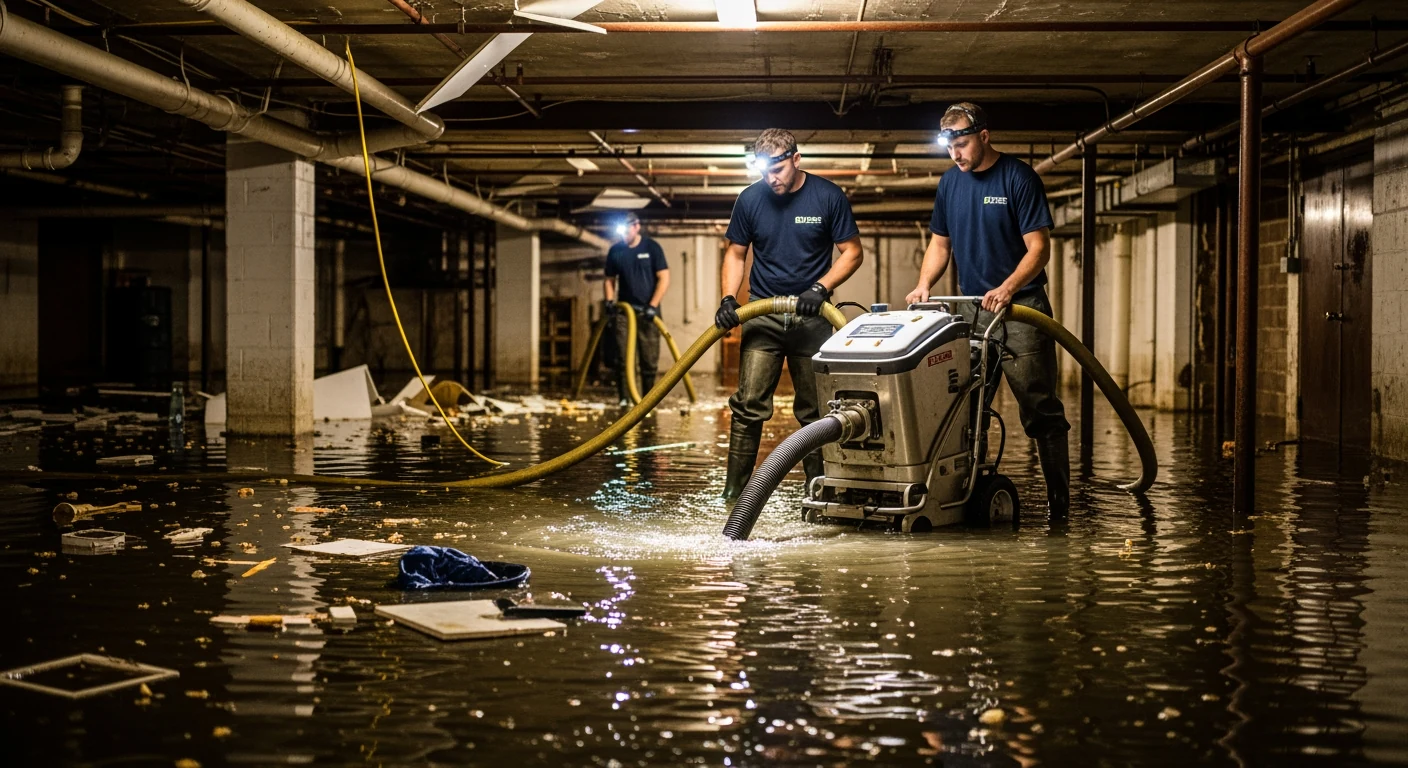
Water extraction: Storm surge or storm-driven water in basements must be extracted within 24 to 48 hours to prevent Category 1 water damage from escalating to mold conditions. In south shore communities where the water may be Category 3, extraction must be followed immediately by the full decontamination protocol.
Regulatory Context for Storm Damage Repairs on Long Island
Emergency storm repairs — tarping, board-up, water extraction — can proceed without permits under emergency exemptions in all Long Island townships. However, structural repairs following storm damage require building permits from the applicable town building department. This is where Long Island’s township-by-township regulatory variation becomes operationally important: the Town of Hempstead, the Town of Islip, and the Town of Brookhaven each have distinct permit requirements, inspection protocols, and processing timelines that affect the reconstruction phase of storm restoration projects.
FEMA flood zone properties in Nassau and Suffolk that sustained storm damage must also comply with the Substantial Damage rule: if a structure in a FEMA Special Flood Hazard Area sustains damage exceeding 50 percent of the pre-damage market value, the repair must bring the structure into full compliance with current flood zone requirements — including foundation elevation to the Base Flood Elevation plus freeboard. This rule, enforced by town building departments, has transformed storm damage repairs into full structural renovations for many south shore Nassau and Suffolk homeowners following Sandy and subsequent events.
Cost Benchmarks for Storm Damage Restoration on Long Island
- Emergency tarping and board-up (immediate response): $800-$3,500 depending on roof area affected and number of structural openings. This scope is typically covered under the emergency stabilization provision of the homeowners policy.
- Roof damage restoration (shingle replacement, decking, flashing): $8,000-$28,000 for a typical Nassau or western Suffolk residential roof replacement following storm damage. Long Island roofing labor costs run 25 to 40 percent above national averages.
- Storm surge flooding (south shore residential, Category 1 or Category 3): $15,000-$45,000+ depending on Category classification, extent of finish demolition required, and whether FEMA Substantial Damage triggers full compliance reconstruction.
- Tree impact through roof (moderate structural damage): $18,000-$55,000 for structural repair, roof replacement, interior water damage remediation, and reconstruction of affected rooms. Tree removal from structural penetrations is a specialized scope requiring crane access in Nassau’s dense residential streetscape.
Township Storm Damage Data Files
Upper Restoration maintains township-specific storm damage restoration data files for all 13 Long Island townships. Each file addresses the specific storm exposure, historical event data, regulatory context, and cost benchmarks for that township. Links coming as township files are published.