The South Shore of Long Island presents one of the most complex flood damage environments in the northeastern United States. From Long Beach to Babylon, the combination of barrier island geography, Jamaica Bay tidal influence, and aging stormwater infrastructure creates a flood profile that is both highly predictable and routinely catastrophic for Nassau County homeowners. South Shore Long Island flood damage is not an occasional emergency — it is a recurring cycle that requires systematic preparation, immediate response, and strategic long-term mitigation.
The Physical Geography of South Shore Flooding
The South Shore’s vulnerability begins with its geology. Unlike the North Shore’s glacial till bluffs, the South Shore barrier islands — Long Beach, Lido Beach, Point Lookout — are narrow spits of sand sitting at or below mean high water. Behind them, Great South Bay, Hempstead Bay, and South Oyster Bay are shallow, warm, and in direct communication with the Atlantic during storm events.
When a northeastern or tropical system approaches, bay-side flooding often begins 12 to 18 hours before oceanside surge, as wind-driven water piles into the shallow bays. Communities like Freeport, Oceanside, and Massapequa flood from the bay side — from canals and tidal creeks that reverse flow and inundate streets and basements before the peak ocean surge arrives. Nassau County flood damage statistics from FEMA’s NFIP database consistently rank Nassau County among the top 10 counties nationally for flood claim frequency.
Post-Storm Assessment: The First 72 Hours
The 72-hour window immediately following a South Shore flood event is the most consequential period for long-term structural outcomes and mold prevention. Before any remediation begins, a structural assessment must confirm that floor joists, foundation walls, and load-bearing elements have not been compromised by hydrostatic pressure or scour.
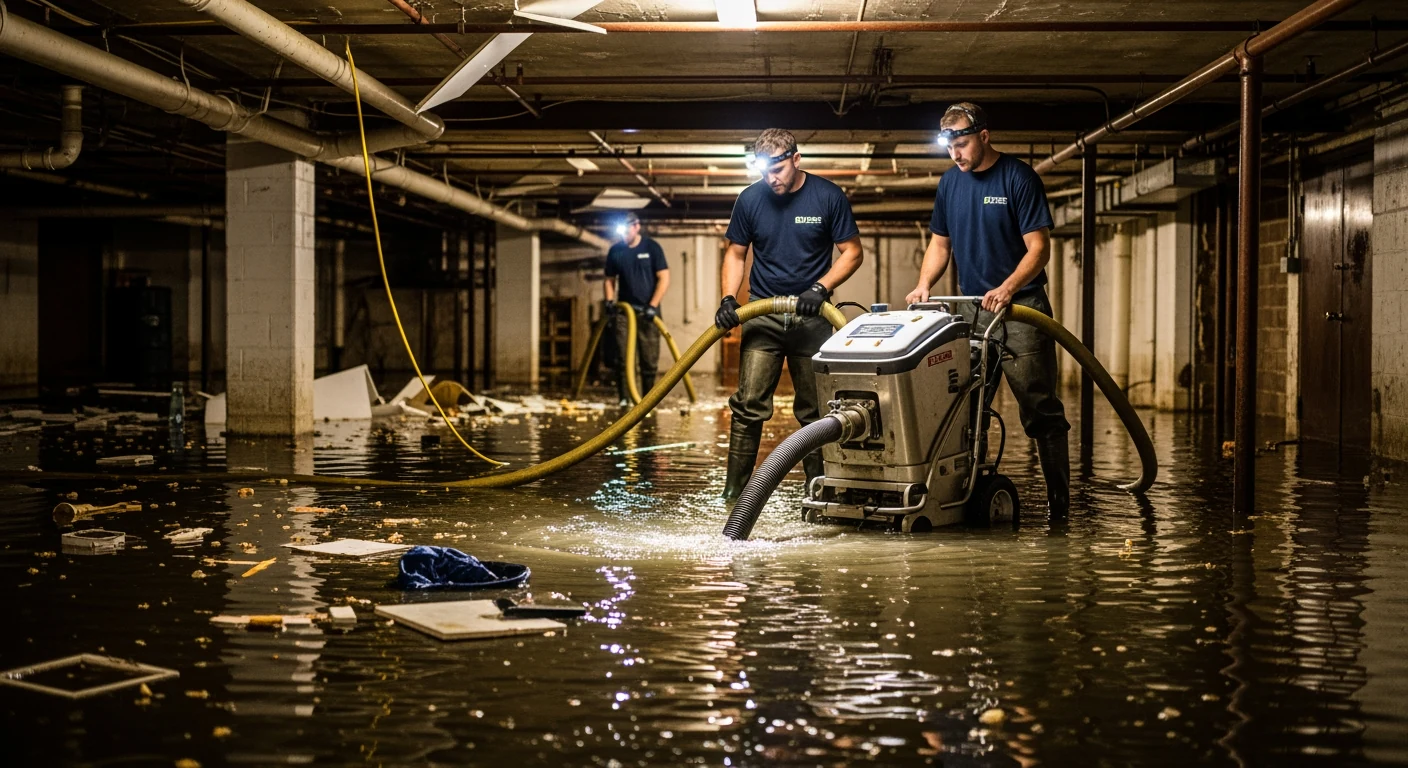
South Shore flooding almost universally involves Category 3 (black water) contamination due to sewer surcharge, marine water intrusion, and hazardous material mixing from neighboring properties. IICRC S500 Category 3 protocols require full PPE, aggressive antimicrobial treatment, and in most cases, controlled demolition of porous materials that cannot be adequately decontaminated. Flood-affected contents must be triaged within 24 to 48 hours — items salvageable through freeze-drying or specialized document recovery must be separated from items destined for disposal.
Navigating the Nassau County NFIP Claims Process
The vast majority of South Shore homeowners with flood coverage carry NFIP policies. Under standard NFIP policy terms, a Proof of Loss must be filed within 60 days of the loss — missing this deadline can jeopardize the entire claim regardless of coverage eligibility. After a major regional storm event, adjuster availability can be severely constrained. Upper Restoration documents all flood losses photographically and with moisture readings at the time of initial response, creating a record that supports the claims process even when adjuster inspections are delayed by weeks.
Long-Term Flood Mitigation for Nassau County Properties
FEMA’s Increased Cost of Compliance (ICC) provision in NFIP policies provides up to $30,000 toward mitigation measures, including elevation, after a substantial damage determination. Home elevation can dramatically reduce flood insurance premiums and physical loss exposure in high-frequency flood zones. For homes in V zones along the barrier islands, code-compliant breakaway walls and FEMA-certified flood vents allow water to flow through the foundation rather than creating destructive hydrostatic pressure. Battery-backup sump pump systems with water-powered secondary pumps provide protection during the power outages that are nearly universal during South Shore storm events.
Frequently Asked Questions
What areas of Nassau County flood most frequently?
The highest-frequency flood communities in Nassau County are along the South Shore: Freeport, Oceanside, Merrick, Massapequa, Long Beach, Lido Beach, and Point Lookout. These communities are in FEMA Special Flood Hazard Areas AE and VE zones and have historically high NFIP claim frequencies.
How long does flood cleanup take on the South Shore?
Initial extraction and Category 3 decontamination for a typical basement or first-floor inundation takes 2 to 4 days. Structural drying typically requires 5 to 7 days. Full restoration including controlled demolition, rebuilding, and finishing can take 4 to 12 weeks depending on scope and contractor availability after a regional storm event.
Is South Shore flood damage covered by homeowner’s insurance?
Standard homeowner’s insurance (HO-3) excludes flood damage from surface water or storm surge. South Shore homeowners in FEMA flood zones are typically required by their mortgage lenders to carry NFIP flood insurance. Private flood insurance is increasingly available and often provides broader coverage, including higher limits for contents and additional living expenses.
What is the NFIP claims deadline after a flood?
Under standard NFIP policy terms, you must file a Proof of Loss within 60 days of the flood. After major regional events, FEMA sometimes extends this deadline via presidential disaster declaration, but do not assume an extension will be granted — begin documentation and notification to your insurer immediately.