Why Smoke Damage Is More Complex Than It Looks
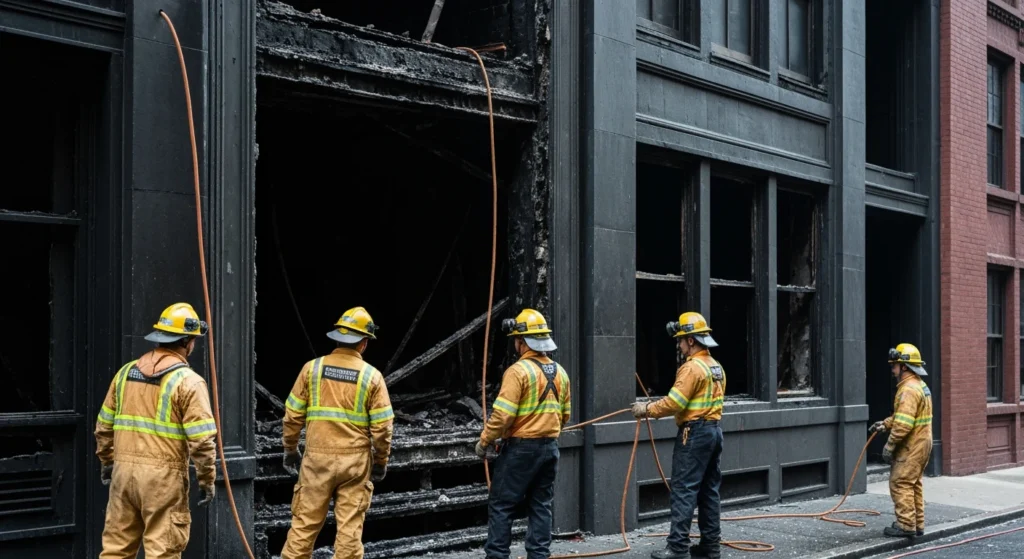
The visible soot on walls and ceilings after a fire is only part of the problem. Smoke is a suspension of fine particles, gases, and volatile organic compounds (VOCs) that penetrates porous materials, travels through HVAC ductwork, and deposits on surfaces throughout a building — often in rooms far from the fire origin.
In NYC brownstones, pre-war apartment buildings, and Long Island homes with forced-air heating, smoke distribution through building systems can affect every room in the structure. The IICRC S700 Standard for Professional Smoke and Fire Damage Restoration classifies smoke residues by type — wet smoke, dry smoke, protein smoke, and fuel oil smoke — because each requires different cleaning agents and methods. Using the wrong cleaning method on the wrong smoke type permanently sets the residue and damages the surface.
Types of Smoke Residue and How They’re Treated
| Smoke Type | Source | Appearance | Treatment |
|---|---|---|---|
| Dry smoke | Fast-burning, high-heat fires (paper, wood) | Dry, powdery, grey | Dry cleaning methods first, then wet |
| Wet smoke | Slow-burning, low-heat fires (rubber, plastic) | Smeary, sticky, strong odor | Wet cleaning, degreasers |
| Protein smoke | Kitchen fires, food burning | Nearly invisible film, extreme odor | Enzyme-based cleaners, specialized deodorization |
| Fuel oil smoke | Furnace puffbacks, oil fires | Heavy black soot, oily residue | Dry sponge first, then oil-based cleaners |
The Smoke Damage Repair Process
Step 1: Assessment and Scope Determination
Before any cleaning begins, a trained technician maps the extent of smoke distribution using air quality testing and visual inspection. This determines which rooms require remediation, which materials can be cleaned versus must be replaced, and whether HVAC cleaning is required. In pre-1980 buildings, surface sampling for asbestos is mandatory before any sanding, dry-sponging, or demolition of suspect materials.
Step 2: HVAC Isolation and Duct Cleaning
HVAC systems are isolated first to prevent recirculating smoke residues during cleaning. Air handling units, filters, coils, and ductwork that passed smoke are cleaned using HEPA-filtered negative air equipment. Contaminated filters are replaced. In NYC buildings with shared HVAC systems, coordination with building management is required — smoke from one unit can contaminate ductwork serving multiple apartments.
Step 3: Dry Cleaning Pass
Dry smoke residues are removed first using dry chemical sponges and HEPA vacuuming. The IICRC S700 protocol specifies dry cleaning before wet cleaning for most smoke types — applying water or wet cleaners to dry smoke residue drives it deeper into porous surfaces, making permanent staining more likely. This sequencing is where inexperienced cleaners most commonly fail.
Step 4: Wet Cleaning and Degreasing
After dry cleaning, surfaces are wet-cleaned with appropriate agents matched to the smoke type. Walls and ceilings receive multiple passes. Cabinets, trim, and hard surfaces are wiped down. Porous materials that cannot be adequately cleaned — heavily soot-contaminated drywall, insulation, acoustic ceiling tiles — are removed and replaced rather than cleaned in place.
Step 5: Odor Neutralization
Smoke odor is the hardest part. VOCs and char compounds embed themselves in drywall, wood, insulation, and soft furnishings. Surface cleaning alone will not eliminate odor — the compounds are embedded in the material matrix. Professional deodorization methods include:
- Thermal fogging: A petroleum-based deodorant is heated to create a fog that penetrates surfaces at the same rate the original smoke did — neutralizing embedded odor compounds
- Hydroxyl generators: Produce hydroxyl radicals that break down VOC chains — safe for use in occupied structures and effective for ongoing odor control
- Ozone treatment: Highly effective but requires complete evacuation — ozone at treatment concentrations is dangerous to humans and animals and must be used in unoccupied spaces only
Step 6: Content Cleaning and Pack-Out
Personal property — furniture, clothing, documents, electronics — requires separate content cleaning. Items with significant soot contamination are packed out to a controlled cleaning facility. Ultrasonic cleaning, ozone chambers, and specialized textile cleaning processes restore items that would otherwise be total losses. Insurance policies typically cover content cleaning as part of a smoke damage claim.
Smoke Damage and Asbestos in NYC and Long Island Buildings
In pre-1980 buildings — the majority of NYC’s housing stock and a significant portion of Long Island’s — smoke damage remediation intersects with asbestos in two ways:
- Fire-disturbed asbestos materials: When fire damages ceilings, walls, or flooring in pre-1980 construction, asbestos-containing materials may be disturbed or destroyed. Under NYC Local Law 76, testing is required before any remediation work disturbs suspect materials.
- Cleaning activities that disturb asbestos: Dry-sponging or sanding surfaces with asbestos-containing joint compound or textured coatings generates fiber release. Technicians must test suspect surfaces before mechanical cleaning methods are applied.
A smoke damage contractor working in NYC or Long Island who skips asbestos screening is creating liability exposure for both themselves and the property owner. Upper Restoration integrates asbestos testing into every smoke damage assessment in pre-1987 buildings as a standard protocol.
Smoke Damage Repair Cost in NYC and Long Island
| Scope | NYC / LI Cost Range | Notes |
|---|---|---|
| Single room (minor smoke) | $1,500–$4,000 | Cleaning + deodorization |
| Multi-room smoke throughout | $5,000–$15,000 | HVAC cleaning included |
| Full structure smoke remediation | $12,000–$35,000 | Major fire, whole-building scope |
| Content cleaning (pack-out) | $2,000–$10,000+ | Separate from structural work |
| HVAC system cleaning | $1,500–$5,000 | Often required even for minor fires |
Frequently Asked Questions About Smoke Damage Repair
Can smoke damage be cleaned or does everything need to be replaced?
It depends on the smoke type, material porosity, and contamination level. Non-porous hard surfaces — tile, metal, glass, sealed wood — can typically be cleaned. Porous materials — drywall, insulation, carpet, unfinished wood — absorb smoke compounds and may require replacement if heavily contaminated. The IICRC S700 standard guides the clean-versus-replace decision for each material type.
How do you get rid of smoke smell after a fire?
Surface cleaning alone will not eliminate smoke odor — VOCs and char compounds embed in the material matrix. Professional deodorization requires thermal fogging, hydroxyl generation, or ozone treatment depending on occupancy status and severity. Materials with severe odor penetration — heavily contaminated drywall, insulation, soft furnishings — must be removed and replaced, not just treated.
How long does smoke damage remediation take?
Single-room smoke damage typically takes 2–5 days including cleaning and deodorization. Multi-room projects run 5–14 days. Whole-building smoke remediation following a significant fire can take 3–6 weeks before reconstruction begins. HVAC cleaning adds 1–2 days. In NYC buildings with asbestos screening requirements, add 3–5 days for testing and results before cleaning of suspect surfaces can proceed.
Does insurance cover smoke damage repair?
Standard homeowners and commercial property policies cover smoke damage as part of fire damage claims. Content cleaning — pack-out and restoration of personal property — is typically covered under the contents portion of the policy. Document all affected items and surfaces before any cleaning begins. An adjuster should inspect before major remediation work starts whenever possible.
Is smoke damage from a neighboring unit covered by my insurance?
In NYC apartments and co-ops, smoke damage from a fire in an adjacent unit is typically covered by your own policy under the property damage provision — regardless of which unit caused the fire. The liability chain between units and building ownership is complex, and pursuing the responsible party’s insurer is possible but often slow. Filing your own claim for prompt remediation and then subrogating against the responsible party’s insurer is the practical approach.