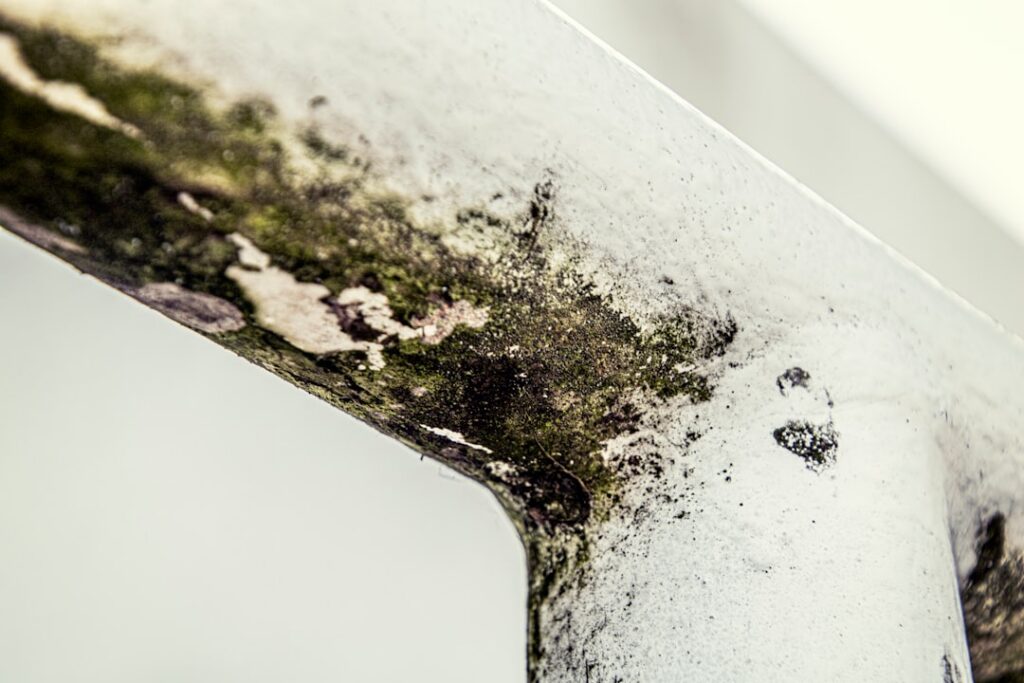
The Problem With Hidden Mold: Why “I Don’t See Anything” Doesn’t Mean You’re in the Clear
Hidden mold grows behind walls, under flooring, and inside HVAC systems without ever producing a visible patch you’d recognize on sight. The EPA notes that a building can smell moldy with no visible source, especially where a past leak or flood wasn’t fully dried within 24 to 48 hours. Musty odor, water stains, and health symptoms are often the only clues available before an inspection confirms the problem.
Most homeowners assume mold announces itself with green or black fuzz on a visible surface. That’s true for surface mold you can wipe off a bathroom tile. Hidden mold behaves differently. It grows on the back side of drywall, on the underside of subfloor, inside wall cavities around a slow plumbing leak, or in the coils of an air handler. By the time it’s visible, it’s usually been established for weeks or months, and the affected area is larger than what you can see from the front.
This is why the New York State Department of Health frames mold detection as a process of following secondary evidence rather than waiting for visual proof. Look for staining, warping, and odor. Follow your nose. Mold hides behind walls, under carpets, and in crawl spaces precisely because those are the places moisture accumulates and air doesn’t circulate.
The good news: you don’t need a lab to start narrowing things down. The next section walks through the five signs that most reliably point to a hidden moisture and mold problem, so you know what to check before deciding whether this is a weekend project or a call to a certified inspector.
5 Warning Signs of Hidden Mold in Your Home
Five signs reliably indicate possible hidden mold: persistent musty odor, allergy-like symptoms tied to being in the home, water stains or discoloration, warped or bulging materials, and recurring condensation. Any one sign warrants a closer look; two or more together justify a professional moisture inspection.
Musty Odor That Won’t Go Away
The National Association of REALTORS® calls a musty, rotting-wood smell “perhaps the most surefire way to detect mold.” If you smell it in one room consistently, especially near an exterior wall, a bathroom, or a basement corner, that’s your moisture source pointing at itself. Air fresheners mask this. They don’t fix it.
Allergy Symptoms That Track With Being Home
Sneezing, a runny nose, or itchy eyes that show up outside of allergy season, or specifically when you walk into a particular room, are a pattern worth logging. NAR flags this timing correlation as a meaningful clue, distinct from seasonal allergies that fluctuate with pollen counts outdoors rather than with which room you’re standing in.
Water Stains or Unexplained Discoloration
A yellow-brown ring on a ceiling, a dark patch on drywall, or discolored grout lines all suggest water intrusion happened, even if it happened once and dried on the surface. NAR points out that mold takes on the color of whatever it’s feeding on, so it isn’t always green or black. Strange coloring on a wall, whatever the hue, deserves a second look rather than a coat of paint.
Warped, Bulging, or Peeling Materials
Wallpaper that’s lifting at the seams, wood trim that’s cupped or swollen, or a section of ceiling that feels soft or bows slightly under light pressure all indicate trapped moisture behind the surface. Bactronix identifies bulging or soft wall and ceiling sections as one of the clearer physical signs that moisture has been sitting inside a wall cavity long enough to compromise the material.
Persistent Condensation on Windows, Pipes, or Walls
If your windows fog up regularly, or you notice beads of water on cold water pipes or exterior walls, your indoor humidity is likely running high enough to feed mold growth. The EPA and Harvard Health both point to condensation as a visible signal that indoor humidity may be sitting above the range where mold struggles to establish itself.
Humidity benchmark: The EPA and Harvard Health recommend keeping indoor relative humidity between 30% and 50%, and no higher than 60%. A basic hygrometer, sold at most hardware stores, tells you where your home actually sits.
Where Hidden Mold Likes to Hide: High-Risk Areas to Inspect
Hidden mold concentrates in areas with recurring moisture and limited airflow: bathrooms, basements, attics, behind appliances, around plumbing lines, and inside HVAC systems. Harvard Health and Bactronix recommend inspecting these zones with a flashlight at least twice a year, checking for discoloration, staining, or bubbling paint.
| Area | What to Check |
|---|---|
| Bathrooms | Grout lines, under sink cabinets, behind toilet base, exhaust fan housing |
| Basements | Foundation walls, floor/wall joints, sump pump area, stored cardboard boxes |
| Attics | Roof decking near vents, insulation for staining, signs of past leaks |
| Behind appliances | Refrigerator door seals, washing machine hose connections, dishwasher base |
| Plumbing lines | Under sinks, around water heaters, supply lines to toilets and showers |
| HVAC system | Return vents, ductwork joints, coil pans, condensate drain lines |
Harvard Health specifically flags window moldings and the areas around air conditioners as commonly overlooked spots, since both generate condensation cycles that repeat daily during humid months. If odor or symptoms persist after checking these visible zones, the next step is looking underneath and behind carpets, wallpaper, and built-in cabinetry, which usually requires pulling back a section of material rather than a quick flashlight scan.
Health Symptoms That May Signal a Mold Problem
Common mold-related symptoms include nasal congestion, coughing, eye irritation, and a runny nose, according to Harvard Health Publishing and Healthline. People with asthma, allergies, or compromised immune systems may experience more pronounced reactions. Symptoms that improve when you leave the home and return when you’re back are a meaningful pattern.
Harvard Health notes that mold exposure can trigger inflammation beyond just the respiratory tract, and that people with asthma or existing lung disease tend to notice symptoms more acutely than others in the same household. That’s part of why two people in the same home can disagree about whether there’s “really” a problem: sensitivity varies, and mild exposure doesn’t affect everyone the same way.
None of this is a substitute for a medical evaluation. If you or a family member has ongoing respiratory symptoms you suspect are tied to your home environment, talk to a physician about it directly. This article can help you connect the dots between symptoms and a physical inspection, not diagnose a health condition.
How to Confirm What You Suspect: Simple Inspection Steps and Tools
A moisture meter measures water content inside walls or flooring without cutting into the material, and an infrared camera identifies cold spots that often correlate with trapped moisture. Both tools help confirm a suspected leak location before you open a wall, though Bactronix notes that a professional assessment remains more reliable than a consumer air-quality test kit.
Start with what’s free: the flashlight walkthrough described above, a hygrometer reading in the rooms where you’ve noticed odor or symptoms, and a close look at any ceiling or wall that’s ever had a stain, even an old one that seems to have dried up. Press gently on any suspicious drywall or wood trim; if it gives or feels soft, moisture is likely still present behind it.
If those checks turn up a positive humidity reading, a soft spot, or a moisture meter reading above baseline for the material, you’ve moved from suspicion to confirmed moisture problem. At that point the question isn’t whether to act, it’s how big the job is and who should handle it, which is exactly what the next two sections cover.
DIY Cleanup vs. When to Call a Professional
The New York State Department of Health and Harvard Health both use size as the primary threshold: areas smaller than roughly 3 feet by 3 feet (under 10 square feet) can often be cleaned with soap and water or a diluted bleach solution and proper ventilation. Larger areas, recurring growth, or households with mold-sensitive occupants call for a licensed remediation professional.
DIY vs. Call a Pro, at a glance: Under 3ft x 3ft (roughly 10 sq ft), isolated, no occupant sensitivity: cleanable with soap/water or a bleach solution (1 cup bleach per 5 gallons water) with gloves, eye protection, and open windows. Larger than that, recurring after cleaning, hidden behind walls/flooring, or affecting someone with asthma or a compromised immune system: call a licensed remediation contractor. (Source: NYS DOH, Harvard Health Publishing)
The size threshold matters less than what’s underneath it. A small visible patch on drywall can sit above a much larger hidden colony if the original leak went undetected for weeks. This is the scenario where DIY cleanup treats the symptom, not the source, and the mold returns within a season. NYS DOH is direct on this point: the first step in any cleanup, DIY or professional, is identifying and correcting the moisture source itself, whether that’s a plumbing leak, a roof leak, or a condensation problem. Wet porous materials, like carpet, insulation, or ceiling tile, that can’t be thoroughly dried usually need to be discarded rather than cleaned.
If you’re not sure which category your situation falls into, that uncertainty is itself a reason to get a professional opinion rather than guess. A certified inspector can confirm scope in a single visit, which either gives you the all-clear to handle it yourself or tells you exactly what a remediation crew needs to do.
Not sure if what you’re seeing is a DIY fix or something bigger? Upper Restoration’s EPA, IICRC, and NYS-certified team offers free same-day consultations across the tri-state area to assess hidden moisture and mold before it spreads further.
Preventing Hidden Mold From Coming Back
Preventing recurring mold means controlling moisture at its source: ventilate bathrooms and kitchens during and after use, fix plumbing leaks within 24 to 48 hours, keep indoor humidity between 30% and 50%, avoid carpet in high-moisture rooms, and replace HVAC filters every one to three months to limit spore circulation.
Healthline recommends steering clear of carpeting in bathrooms, laundry rooms, and basements altogether, since carpet fiber holds moisture longer than hard flooring and gives mold a foothold that’s harder to spot. Running exhaust fans during showers and while cooking, and opening a window when weather allows, cuts down the ambient humidity that condenses on cold surfaces overnight.
Outside the house, check that your gutters and grading direct water away from the foundation rather than toward it. A surprising number of basement moisture problems trace back to a downspout dumping water two feet from the foundation wall instead of six feet away. Inside, don’t let wet towels or damp laundry pile up in a hamper for days, and if you repaint a previously damp surface, let it fully dry first and consider a mold-inhibiting primer.
Bactronix’s recommendation to swap HVAC filters every one to three months is worth automating with a calendar reminder, since a clogged filter both recirculates spores and reduces the airflow that helps keep humidity even throughout the house. None of these habits require special equipment, and together they address the root causes behind most of the five warning signs covered earlier in this article.
Frequently Asked Questions
Why does my house smell musty even though I don’t see mold anywhere?
A musty odor without visible mold usually means growth is happening behind a wall, under flooring, or inside an HVAC system where moisture has been trapped. The National Association of REALTORS® identifies musty odor as one of the most reliable indicators of hidden mold, even before any visible growth appears on a surface.
Could my allergy symptoms or coughing be caused by mold in my walls?
Possibly. Harvard Health Publishing and Healthline note that mold exposure can cause nasal congestion, coughing, and eye irritation, particularly in people with asthma or allergies. Symptoms that appear only in certain rooms or outside your usual allergy season are worth tracking and discussing with a physician alongside a home moisture inspection.
Is a water stain on my ceiling or wall a sign of mold underneath?
A water stain confirms that moisture reached that surface at some point, which creates conditions where mold can grow behind it. The National Association of REALTORS® lists water stains on walls, ceilings, and carpeting as a direct signal of possible hidden mold, especially if the stain has grown or recurred.
Which areas of my home are most likely to have hidden mold?
Bathrooms, basements, attics, areas behind appliances, plumbing lines, and HVAC systems are the highest-risk zones, according to Harvard Health Publishing and Bactronix. These areas combine recurring moisture exposure with limited airflow, creating conditions favorable to mold growth that isn’t visible from a quick glance.
Can I check for hidden mold myself, or do I need a professional?
You can perform an initial check yourself using a flashlight, a hygrometer to measure humidity, and visual inspection for staining or soft spots. Confirming what’s happening inside a wall or under flooring typically requires a moisture meter, infrared camera, or professional inspection for a reliable result.
How much mold is a DIY cleanup versus a call-a-professional situation?
The New York State Department of Health and Harvard Health Publishing indicate that areas smaller than roughly 3 feet by 3 feet (under 10 square feet) can often be cleaned with soap, water, or a diluted bleach solution. Larger areas, recurring growth, or households with mold-sensitive occupants warrant a licensed remediation professional.
What should I do first if I think I have hidden mold?
Identify and address the moisture source first, whether it’s a plumbing leak, roof leak, or condensation problem, since cleaning visible mold without fixing the underlying moisture typically allows it to return. The EPA recommends drying any wet materials within 24 to 48 hours and discarding porous materials that can’t be fully dried.
Sources
- U.S. Environmental Protection Agency, “A Brief Guide to Mold, Moisture, and Your Home,” epa.gov/mold/brief-guide-mold-moisture-and-your-home
- New York State Department of Health, “Facts About Mold,” health.ny.gov/publications/7287/
- National Association of REALTORS®, nar.realtor
- Harvard Health Publishing, health.harvard.edu
- Healthline, “Mold in the House: What You Need to Know,” healthline.com/health/mold-in-house
- Bactronix, “Hidden Mold in House,” bactronix.com/blog/hidden-mold-in-house/
This content is for general informational purposes only and is not legal, medical, or insurance advice. Remediation scope, timelines, and costs vary by site conditions. Contact Upper Restoration for a professional assessment. Licensing and certifications apply per jurisdiction.