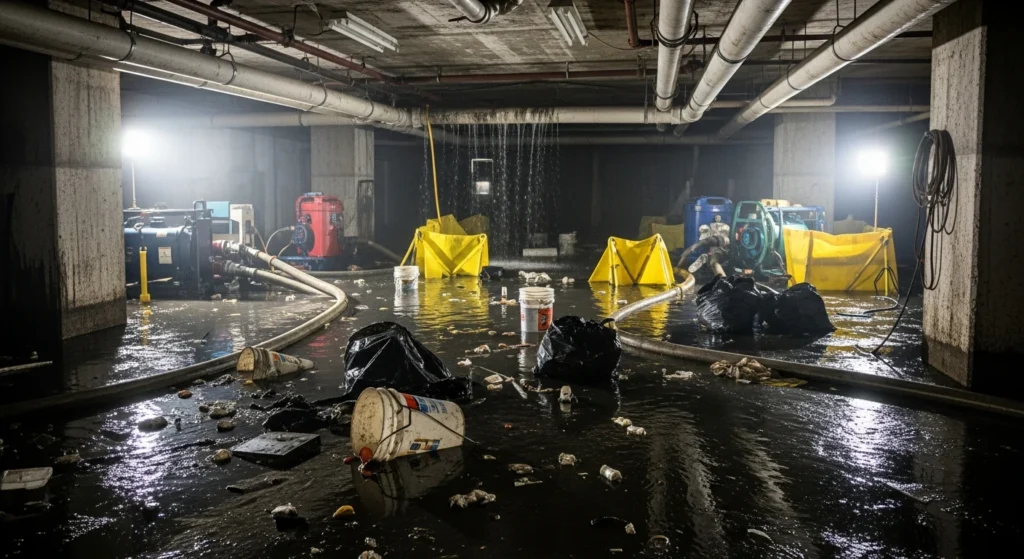
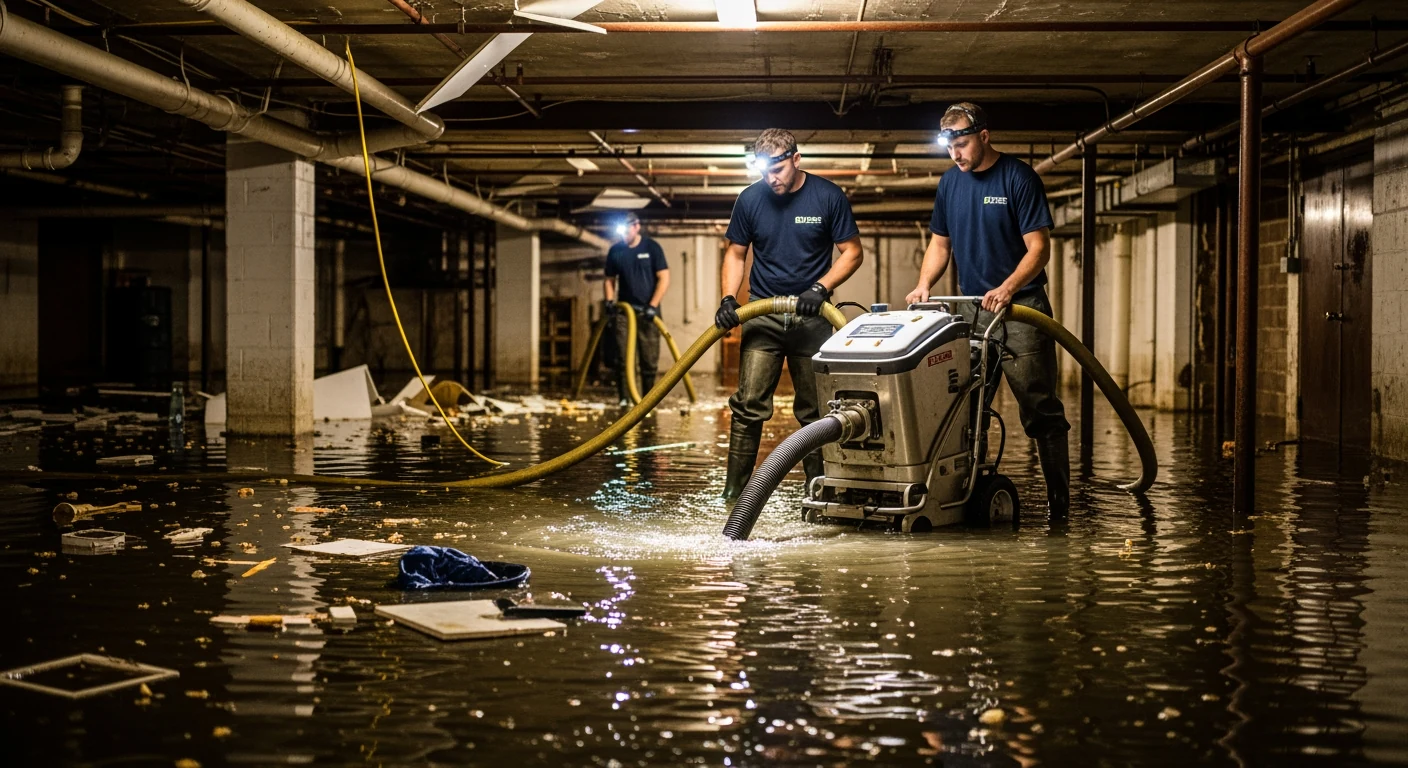
NYC’s combined sewer system — which carries both stormwater and sewage in the same pipes — is designed for a specific peak flow capacity. When a major storm event overwhelms that capacity, the system backpressures and sewage can enter building drains from below. The Blizzard of 2026 and subsequent March rain events are producing exactly this pattern across Brooklyn, Queens, the Bronx, and parts of Manhattan served by the city’s combined sewer overflow (CSO) network. If your basement or first-floor drains are backing up with dark, foul-smelling water after heavy rain or snowmelt, you are almost certainly dealing with what the IICRC classifies as Category 3 water — and that changes everything about how the situation must be handled.
What Category 3 Water Actually Means
The IICRC S500 Standard for Professional Water Damage Restoration classifies water contamination into three categories that determine remediation protocol:
Category 1 (Clean water): Water from a clean supply source — broken supply pipe, overflow from a clean fixture. Safe to touch. Porous materials can be dried in place if addressed promptly.
Category 2 (Gray water): Water with significant contamination that can cause illness or discomfort — discharge from washing machines, dishwashers, toilet bowl overflow without feces. Materials in contact must be evaluated carefully; some porous materials require disposal.
Category 3 (Black water): Grossly contaminated water containing pathogenic agents, toxigenic agents, or other harmful materials. This includes sewage backup, seawater flooding, rising floodwater from rivers or the ocean, and stormwater mixed with sewage. All porous materials in contact with Category 3 water must be removed and disposed of — they cannot be dried and saved. This is not a contractor preference; it is the standard.
The pathogen load in sewage is not trivial. Raw sewage contains Escherichia coli, Salmonella, Hepatitis A virus, Norovirus, Cryptosporidium, Giardia, and a wide range of other organisms that remain viable on porous surfaces for days to weeks after the water has receded. The surfaces look dry. They are not safe.
NYC’s Combined Sewer System and Why It Overflows in March
New York City’s sewer system was built largely in the 19th and early 20th centuries as a combined system — a single pipe carries both sanitary sewage and stormwater runoff from streets and buildings. This made economic and engineering sense when the city was first built. Today, it creates a structural vulnerability: whenever rainfall intensity or runoff volume exceeds the system’s capacity, the combined flow must go somewhere.
That somewhere is either a combined sewer overflow (CSO) discharge point — where the mixed sewage and stormwater is released directly into adjacent waterways — or, in buildings with drain connections below the street-level sewer line, back up through floor drains, basement toilets, and utility sinks. NYC DEP data shows that the city’s CSO program generates billions of gallons of overflow per year, concentrated heavily during major storm events.
March is high-risk for two compounding reasons: snowmelt from a major storm like the Blizzard of 2026 produces enormous runoff volumes over a compressed time period, and the system simultaneously receives spring rainfall. Any NYC or Long Island building with basement drain connections below the street-level main is at risk during these events without a functioning backwater prevention valve.
What Cannot Be Saved After Category 3 Sewage Backup
The IICRC S500 and S520 standards are specific about what must be removed after Category 3 water contact. Understanding this before negotiating with a contractor or insurer protects you from both incomplete remediation (which creates ongoing health risk) and over-demolition (which inflates costs unnecessarily):
Must be removed: All drywall that had direct contact with Category 3 water. All carpet and padding. All insulation. Vinyl flooring if the subfloor beneath was affected. Any cardboard, paper-based materials, or organic furnishings in contact with the water. Wood framing that was saturated (as opposed to wetted at the surface) requires assessment — surface contamination can be treated with EPA-registered antimicrobial agents; saturation requires removal.
Can potentially be saved (after proper treatment): Concrete and masonry surfaces with surface contamination but no structural compromise. Non-porous surfaces (metal, solid plastic, ceramic tile) that can be fully disinfected. Solid wood framing that had surface exposure but is not saturated. Personal property items that can be laundered or hard-surface disinfected.
Never dry in place after Category 3: Any porous material — carpet, drywall, insulation, upholstery — must be removed regardless of drying potential. Drying does not decontaminate. Pathogens in dry sewage residue remain infectious and can become aerosolized during subsequent disturbance of the dried material.
OSHA Requirements and Personal Protective Equipment
Category 3 sewage cleanup is an OSHA-regulated activity. Under OSHA’s Bloodborne Pathogen Standard (29 CFR 1910.1030) and OSHA’s General Industry Standards for hazardous waste operations, workers performing sewage cleanup must use specific PPE:
Minimum required PPE for Category 3 sewage work: waterproof gloves (heavy-duty, wrist-length minimum), waterproof boots, eye protection (goggles, not safety glasses), N95 respirator minimum (P100 for enclosed areas), and full coveralls or dedicated work clothing that is bagged and laundered at the worksite before removal. Any contractor entering your property for sewage cleanup without this PPE level is not following OSHA standards — which is relevant both to their worker safety and to your potential liability as a property owner.
Insurance Documentation for Sewage Backup Claims in NYC
Standard homeowners policies in New York State typically exclude sewer backup damage unless a specific sewer backup rider has been added. This rider is inexpensive — $50–$150/year on most policies — and should be standard for any NYC or Long Island homeowner or co-op owner with basement space or first-floor drains. If you don’t have the rider, the damage is almost certainly not covered.
If you do have sewer backup coverage, documentation for the claim must include: photos and video of the flooding and affected materials before any cleanup begins; the contractor’s initial assessment report identifying the water category and affected scope; IICRC-compliant drying logs; all disposal manifests for removed materials; and a post-remediation clearance report. Adjusters reviewing sewage backup claims look for IICRC-standard documentation to validate the remediation scope — particularly the removal of porous materials, which is often the largest cost component and the one most frequently disputed.
HPD Violations for NYC Landlords After Sewage Backup
For owners of tenant-occupied buildings in NYC, sewage backup in tenant spaces triggers multiple HPD violation categories. Sewer backup constitutes an immediate health hazard and is classified as a Class C (immediately hazardous) violation — the highest severity level. Class C violations require correction within 24 hours of HPD notice and carry penalties of $50–$150/day plus escalating fines for continued violations.
Landlords are also required under NYC Housing Maintenance Code to install backwater prevention valves in buildings where sewer backup has occurred and where installation is feasible. Failure to install after a documented backup event can result in HPD orders and may be cited as evidence of willful neglect in subsequent Housing Court proceedings.
Frequently Asked Questions About Sewage Backup in NYC
Can furniture be saved after sewage backup? Upholstered furniture in contact with Category 3 water cannot be decontaminated and must be disposed of. Solid wood furniture with surface contamination only may be salvageable after professional disinfection treatment. Metal and glass furniture with non-porous surfaces can typically be saved if thoroughly cleaned and disinfected.
Is sewage backup covered by homeowners insurance? Only if a sewer backup rider is included in your policy. Standard policies exclude sewer backup damage. Check your policy declarations page for a sewer backup or water backup endorsement — if it isn’t listed, the damage is not covered without filing an affirmative claim for weather-related damage (which may apply if the backup was caused by a city system overflow rather than a building system failure).
How long does sewage cleanup take in NYC? Initial Category 3 sewage cleanup — removing contaminated materials, disinfecting hard surfaces, and establishing drying equipment — typically takes 1 to 3 days depending on scope. Full restoration including drywall replacement, flooring, and painting requires additional time after the area is confirmed dry and cleared. Total timeline from event to restored space: 1 to 4 weeks for typical residential events.
How do I prevent sewage backup in my NYC building? The most effective prevention is a properly installed and maintained backwater prevention valve on the building’s main drain connection. These valves allow flow out but prevent backflow into the building when the street main pressure exceeds building drain pressure. They require periodic inspection and cleaning — a valve blocked by debris will not function during a storm event.
Related reading: Why March Is the Most Dangerous Month for NYC Properties (March 2026) | The March Mold Discovery Problem — What Grew Over Winter | The April Property Assessment for NYC and Long Island Owners