“`html
Discovering a sewage backup in your basement is more than a messy inconvenience—it is a full-scale biohazard emergency. For Long Island homeowners, whose properties are often susceptible to high water tables and aging municipal infrastructure, a sewage event requires an immediate, disciplined response. As a Certified Biohazard Safety Officer, I have seen firsthand how a small backup can escalate into a structural and medical crisis within hours. This is not a situation for a mop and a bucket of household bleach. It requires industrial-grade intervention to protect your family’s health and your home’s equity. For a complete breakdown of pricing, see our guide to sewage backup cleanup cost on Long Island.
The industry standard for water damage restoration categorizes sewage as “Category 3” water, commonly referred to as “Black Water.” By definition, Category 3 water is grossly contaminated and contains pathogenic, toxigenic, or other harmful agents. Whether the backup was caused by a city sewer main failure, a heavy Long Island rainstorm overwhelming your sump pump, or a collapsed pipe on your property, the risks remain the same: your basement is now a breeding ground for infectious disease.
Health Risks of Raw Sewage
The primary concern during any sewage backup cleanup in a basement is the sheer volume of microorganisms present in the waste. Unlike a “clean water” leak from a supply line, sewage carries a cocktail of bacteria, viruses, and parasites that can cause severe illness through ingestion, skin contact, or inhalation of aerosolized particles.
Pathogenic Contaminants
According to the CDC guidelines on flood water and sewage safety, several high-risk pathogens are commonly found in residential backups:
- E. coli and Salmonella: These bacteria cause severe gastrointestinal distress, dehydration, and in some cases, kidney failure.
- Hepatitis A: A highly contagious virus that attacks the liver. It can survive on surfaces for extended periods if not neutralized with hospital-grade disinfectants.
- Leptospirosis: Often transmitted via water contaminated with animal waste, leading to kidney damage or meningitis.
- Parasites: Cryptosporidium and Giardia are frequently present in raw sewage and are resistant to many standard cleaning agents.
The Hidden Danger: Airborne Pathogens
Many homeowners believe they are safe as long as they don’t touch the water. This is a dangerous misconception. As sewage sits, it off-gasses. Furthermore, any attempt to move or splash the water—even walking through it—can aerosolize bacteria. Once these particles are in the air, they can be pulled into your HVAC system and distributed throughout your entire Long Island home. This is why professional containment is the first step in any certified Residential Restoration | Sewage Cleanup project.
Vaccination and Personal Safety
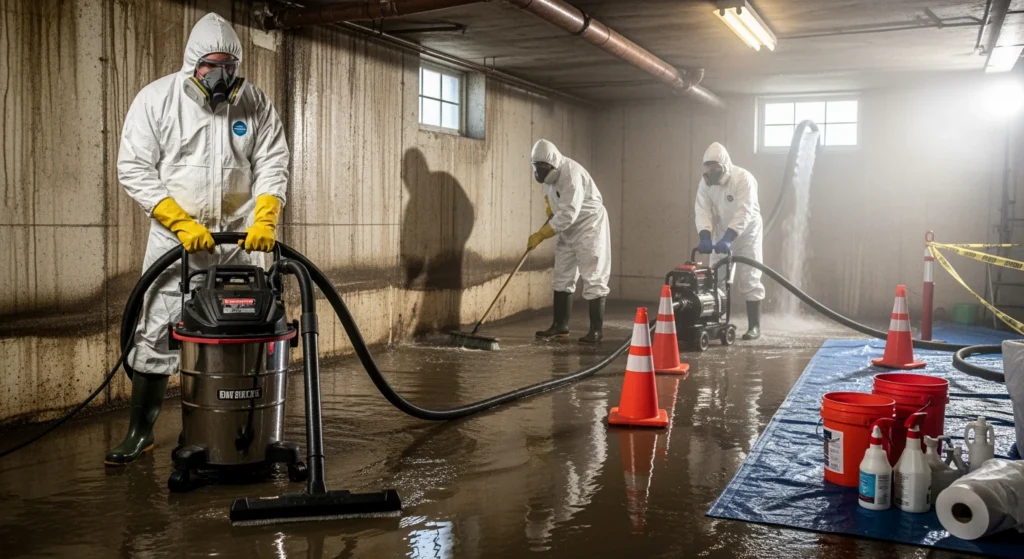
Before even considering entering an area affected by sewage, you must verify your vaccination status. Tetanus and Hepatitis B vaccinations should be up to date. If you have any open cuts or a compromised immune system, you should not be in the building until it has been professionally cleared. As a safety officer, my first protocol is always to ensure that everyone on-site is equipped with full-body Tyvek suits, N95 or P100 respirators, and heavy-duty nitrile gloves.
Immediate Safety Steps
If you walk down your basement stairs and see or smell sewage, your priority is life safety. Follow these steps immediately to mitigate the damage and protect yourself.
1. Avoid the Area and Secure the Perimeter
Do not enter the standing water. If the water has reached the level of electrical outlets or your HVAC system, the entire basement could be “hot” with electricity. Electrocution is a secondary but lethal risk in flooded basements. Keep children and pets away from the area, as they are most vulnerable to the pathogens present in the waste.
2. Shut Off Utilities (If Safe)
If your electrical panel is located in the basement and you have to walk through water to get to it, do not do it. Contact PSEG Long Island or your local utility provider to have the power cut remotely. Similarly, if your gas water heater or furnace is submerged, shut off the gas supply if the valve is located in a dry, safe area.
3. Call for Professional Help
A sewage backup cleanup in the basement is not a DIY task. Household cleaning products, including standard bleach, are insufficient for porous materials and cannot penetrate the layers of contamination that sewage leaves behind. Contact a biohazard-certified team that utilizes hospital-grade disinfectants and specialized extraction equipment. At Upper Restoration, we provide discrete unmarked vehicles upon request to maintain your privacy during this stressful time.
4. Notify Your Insurance Company
Sewage backups often require a specific “Sewer Backup Rider” on your homeowner’s insurance policy. Document the scene from a safe distance with photos and videos, but do not prioritize documentation over safety. Professional restorers can help provide the necessary documentation and “Scope of Work” required by adjusters.
The Professional Extraction Process
The goal of professional remediation is to return the environment to a “Pre-Loss Condition,” which means the space is not just visually clean, but biologically safe. We follow a rigorous process designed to eliminate all traces of Category 3 contamination.
Containment and Pressure Management
Before a single gallon of sewage is removed, we establish containment using heavy-duty plastic sheeting and HEPA-filtered air scrubbers. By creating “negative air pressure,” we ensure that no airborne pathogens escape the basement into the upper living quarters of your home.
Extraction and Disposal
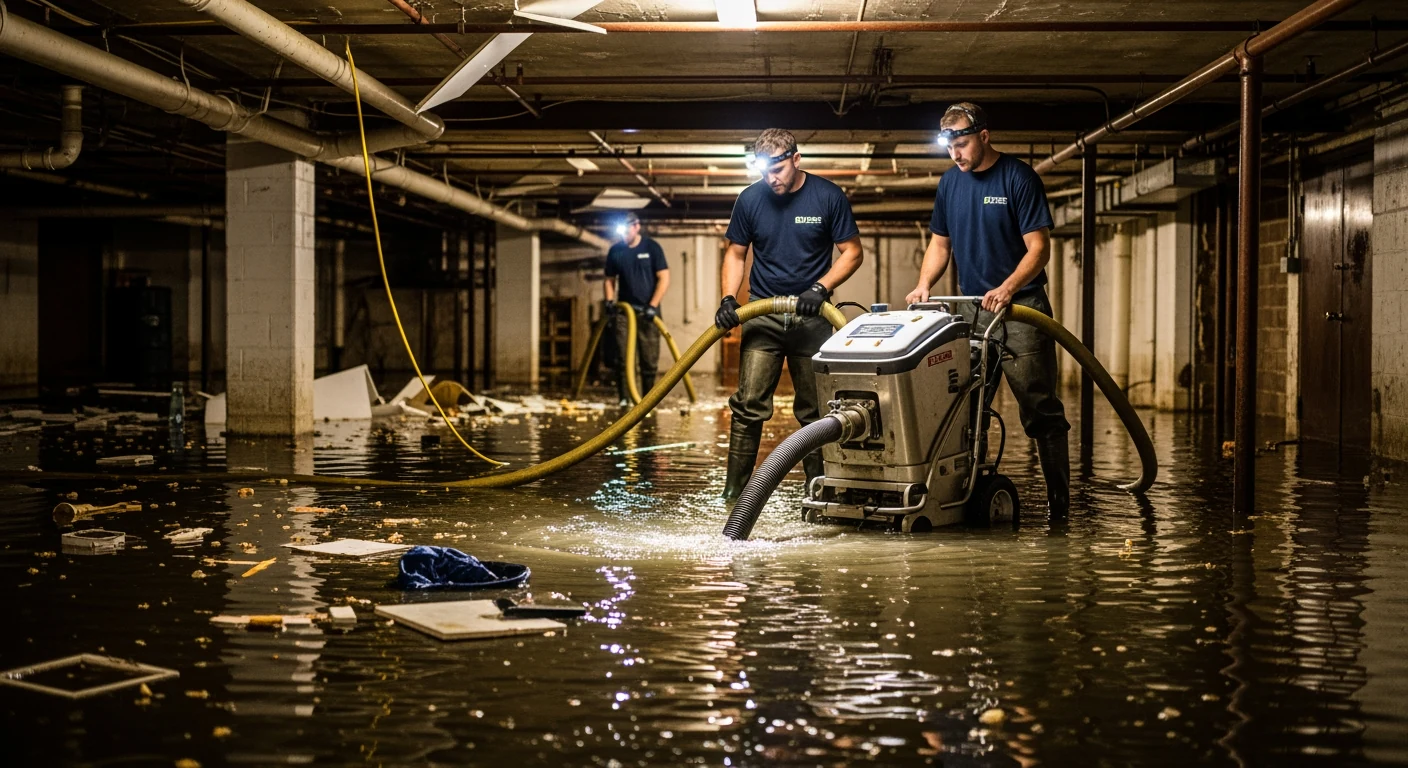
We use industrial-strength truck-mounted extraction units to remove the bulk of the liquid waste. This waste must be disposed of according to local Long Island environmental regulations. We do not simply pump it back into the yard or the storm drain, as this creates a secondary environmental hazard.
The “Rule of Porosity”
In a sewage event, the most difficult pill for homeowners to swallow is the loss of personal property. The IICRC (Institute of Inspection, Cleaning and Restoration Certification) S500 standards dictate how different materials are handled. In a Category 3 event, porous materials that have absorbed sewage cannot be cleaned and must be removed.
| Material | Restoration Potential (Sewage) | Action |
|---|---|---|
| Concrete Floor | High | Clean & Sanitize |
| Carpet & Pad | None | Discard Immediately |
| Drywall | None | Cut 2ft above water line |
| Solid Wood Furniture | Low/Moderate | Evaluate/Specialty Cleaning |
Drywall acts like a sponge, wicking sewage upward through the core of the material. This is why we perform a “flood cut,” removing the drywall at least 12 to 24 inches above the highest visible water line. This ensures no trapped bacteria or moisture remain behind the walls to cause future mold growth.
Disinfection and Deodorization
Once all unsalvageable materials are removed, we apply hospital-grade disinfectants to all “hard” surfaces like concrete and framing. We use broad-spectrum antimicrobials that are specifically designed to kill the bacteria and viruses associated with human waste. Finally, we use hydroxyl generators or ozone machines to eliminate lingering odors at a molecular level.
Preventing Future Backups
Once your basement is restored, the next step is ensuring this never happens again. On Long Island, our unique geography and weather patterns contribute to specific risks.
Sump Pump Maintenance
Sump pump failure is the leading cause of basement flooding in Nassau and Suffolk counties. During heavy rain, the water table rises, and if your pump fails due to age or a power outage, the pressure can cause a reverse flow of sewage into your home. We recommend installing a battery-backup system and a secondary pump to handle peak loads.
Check Valves and Backwater Valves
A backwater valve is a one-way gate installed on your main sewer line. Under normal conditions, it allows waste to exit your home. However, if the municipal sewer line becomes overwhelmed and begins to flow back toward your house, the valve closes automatically, blocking the sewage from entering your basement.
Tree Root Mitigation
Long Island’s beautiful mature trees can be a nightmare for sewer lines. Roots seek out the moisture in your pipes, causing cracks and blockages. Have your main line “scoped” with a camera every few years to identify potential obstructions before they lead to a backup.
Frequently Asked Questions
Q: Can I clean a small sewage backup myself?
A: It is highly discouraged due to biohazard risks; even small spills can contaminate the air and harbor pathogens that survive standard cleaning. Without professional-grade moisture meters and thermal imaging, you may also leave moisture behind that leads to a toxic mold infestation.
Q: How long does the cleanup process take?
A: While every situation is unique, the initial extraction and “muck out” usually occur within the first 24 hours. The full drying and sanitization process typically takes 3 to 5 days, depending on the extent of the saturation.
Q: Will the smell ever go away?
A: Yes, but only if the source of the odor (the contaminated material) is removed. Masking the smell with candles or sprays will not work. Professional deodorization focuses on eliminating the bacteria that produce the odor.
CRITICAL SAFETY WARNING
If you are experiencing a sewage emergency, do not wait. Every hour that sewage sits in your basement increases the risk of structural rot and permanent health complications for your family.
Our biohazard certified team is standing by 24/7 to provide professional Sewage Cleanup & Restoration services across Long Island.
“`