The Intersection of NYC High-Rise Architecture and PTAC Mold Issues
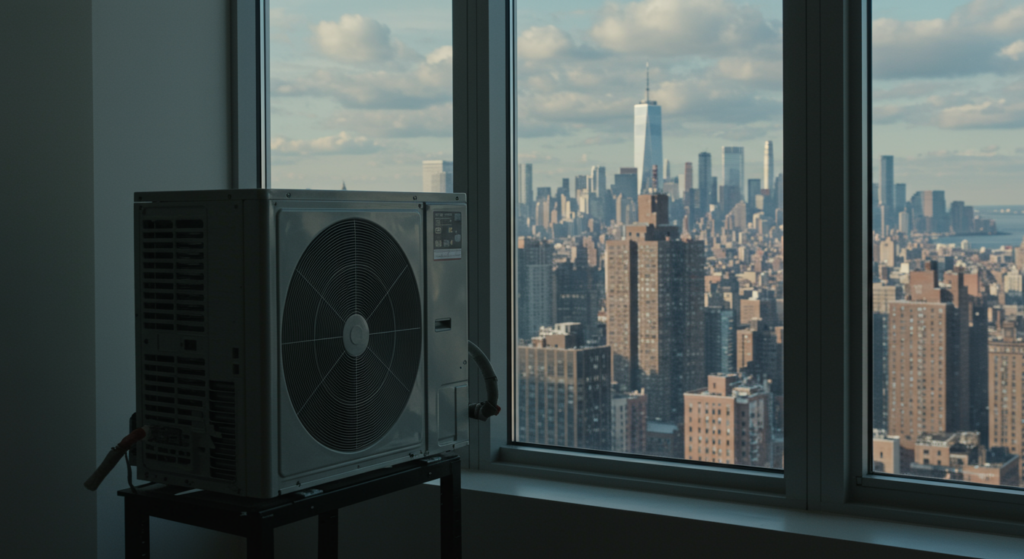
Packaged Terminal Air Conditioners, commonly known as PTACs, are the ubiquitous workhorses of the New York City residential landscape. If you live in a luxury condo built between the 1980s and the early 2010s in neighborhoods like Long Island City, Williamsburg, or the Upper West Side, you likely have one of these units tucked under every window. While they offer a cost-effective solution for heating and cooling without the need for extensive ductwork, they possess a significant architectural vulnerability: they are highly prone to microbial growth. For residents, ptac mold nyc isn’t just a maintenance annoyance; it is a structural and indoor air quality challenge that often goes unnoticed until it becomes a systemic problem.
The reliance on PTAC units in Manhattan and Brooklyn high-rises stems from the density of the city. Central HVAC systems require massive amounts of vertical space for ducting, which reduces the number of floors a developer can fit into a building. By using PTACs, developers can maximize the number of units. However, this decentralized approach puts the burden of moisture management on individual machines that are exposed to the extreme humidity of the Atlantic coast. When these units fail—as they often do after 5 to 10 years of service—the result is a localized mold outbreak that can quickly migrate into the building’s infrastructure.
Technical Root Causes of PTAC Mold in NYC Condos
The design of a PTAC unit is inherently susceptible to moisture. Unlike central air systems, which have centralized drainage and filtration, each PTAC is a self-contained environment that interfaces directly with the outside air through a metal sleeve in the wall. In the humid summers of NYC and Long Island, this creates a perfect storm for mold. The failure usually happens in one of three areas:
- Condensate Tray Failure: This is the most common failure point. As the unit cools, it pulls moisture from the air. This moisture collects in a tray. If the unit isn’t perfectly level—a common issue in older Manhattan buildings shifting on their foundations—the water pools rather than draining through the exterior weep holes.
- Filter Neglect: Residents often forget to clean the internal filters. Dust buildup, which consists of skin cells, pet dander, and organic debris, provides the “food” source that mold spores need to colonize the damp coils.
- Sleeve Seal Degradation: The “sleeve” is the metal box that stays in the wall. Over time, the caulking and weatherstripping between the sleeve and the building’s facade (brick or curtain wall) can degrade. This allows wind-driven rain from a Nor’easter to enter the wall cavity behind the unit.
The Humidity Factor in Manhattan and Long Island High-Rises
High-rise living presents unique environmental pressures. Wind-driven rain on the exterior of buildings in areas like Battery Park or the Brooklyn waterfront can force moisture into the PTAC sleeve at high pressure. When this exterior moisture meets the cool, conditioned air of the interior, condensation occurs within the wall assembly. This is a primary driver of hvac mold nyc issues that extend beyond the unit itself and into the surrounding drywall and fiberglass insulation. Without proper thermal breaks, these units essentially act as “cold bridges,” attracting moisture throughout the humid summer months.
Identifying PTAC Unit Mold: Signs and Symptoms
Recognizing a ptac unit mold problem early can save thousands in remediation costs and prevent long-term health issues. Often, the first sign is a faint, earthy, or musty odor that intensifies when the fan starts. This “dirty sock syndrome” is a clear indicator of microbial activity on the evaporator coils or within the blower wheel. Because PTACs recycle a portion of the indoor air while pulling in some outdoor air, they are highly effective at distributing spores throughout a bedroom or living area.
Visible signs include black or green spotting on the plastic grilles or the aluminum fins. However, the most dangerous mold is often hidden. At Upper Restoration, we frequently find that while the unit’s face looks clean, the internal insulation—often made of open-cell foam—is heavily contaminated. If residents in your Queens or Manhattan condo are experiencing unexplained respiratory irritation, itchy eyes, or allergic reactions only when the A/C is running, a professional inspection is necessary. We often use infrared cameras to detect moisture plumes around the sleeve that are invisible to the naked eye.
Regulatory Landscape and IICRC S520 Standards for NYC Remediation
In New York City, mold remediation is governed by strict regulations, specifically the NYC Department of Health and Mental Hygiene (DOHMH) guidelines and New York State Labor Law Article 32. These laws require that for projects over a certain size (typically 10 square feet of affected area), a clear separation exists between the assessment and the remediation companies. This protects the consumer from “conflict of interest” where a company finds a problem they are also paid to fix.
Upper Restoration follows the IICRC S520 Standard for Professional Mold Remediation. This is the “gold standard” in the industry, emphasizing the physical removal of mold rather than just “killing” it with chemicals. For ptac mold nyc, this often involves more than just cleaning the unit. If the mold has spread to the building’s structural components, a DEP ACP-5 form may be required if any asbestos-containing materials (common in the fireproofing of older buildings in Nassau County and the outer boroughs) are disturbed during the wall cavity inspection. Our teams are trained to navigate these NYC-specific compliance hurdles while ensuring the remediation is performed under proper negative pressure.
The PTAC Mold Removal Process: From Assessment to Air Clearance
Effective ptac mold removal is a surgical process. It is not enough to simply wipe down the exterior with a disinfectant. The goal is to return the environment to a “Condition 1” state, meaning the mold levels inside are lower than or equal to the natural environment outside. The process typically follows these steps:
- Containment: Before any work begins, we establish a localized containment area using 6-mil polyethylene sheeting. We use HEPA-filtered negative air machines (air scrubbers) to ensure that when we move the unit, no spores are released into the rest of the condo.
- Unit Disassembly: The chassis is removed from the sleeve. This allows for a full 360-degree inspection of the condensate tray, the blower assembly, and the internal insulation.
- HEPA Vacuuming: All surfaces are vacuumed using industrial HEPA-rated equipment to remove the bulk of the mold spores and dust.
- Sleeve Cleaning: The metal sleeve, which stays in the wall, must be scrubbed with EPA-registered antimicrobial solutions. If the sleeve is rusted (common in older Islandaire or McQuay units), it may need to be treated for oxidation or replaced.
- Wall Cavity Inspection: We often find that condo ptac mold has leaked into the surrounding drywall. In these cases, we remove the affected drywall to at least 12 inches beyond the visible growth, following S520 removal protocols.
Once the remediation is complete, we recommend a third-party air clearance test. A licensed Mold Assessor will take air samples to ensure the HEPA scrubbing was successful. Only after a “passed” clearance report do we reinstall the unit and close the containment.
Navigating Building Management and Insurance in NYC
One of the most complex aspects of dealing with ptac mold nyc is determining liability. In most NYC condos, the PTAC unit itself is the property of the unit owner, making them responsible for maintenance and repairs. However, if the mold is caused by a failure in the building’s “common elements”—such as a leaking exterior facade, a failed common drainage pipe, or a defect in the building’s brickwork—the building management or HOA may be responsible for the remediation costs.
Insurance reality in New York and Long Island is straightforward: most policies have a “mold exclusion” or a very low “mold sub-limit” (often $5,000). Coverage usually only kicks in if the mold is the direct result of a “covered peril,” such as a sudden pipe burst or an accidental discharge from the unit’s heating lines. Slow leaks due to poor maintenance or age are rarely covered. Upper Restoration works transparently with adjusters, providing the detailed documentation, IICRC-compliant photo logs, and moisture mapping they need to evaluate your claim fairly. We often find that adjusters are more likely to approve claims when they see a professional, standardized approach rather than a “handyman” fix.
Prevention Strategies for Packaged Terminal Air Conditioner Mold
The best way to handle packaged terminal air conditioner mold is to prevent it from ever taking hold. Because these units are prone to failure, a proactive maintenance schedule is essential for NYC high-rise residents.
- Bi-Annual Professional Cleaning: Have a professional HVAC technician steam-clean the coils and clear the drain lines every spring and fall. A clogged drain line is the #1 cause of PTAC flooding.
- Monthly Filter Maintenance: Clean your unit’s filters every 30 days during the peak summer and winter seasons. Vacuuming is usually sufficient, but a light wash with soap and water can remove stuck-on biofilm.
- Correct Leveling: Ensure the unit is slightly tilted toward the exterior (about 1/4 inch) to facilitate gravity drainage. If the unit is tilted inward, water will inevitably pool in your wall.
- Humidity Control: Use a dehumidifier in your condo if the relative humidity exceeds 50%. High interior moisture provides the baseline for mold growth regardless of unit performance.
Frequently Asked Questions
Can I clean PTAC mold myself with bleach?
No. Bleach is an ineffective antimicrobial for porous materials like the foam insulation inside a PTAC. Furthermore, the chemicals in bleach can corrode the aluminum fins of your unit, leading to refrigerant leaks and premature mechanical failure. Professional remediation uses specialized surfactants that penetrate the mold’s “root” system without damaging the machine.
How much does professional ptac mold removal cost?
Costs vary based on the extent of the wall cavity damage. A simple unit decontamination might be a few hundred dollars, but a full IICRC-compliant remediation involving drywall removal, containment, and HEPA scrubbing typically starts between $1,500 and $3,500 per unit in the NYC market.
How long does the remediation process take?
Most PTAC-related remediation projects in Manhattan or Brooklyn can be completed within 1 to 2 days. This includes the setup of containment, the physical cleaning or removal of materials, and the required drying time for the wall cavity before reconstruction begins.
Does the building management have to pay for this?
This depends on your specific condo bylaws and the root cause of the moisture. If the leak is coming through the building’s exterior wall, it is typically a building management issue. If the leak is due to a clogged drain line inside your unit, it is typically the owner’s responsibility. Upper Restoration can help document the source of the moisture to assist in these discussions.
Talk to Upper Restoration
If you have noticed a musty smell or visible growth near your heating and cooling units, don’t wait for the problem to spread into your building’s structure. Upper Restoration provides expert assessment and remediation services for ptac mold nyc across Manhattan, Brooklyn, Queens, and Long Island. Our team is IICRC-certified and experienced in navigating the complex regulatory and architectural requirements of NYC high-rises. We pride ourselves on clear communication, technical accuracy, and helping property owners restore their indoor air quality. Contact us today to schedule a professional inspection and ensure your home remains a healthy environment.