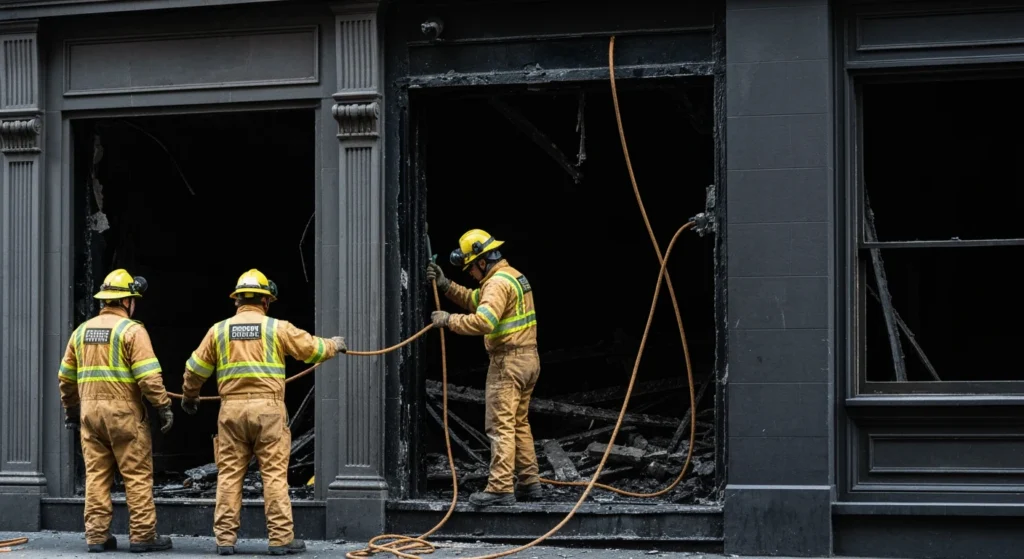
Fire damage is one of the most devastating events a property owner can face in New York City and Long Island. According to the FDNY, there are over 27,000 structural fires annually in the five boroughs alone, with Nassau and Suffolk counties adding thousands more. The emotional trauma, financial burden, and displacement that follow a fire can be overwhelming. Fortunately, there are proven steps you can take to prevent fire damage before it ever occurs.
At Upper Restoration, we respond to fire emergencies across NYC and Long Island every week. Based on what we see in the field, here are 10 essential fire prevention tips for home and business owners.
1. Install and Maintain Smoke Alarms
Smoke alarms are your first line of defense against fire damage. New York State law requires working smoke alarms on every floor of residential buildings. Install them in every bedroom, outside sleeping areas, and on each level including the basement. Test them monthly and replace batteries at least once a year. If you have children, educate them on what to do when they hear an alarm. For NYC apartments and Long Island homes alike, interconnected alarms (where one triggers all) provide the best protection.
2. Create and Practice a Fire Escape Plan
Every household and business in NYC and Long Island should have a written fire escape plan. Include at least two escape routes from every room, designate an outdoor meeting place, and practice the plan twice annually. For NYC high-rise apartments, know your building’s fire safety plan — many pre-war buildings on the Upper West Side, in Brooklyn, and Queens have specific evacuation protocols. On Long Island, ensure all family members — including those with mobility issues — know every exit path.
3. Check Electrical Wiring Regularly
Faulty electrical wiring is a leading cause of residential fires in NYC and Long Island. Many older homes in Nassau County and pre-war apartments in Manhattan have outdated knob-and-tube or aluminum wiring that poses a serious fire hazard. Have a licensed NYC electrician inspect your wiring every 3–5 years. Watch for warning signs: flickering lights, tripping breakers, discolored outlets, or a burning smell near switches. Never attempt DIY electrical repairs — hire a licensed professional.
4. Store Flammable Materials Safely
Gasoline, paint thinner, cleaning solvents, and other flammable materials should be stored in original containers, tightly sealed, in well-ventilated areas away from heat sources. In Long Island garages and NYC building basements, improper flammable storage is a common fire code violation. Always use flammable materials in ventilated spaces, avoid smoking nearby, and clean up spills immediately. Dispose of oily rags properly — they can spontaneously combust.
5. Keep Fire Extinguishers Accessible
Every NYC and Long Island home should have at least one ABC-rated fire extinguisher on each floor. Place them in easily accessible locations — kitchens, garages, and near fireplaces. Ensure everyone in your household knows the PASS technique (Pull, Aim, Squeeze, Sweep). Check the pressure gauge monthly and replace extinguishers every 10–12 years. NYC commercial buildings must comply with FDNY inspection schedules for fire suppression equipment.
6. Avoid Overloading Electrical Outlets
Overloaded outlets and power strips are a major fire risk, especially in older NYC apartments with limited outlet counts. Never daisy-chain power strips, and avoid running high-wattage appliances (space heaters, air conditioners) through extension cords. In Long Island homes, older construction may have insufficient circuits for modern electrical loads. If you regularly trip breakers, it’s time to upgrade your electrical panel.
7. Maintain Heating Equipment
Heating equipment is the second leading cause of home fires nationwide. In NYC and Long Island, this includes boilers, furnaces, space heaters, and fireplaces. Have your heating system professionally serviced annually before winter. Keep combustible materials at least three feet from space heaters. On Long Island, chimney fires from unmaintained flues are common — schedule annual chimney cleanings. Never leave portable heaters running while you sleep or leave the room.
8. Practice Kitchen Fire Safety
Cooking fires are the #1 cause of home fires in the United States. Never leave cooking unattended, keep flammable items (towels, paper, curtains) away from the stovetop, and always have a lid nearby to smother grease fires. In NYC apartment kitchens — often compact and near living areas — fires spread quickly. Keep your stovetop clean, as built-up grease ignites easily. Never throw water on a grease fire; use baking soda or a lid instead.
9. Inspect and Maintain Your Dryer
Dryer lint is highly flammable and a surprisingly common cause of residential fires. Clean the lint trap after every load, and have your dryer vent professionally cleaned annually. In Long Island homes, dryer vents often run long distances to exterior walls, allowing lint buildup. In NYC apartments with shared laundry, report any dryers that overheat or fail to vent properly to building management immediately.
10. Install a Monitored Fire Alarm System
For maximum protection, consider a professionally monitored fire alarm system that alerts the fire department automatically. This is especially valuable for NYC businesses, Long Island commercial properties, and homes where occupants may not always be present. Modern systems include smoke, heat, and carbon monoxide detection with smartphone alerts. Many homeowners insurance providers on Long Island offer premium discounts for monitored systems.
What to Do If Fire Damage Occurs
Despite best prevention efforts, fires can still happen. If your NYC or Long Island property suffers fire damage, professional fire damage restoration should begin within 24–48 hours to prevent secondary damage from soot, smoke, and moisture. Upper Restoration serves Nassau County, Suffolk County, and all five NYC boroughs with emergency fire restoration services.
Frequently Asked Questions
What is the #1 cause of house fires in NYC and Long Island?
Cooking fires are the leading cause of residential fires in both New York City and Long Island. Unattended cooking, grease fires, and flammable items left near stovetops account for nearly half of all home fire incidents in the region.
How often should I test my smoke alarms?
Test smoke alarms monthly by pressing the test button. Replace batteries at least once per year (or when the low-battery chirp sounds). Replace the entire unit every 10 years. New York State law requires working smoke alarms on every floor of residential buildings.
Does homeowners insurance cover fire damage on Long Island?
Yes, most standard homeowners insurance policies in Nassau and Suffolk counties cover fire damage, including structural repairs, personal property replacement, and additional living expenses during restoration. However, coverage limits and deductibles vary — review your policy annually and document your belongings.
How quickly should I call a fire restoration company after a fire?
Contact a professional fire damage restoration company within 24 hours. Soot and smoke residue become permanently bonded to surfaces within 48–72 hours, making restoration more difficult and expensive. Upper Restoration offers 24/7 emergency response across NYC and Long Island.
What are signs of electrical fire risk in older NYC apartments?
Warning signs include: frequently tripping circuit breakers, flickering or dimming lights, discolored or warm outlets, a persistent burning smell, sparks when plugging in devices, and two-prong (ungrounded) outlets throughout the unit. Pre-war buildings in Manhattan, Brooklyn, and Queens are particularly susceptible due to aging wiring infrastructure.