Every commercial renovation project on Long Island begins with a critical question: does this building contain asbestos? New York State law and federal EPA NESHAP regulations require building owners to answer that question through a formal asbestos survey before any renovation or demolition work disturbs building materials. Skipping this step exposes building owners to regulatory penalties, project shutdowns, and significant liability.
Why Commercial Buildings on Long Island Need Pre-Renovation Surveys
Long Island’s commercial building stock includes thousands of structures built between 1930 and 1985 — the peak decades of asbestos use in construction materials. Office parks in Melville and Hauppauge, industrial facilities along the Route 110 corridor, retail centers throughout Nassau County, and municipal buildings across both counties commonly contain asbestos in floor tiles, pipe insulation, ceiling materials, spray-applied fireproofing, and roofing compounds.
The New York State Industrial Code Rule 56 requires any person who owns or operates a building to have an asbestos survey performed before renovation or demolition activities that could disturb suspect materials. Federal EPA NESHAP (National Emission Standards for Hazardous Air Pollutants) regulations add a separate layer of requirements for demolition projects.
What a Commercial Asbestos Survey Covers
A thorough pre-renovation asbestos survey for a commercial building on Long Island includes:
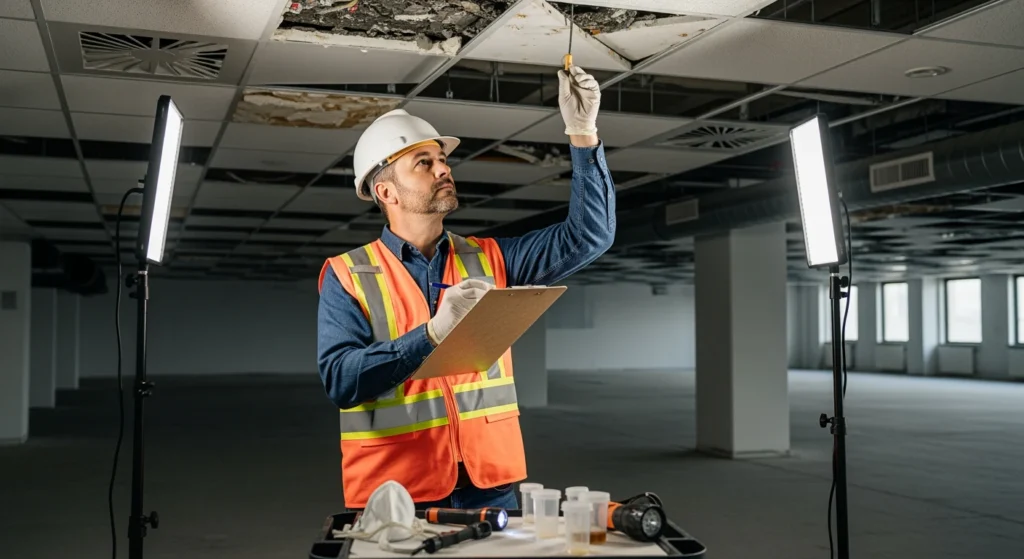
Visual inspection of all suspect materials. The certified inspector examines every building material within the renovation scope — flooring, ceiling systems, wall materials, pipe insulation, ductwork, roofing, caulking, window glazing, and fireproofing. Materials installed before 1981 are presumed suspect unless proven otherwise.
Bulk sampling. The inspector collects physical samples of each suspect homogeneous material. Homogeneous area means a section of material that appears uniform in texture, color, and age. The number of samples required depends on the area of material — typically 3 samples per homogeneous area up to 1,000 square feet, with additional samples for larger areas per EPA guidelines.
Laboratory analysis. Samples go to a NVLAP-accredited laboratory for Polarized Light Microscopy (PLM) analysis. If PLM results show between 1% and 10% asbestos, point counting or Transmission Electron Microscopy (TEM) may be required for confirmation. Lab turnaround is typically 3-5 business days for standard service.
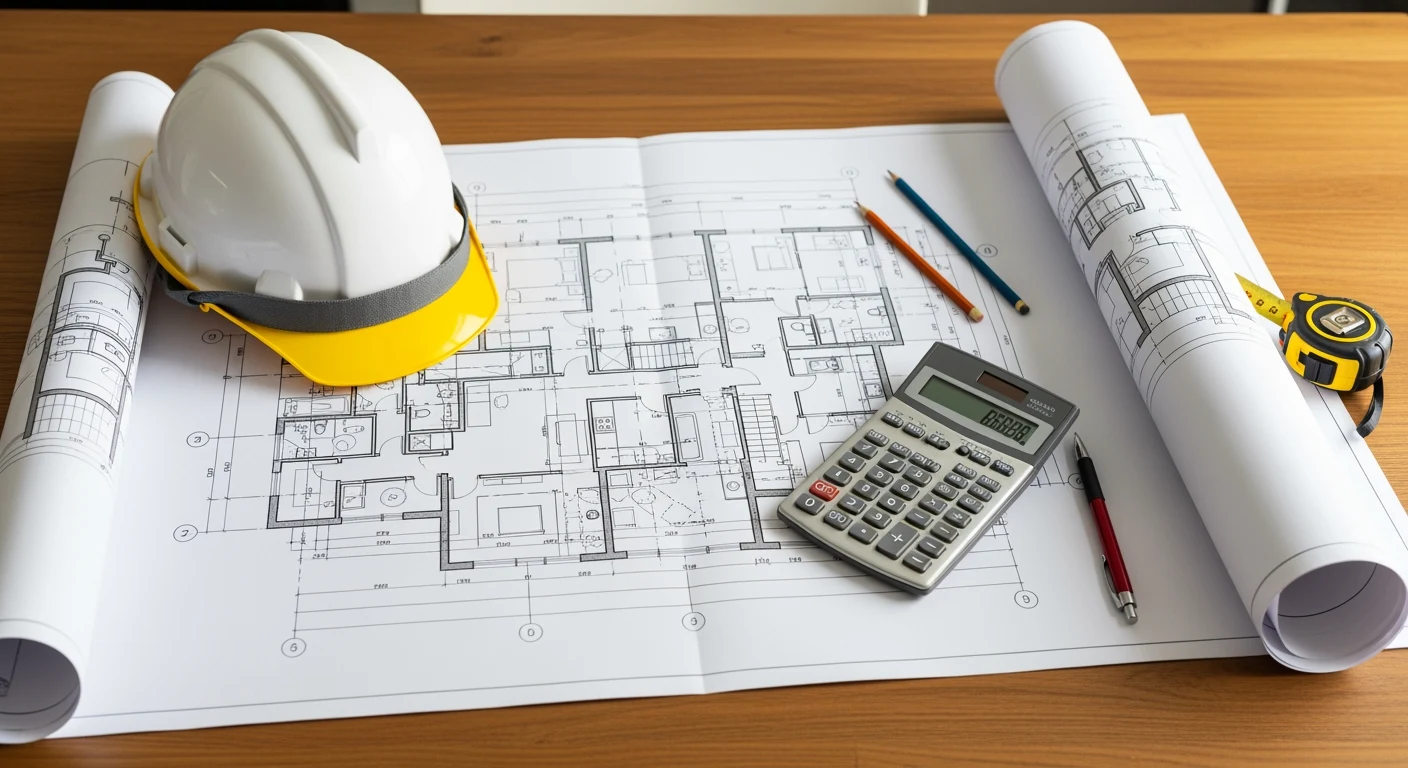
Survey report. The inspector produces a written report documenting all materials surveyed, sample locations mapped on building drawings, laboratory results, and a clear determination of which materials are asbestos-containing (greater than 1% asbestos by weight). This report is the legal foundation for all subsequent abatement or renovation decisions.
Types of Commercial Asbestos Surveys
Limited survey (renovation scope only). Covers only materials within the planned renovation area. This is sufficient when renovating a specific floor, suite, or building system. Cost: $1,500 to $3,500 on Long Island.
Comprehensive survey (full building). Covers all accessible materials throughout the entire structure. Required before full demolition and recommended before building acquisition. Cost: $3,000 to $8,000+ depending on building size and complexity.
Re-inspection survey. Required for buildings with known asbestos that has been managed in place. The Asbestos Hazard Emergency Response Act (AHERA) requires periodic re-inspection of asbestos in schools, and best practice extends this to commercial buildings with asbestos management plans.
New York Regulatory Requirements for Building Owners
Long Island building owners must comply with multiple overlapping regulations:
NYS Industrial Code Rule 56 governs all asbestos projects in New York. It requires certified inspectors, licensed abatement contractors, project notifications to NYS DOL, and air monitoring during abatement. Penalties for non-compliance include fines up to $25,000 per violation and criminal charges for willful violations.
EPA NESHAP requires notification to the regional EPA office (Region 2 for New York) at least 10 working days before demolition of any commercial building, regardless of whether asbestos is present. If asbestos is found, NESHAP mandates removal before demolition using wet methods and proper disposal.
OSHA standards (29 CFR 1926.1101) establish permissible exposure limits for workers and require employers to assess asbestos exposure for any construction work that may disturb ACMs.
How Upper Restoration Supports Pre-Renovation Surveys on Long Island
Upper Restoration works with building owners and general contractors across Nassau and Suffolk Counties to coordinate pre-renovation asbestos surveys with certified inspection firms, interpret survey results, and — when asbestos is confirmed — provide licensed abatement services that keep renovation projects on schedule. Our team understands the regulatory timeline and can begin abatement planning before survey results arrive, reducing project delays.