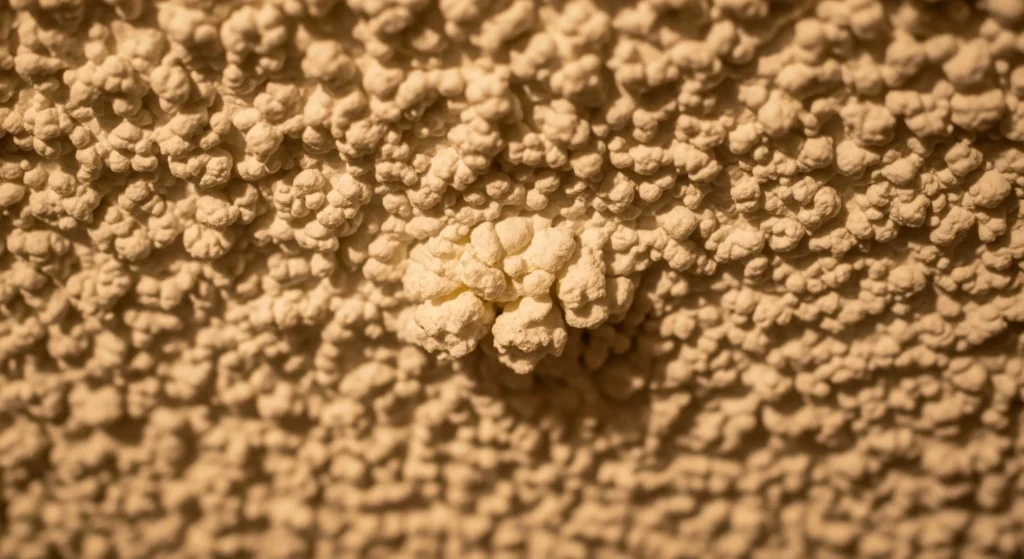
The popcorn ceiling — that bumpy, textured finish found on ceilings throughout Long Island homes built in the 1950s through the early 1980s — is one of the most commonly encountered asbestos-containing materials in residential properties. It is also one of the most frequently disturbed, because homeowners often want to remove the dated texture during renovation without realizing it may contain asbestos that makes casual scraping a health hazard.
Why Long Island Homes Have Asbestos Popcorn Ceilings
Textured ceiling finishes became standard in American home construction during the 1950s and remained popular through the 1980s. They were inexpensive to apply, hid drywall imperfections, and provided modest acoustic dampening. Asbestos was added to many formulations because it improved fire resistance, strengthened the texture bond, and made the product easier to apply without sagging.
Long Island experienced massive residential construction during this exact period. The postwar housing boom in Nassau County and the subsequent development of Suffolk County produced thousands of homes with popcorn ceilings that may contain asbestos. Homes in Levittown, the Towns of Hempstead and Oyster Bay, and throughout the Babylon-Islip-Brookhaven corridor are particularly likely to have this material.
The 1978 Rule — and Why 1986 Is the Real Cutoff
The EPA banned spray-applied asbestos materials in 1978 under the Clean Air Act. However, the ban applied to manufacturing, not to using existing inventory already in distribution. Distributors and contractors continued applying products from pre-ban stock for years afterward. The practical result: any popcorn ceiling applied before 1986 on Long Island should be considered potentially asbestos-containing and tested before any work begins.
Ceilings applied after 1986 are very unlikely to contain asbestos but are not automatically safe — some specialty products and imports may have continued using asbestos beyond the mainstream transition. When in doubt, test.
How to Test Popcorn Ceiling for Asbestos
Testing requires collecting a small sample of the ceiling texture and submitting it to a laboratory. The professional route: hire a NYS DOH-certified asbestos inspector ($200-$400 for a ceiling-specific inspection). The DIY route: purchase a mail-in test kit, wet a small area of the ceiling with a spray bottle, carefully scrape a tablespoon-sized sample into the provided container, and mail it to the lab. If you DIY the sample, wear an N95 mask, wet the material thoroughly before scraping, and clean up the area with a damp cloth afterward.
Laboratory analysis costs $25-$50 per sample with 3-5 day turnaround. Test at least two areas of the ceiling — different rooms may have been textured at different times with different products.
Your Options If the Ceiling Contains Asbestos
Leave it alone. If you are not planning renovation that affects the ceiling, intact asbestos popcorn texture can safely remain. It is stable, does not release fibers during normal occupancy, and requires no action beyond awareness and documentation.
Paint over it (encapsulation). Applying paint directly to asbestos popcorn ceiling is safe and effectively seals the surface. Use a thick-nap roller or airless sprayer to apply paint without mechanical disturbance. Do not sand, scrape, or texture over the existing surface. Multiple coats of quality ceiling paint create a durable encapsulating layer. Cost: standard painting costs, no abatement required.
Cover with new drywall (enclosure). Installing 1/4-inch or 3/8-inch drywall directly over the popcorn ceiling permanently encloses the material. Screws go through the new drywall into ceiling joists — not into the existing drywall — so the asbestos texture is not mechanically disturbed. This approach gives you a smooth, modern ceiling without abatement costs. Budget: $2 to $5 per square foot installed on Long Island, including finishing and painting.
Professional removal (abatement). When you want the ceiling completely removed — for structural access, recessed lighting installation, or personal preference — a NYS DOL-licensed abatement contractor performs wet removal under containment with air monitoring. The room is sealed, the texture is saturated with water, scraped from the drywall, bagged as asbestos waste, and the room is cleared by an independent air analyst. Cost: $8 to $25 per square foot on Long Island.
What NOT to Do
Never dry-scrape a popcorn ceiling. This is the single most common way Long Island homeowners accidentally create asbestos exposure. Dry scraping launches asbestos fibers into the air throughout the room and potentially the entire home through HVAC systems.
Never sand a popcorn ceiling. Sanding generates massive quantities of fine dust, including respirable asbestos fibers if the material contains asbestos.
Never use a chemical ceiling texture remover without testing first. These products soften the texture for scraping, but the scraping still releases fibers from asbestos-containing material.
Upper Restoration’s Popcorn Ceiling Removal on Long Island
Upper Restoration provides licensed asbestos popcorn ceiling removal throughout Nassau and Suffolk Counties. Our certified crews perform full-containment wet removal with HEPA filtration and independent air monitoring, leaving you with clean drywall ready for finishing. We also advise homeowners on encapsulation and enclosure alternatives when removal is not necessary or budget does not allow it.