Navigating Article 47: The Legal Landscape for NYC Group Child Care
When establishing or renovating a licensed group child care facility in the five boroughs, operators face a stringent set of environmental regulations enforced by the Department of Health and Mental Hygiene (DOHMH) and the Administration for Children’s Services (ACS). A critical component of this regulatory framework is ensuring the commercial building is completely free from hazardous, airborne materials. For operators looking to secure or renew their permits, understanding the exact legal requirements for nyc daycare asbestos testing is entirely non-negotiable.
New York City Health Code Article 47 mandates that child care environments maintain specific safety, structural, and sanitation standards. Because a vast portion of commercial real estate across Manhattan, Brooklyn, Queens, and the Bronx was constructed prior to the EPA bans of the 1970s and 1980s, the likelihood of encountering Asbestos-Containing Materials (ACM) in prospective lease spaces is exceptionally high. From 9×9 vinyl asbestos tile (VAT) hidden under modern carpeting in a Staten Island commercial space to degrading pipe insulation in a basement mechanical room, the presence of ACM triggers immediate regulatory oversight. Upper Restoration frequently consults with property owners and facility directors to navigate these complex environmental overlaps before they delay an opening date or compromise a building’s structural integrity.
When is NYC Daycare Asbestos Testing Legally Required?
The city does not leave environmental safety to chance, especially when vulnerable populations are involved. The Department of Environmental Protection (DEP), working in tandem with the DOHMH, has strict criteria governing when testing must occur. You cannot simply assume a newly leased space is clean; you must formally prove it through certified documentation submitted to the city.
Typically, there are three primary triggers that necessitate comprehensive daycare environmental testing nyc for facility operators:
- Initial Licensing and Change of Use: Before a Certificate of Occupancy can be updated for E (Educational) or I (Institutional) use, or before a new Article 47 permit is issued by the DOHMH, the space must be evaluated. The city requires concrete proof that the environment poses no respiratory exposure risk to children or staff.
- Renovations and Facility Alterations: Any construction work that disturbs existing building materials requires an asbestos survey prior to the commencement of demolition. Whether you are knocking down a drywall partition to expand a classroom in a Queens storefront or updating the plumbing in a historic Long Island property, you must obtain a DEP ACP-5 form (Asbestos Exemption Certification) or proceed with a full, regulated abatement project.
- Violation Removal and Lease Renewals: In some scenarios, historical building violations or changes in lease terms may prompt an immediate environmental inspection. Landlords and childcare operators must work together to ensure ongoing acs daycare compliance, as unaddressed environmental hazards can result in severe fines or immediate closure orders from the city.
Securing the proper documentation before beginning physical work is crucial. If contractors begin demolition without an asbestos survey on file, operators risk severe stop-work orders and financial penalties from the NYC Department of Buildings (DOB) and the DEP, which can effectively stall a project for months.
Understanding the Differing Roles of the DOHMH and ACS
Facility directors often use the terms DOHMH and ACS interchangeably when discussing compliance, but their roles in environmental oversight differ. The DOHMH is the primary licensing body for group child care programs under Article 47. Their inspectors conduct the rigorous pre-operational health and safety walkthroughs, checking for lead paint, proper egress, sanitation facilities, and verifying that all asbestos documentation is in order before granting the permit to operate.
The Administration for Children’s Services (ACS), on the other hand, oversees the city’s subsidized child care system. If a daycare intends to accept ACS vouchers or hold a direct contract with the city to provide subsidized early childhood education, they must meet ACS’s specific contractual standards in addition to holding a valid DOHMH license. ACS contract monitors perform their own facility evaluations. Having your nyc daycare asbestos testing completed and well-documented is a prerequisite for maintaining good standing in these lucrative, city-funded programs. Failure to produce clean environmental records can result in the suspension of subsidized placements.
The ACP-5 Process and DOHMH Submission Requirements
If you are planning to alter a commercial space for a childcare center, the term “ACP-5” will become central to your architectural planning. An ACP-5 is an official certification stating that the proposed construction work will not disturb asbestos-containing materials, or that the amount being disturbed is so minor (less than 10 square feet or 25 linear feet) that it is legally exempt from full-scale DEP abatement regulations.
To acquire this critical certification, a licensed NYC Asbestos Investigator must physically inspect the proposed facility. This inspection involves taking core samples of suspect materials—plaster, drywall joint compound, flooring mastic, roofing felts, and ceiling tiles. These physical samples are then securely transported to a third-party laboratory for Transmission Electron Microscopy (TEM) or Polarized Light Microscopy (PLM) analysis.
If the laboratory results come back negative for asbestos fibers, the investigator issues the ACP-5, which is then submitted alongside your architectural plans to the DOB to secure your construction permits. This paperwork is also a vital piece of the puzzle for dohmh childcare asbestos clearance. DOHMH inspectors will review these documents during their final walkthroughs to confirm that no environmental hazards exist in areas accessible to children.
Identifying Common Asbestos Materials in NYC Buildings
What exactly are investigators looking for during these mandatory inspections? In the dense urban environment of New York City, asbestos was utilized heavily for decades due to its fire-retardant and insulating properties. Common ACMs found during nyc daycare asbestos testing include:
- Resilient Floor Coverings: Old 9×9 vinyl tiles and the thick, black mastic adhesive used to secure them to concrete subfloors are incredibly common in ground-floor commercial spaces.
- Thermal System Insulation (TSI): Corrugated paper, block insulation, or fiberglass wrapping on steam pipes and boiler breeching in older basements.
- Surfacing Materials: Sprayed-on fireproofing applied directly to structural steel beams, or textured acoustical plaster on ceilings.
- Miscellaneous Materials: Window glazing caulking, roofing felts, exterior transite siding, and sometimes even the joint compound used between drywall panels.
If your intended location features drop ceilings, raised floors, or hidden mechanical chases, investigators must access these specific plenums to check for hidden hazards. The thoroughness of this physical inspection directly impacts your ability to secure a clean bill of health from the DOHMH.
The Intersection of Water Damage and Asbestos Protocols
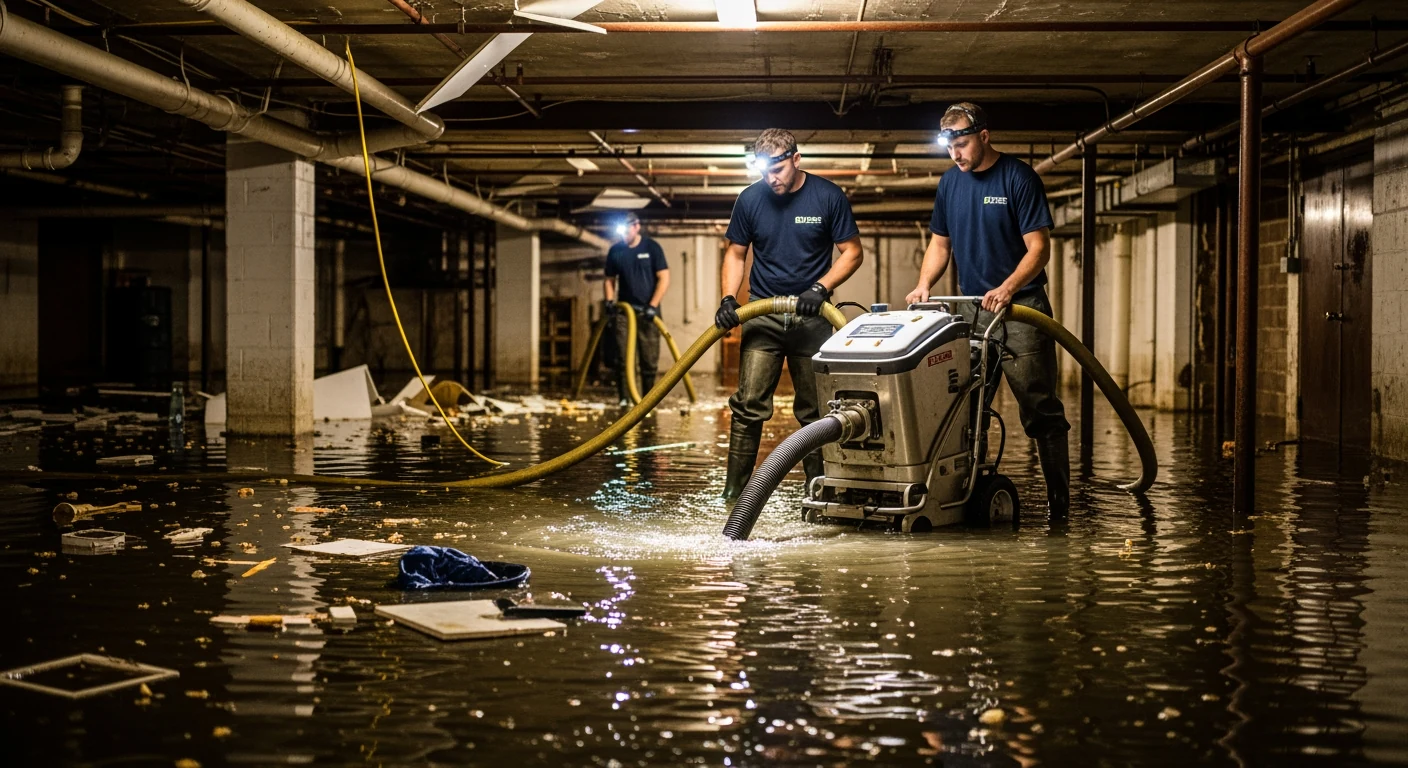
Maintaining continuous compliance requires absolute vigilance, particularly when unexpected property damage occurs. As a commercial restoration company, Upper Restoration frequently responds to emergency water damage calls in educational and institutional facilities across Long Island and the five boroughs. When a pipe bursts over a weekend or a roof leaks during a severe storm in a licensed preschool, the response protocol changes drastically if the building is older.
According to the IICRC S500 Standard and Reference Guide for Professional Water Damage Restoration, restorers must account for hazardous materials before beginning destructive drying techniques. If water damages a ceiling coated in older acoustical plaster, that plaster can rapidly degrade from a non-friable state (where fibers are locked in) to a friable state (where it crumbles under hand pressure and releases airborne fibers). Our first step before deploying high-velocity air movers or initiating structural demolition is verifying the environmental status of the wet materials.
If the damaged plaster, drywall, or floor tile contains asbestos, standard drying protocols must be immediately halted. The area must be isolated, and a licensed abatement contractor must safely remove the hazard under controlled negative air pressure before standard water damage restoration can resume. Ignoring this step to dry a building faster is a severe violation of state and federal law, and it places children and staff at immense risk.
Compliance Costs and Timelines for Preschool Operators
Budgeting for environmental compliance is a harsh reality for any child care operator expanding in the New York market. The costs associated with nyc preschool asbestos inspections and subsequent abatement, if necessary, vary significantly based on the square footage of the facility, the scope of the renovation, and the age of the building.
For a standard 3,000-to-5,000 square foot facility in Brooklyn or Nassau County, initial investigative sampling and the issuance of an ACP-5 form typically range from $800 to $2,500. This fee covers the investigator’s time on site, the extraction of samples, and the laboratory fees for microscopic analysis. The timeline for this initial phase is generally 5 to 10 business days, heavily dependent on lab turnaround times and backlog.
Budgeting for Abatement
If asbestos is confirmed by the lab and will be disturbed during your build-out, the process shifts from inspection to formal abatement. Remediation costs are highly specific to the material type and location. Removing non-friable floor tile might cost between $10 and $25 per square foot. However, abating friable materials—like deteriorating pipe insulation or sprayed-on fireproofing—requires extensive, multi-stage containment protocols, decontamination units, and rigorous air scrubbing. These complex projects can easily exceed $50 to $100 per linear or square foot.
Furthermore, an independent third-party air monitor must be hired to oversee the abatement contractor and conduct final clearance air sampling. This separation of duties is a strict legal requirement in New York to prevent conflicts of interest and ensure the space is genuinely safe for re-occupancy.
Remediation and Abatement Under DOHMH Oversight
Discovering asbestos during the planning phase is stressful, but it is a manageable obstacle if approached methodically. If ACM is identified and must be removed to meet DOHMH requirements, a licensed asbestos abatement contractor must perform the physical work. General contractors and standard carpenters are legally prohibited from removing, manipulating, or disposing of asbestos-containing building materials.
The abatement process involves sealing off the designated work area with heavy-duty polyethylene sheeting and establishing negative air pressure using specialized HEPA-filtered exhaust machines. This critical step prevents microscopic asbestos fibers from migrating into adjacent, clean spaces—a primary concern in multi-tenant commercial buildings typical of Manhattan and Queens. Workers utilize specialized personal protective equipment (PPE) and wet methods to carefully remove the materials, which are then sealed in labeled, double-bagged, leak-tight containers for secure transport to an EPA-approved landfill.
Following the removal phase, the independent air monitor conducts aggressive clearance testing. Only after the interior air samples pass the rigorous clearance standards set by the DEP and state regulations can the containment barriers be dismantled. Once this clearance is officially achieved, the property owner receives an ACP-21 form (Asbestos Project Conditional Completion Form), which is required to close out DOB permits, lift stop-work orders, and satisfy DOHMH licensing inspectors.
The Reality of Commercial Insurance Coverage
From a financial and insurance perspective, standard commercial property policies or business owner policies (BOP) rarely cover the costs of routine asbestos testing or the abatement required for regulatory compliance and proactive renovations. Insurance typically only responds to sudden, accidental, and covered physical damage—for example, if a covered peril like a ruptured frozen pipe or a localized fire damages asbestos-containing drywall.
Even when a covered loss occurs, coverage for the resulting asbestos abatement is almost always subject to strict policy sub-limits, sometimes capped at a mere $10,000 to $25,000 for the entire claim. Childcare operators and commercial landlords should rely heavily on capital reserves rather than insurance expectations when budgeting for baseline environmental compliance work.
Frequently Asked Questions About Daycare Asbestos Compliance
Does every new daycare in NYC require an asbestos inspection?
Yes. If you are applying for a new Article 47 permit or filing for building alterations with the DOB to convert a commercial space for child care use, you must prove the space is free of asbestos hazards before work begins. This almost always requires formal inspection, physical sampling, and documentation (an ACP-5 form) completed by a certified investigator.
Will the DOHMH shut down my preschool if asbestos is found?
Not necessarily. The mere presence of asbestos does not immediately force a closure if the material is in good, non-friable condition and left completely undisturbed (e.g., intact floor tiles hidden safely under a commercial carpet). However, if the material is damaged, friable, or will be disturbed during renovations, it must be properly abated before DOHMH will issue or renew your permit to operate.
How long does the testing and clearance process actually take?
Initial inspection and lab results typically take 1 to 2 weeks. If abatement is required, the timeline expands significantly. Filing the abatement project with the DEP requires a mandatory waiting period (often 7 days), followed by the physical removal, which depends on the project size, and then final air clearance testing. Operators should build an additional 3 to 6 weeks into their project schedules if abatement becomes legally necessary.
Can my trusted general contractor handle the asbestos removal?
Absolutely not. New York law requires that asbestos abatement be performed strictly by a separately licensed asbestos abatement contractor. Furthermore, the mandatory air monitoring and clearance testing must be performed by a separate, independent environmental firm to guarantee objective results.
Talk to Upper Restoration for Compliance Testing Support
Meeting the stringent requirements of Article 47 does not have to stall your facility’s opening or overwhelm your administrative team. Understanding the regulatory landscape of nyc daycare asbestos testing and having a reliable, professional plan for managing potential environmental hazards is essential for any childcare operator in the metropolitan area.
While Upper Restoration specializes in comprehensive commercial water, fire, and mold remediation (adhering strictly to IICRC S500 and S520 standards), we work closely with a trusted, highly vetted network of licensed environmental investigators and abatement professionals across New York City and Long Island. We routinely help property owners and facility directors navigate the complex intersection of property damage, environmental compliance, and structural drying, ensuring that any remediation work adheres strictly to local laws and safety guidelines.
If you are in the process of building out a new center, negotiating a lease, or responding to unexpected property damage in an existing facility, contact Upper Restoration. We can discuss your specific situation and connect you with the right professionals to ensure your property remains compliant, safe, and ready to serve the community without regulatory delays.