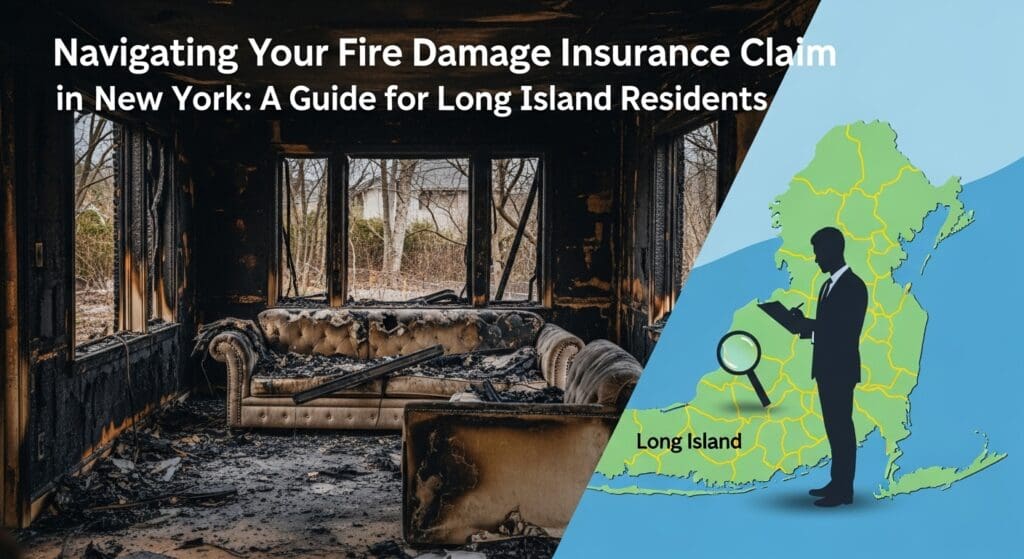
Dealing with the aftermath of a house fire is stressful enough without the added complexity of an insurance claim. For homeowners in Nassau and Suffolk counties, understanding the fire damage insurance claim process in New York is essential to ensure a fair and complete settlement. This guide will walk you through the key steps and concepts to help you navigate your claim successfully.
Step 1: Immediate Notification and Mitigation
The first and most critical step is to notify your insurance company about the fire as soon as possible. This action officially starts the claims process. Your policy also requires you to take “reasonable steps” to mitigate further damage. This means you must secure your property to prevent issues like water damage from rain or theft. This often involves:
- Emergency Board-Up: Securing windows, doors, and other openings.
- Roof Tarping: Protecting a damaged roof from the elements.
A professional fire and smoke damage restoration company can handle this for you, and the costs are typically covered as part of your claim.
Step 2: Comprehensive Documentation
Thorough documentation is the backbone of a successful insurance claim. Before any cleanup begins, you should:
- Take Photos and Videos: Capture detailed images and videos of all damaged property and structural elements from various angles.
- Create a Home Inventory: Make a list of all damaged items, including their age, original cost, and estimated replacement cost. Look for old photos or receipts that can help prove ownership and value.
- Keep All Receipts: Save every receipt for any expense related to the fire, including temporary housing, meals, clothing, and repair costs.
Step 3: Understanding Your Policy and Settlement Terms
Your insurance adjuster will assess the damage, but it’s crucial that you understand the terms of your own policy. Two key concepts you will encounter are Actual Cash Value (ACV) and Replacement Cost Value (RCV).
- Actual Cash Value (ACV): This is the value of your damaged property minus depreciation. For example, if a five-year-old sofa is destroyed, ACV is what that five-year-old sofa was worth right before the fire, not what a new one would cost. Most policies initially pay out on an ACV basis.
- Replacement Cost Value (RCV): This is the cost to replace your damaged property with a new item of similar kind and quality, without deducting for depreciation. To receive the full RCV, you typically need to actually replace the item and submit the receipt to the insurance company. The difference between the initial ACV payment and the final RCV amount is called recoverable depreciation.
Step 4: The Role of Your Restoration Company as an Advocate
While your insurance adjuster works for the insurance company, your chosen fire damage restoration company works for you. A reputable, IICRC-certified restoration company is more than just a cleanup crew; they are a crucial advocate in the claims process.
An experienced local restoration company will:
- Use Industry-Standard Estimating Software: They use the same software as insurance companies (like Xactimate) to create a detailed, line-by-line estimate for repairs, ensuring nothing is overlooked.
- Communicate Directly with Your Adjuster: They can walk the property with the adjuster, pointing out specific damages (like hidden smoke or water damage) and explaining the necessary scope of work.
- Provide Necessary Documentation: They supply all the detailed reports, moisture readings, and photographic evidence required by the insurance company to justify the restoration plan.
Upper Restoration provides professional sewage cleanup and removal services across Nassau County, Suffolk County, and all five NYC boroughs — available 24/7.
Navigating a fire damage insurance claim on Long Island requires diligence and the right professional partners. By understanding the process, documenting everything, and working with a trusted restoration company, you can ensure you receive the full settlement you are entitled to and begin the process of rebuilding your home and your life.