Two of the most common calls we receive at Upper Restoration start the same way: “I think I have mold – do I need testing or remediation?” It’s a fair question, because the two services are often confused, sometimes bundled unnecessarily, and can represent very different costs. Here’s a clear breakdown of mold testing vs. mold remediation – what each involves and when you actually need one versus the other.
What Is Mold Testing?
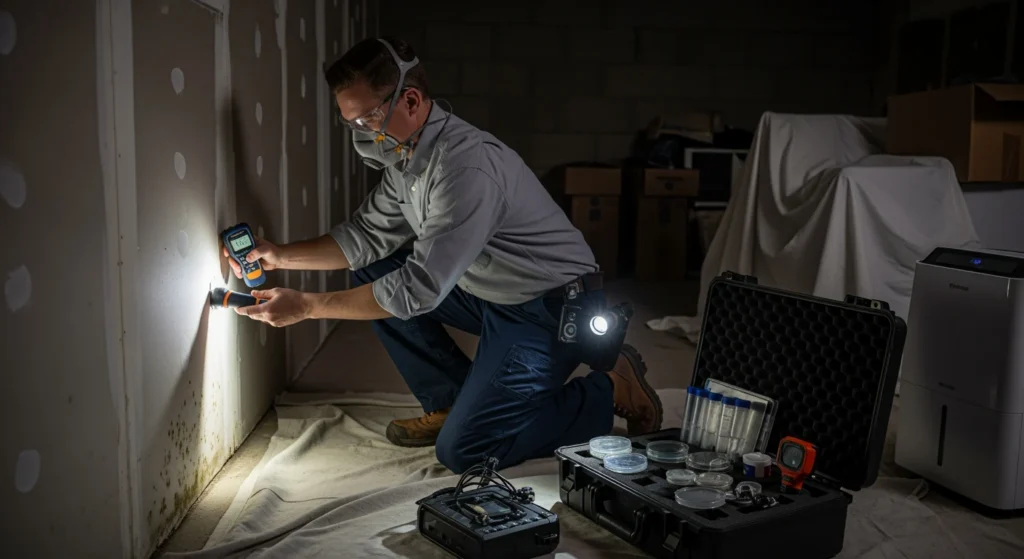
Mold testing – also called mold inspection or indoor air quality sampling – is the process of determining whether mold is present, what species it is, and at what concentration. Testing is typically performed by a certified industrial hygienist (IH) or certified mold inspector who is independent from the remediation company.
Common mold testing methods include:
- Air sampling: A pump draws air through a cassette that captures spores; the cassette is sent to a lab for analysis. This is the most common method and measures airborne spore counts.
- Surface/tape sampling: A strip of tape is pressed against a visibly moldy surface and sent to a lab to identify the species present.
- Bulk sampling: A piece of material (drywall, wood, insulation) is collected and analyzed. Used when deeper contamination is suspected.
- ERMI (Environmental Relative Moldiness Index): A dust sampling method that provides a comprehensive snapshot of the mold history in a home.
A mold inspection report will tell you what species are present (Cladosporium, Penicillium, Stachybotrys, etc.), whether indoor levels are elevated compared to outdoor baseline samples, and which areas of the home are affected.
What Is Mold Remediation?
Mold remediation is the physical removal and cleanup of mold-contaminated materials. It is performed by a licensed mold remediation contractor (in New York, this requires a license under Article 32 of the Labor Law). Remediation involves:
- Containing the affected area to prevent spore spread
- Removing contaminated materials (drywall, insulation, wood framing) that cannot be cleaned
- HEPA vacuuming and antimicrobial treatment of remaining surfaces
- Air scrubbing with HEPA filtration during and after work
- Post-remediation clearance testing (performed by an independent inspector)
Remediation addresses the existing mold. It does not fix the underlying moisture source – that must be corrected separately or mold will return.
When Do You Need Mold Testing Only?
Testing without remediation makes sense in these scenarios:
- You smell musty odors but see no visible mold – testing can identify hidden mold before it spreads further
- Real estate transactions – buyers and sellers often require air quality testing as part of due diligence
- Post-remediation clearance – independent testing confirms remediation was successful before re-occupying a space
- Health concerns – occupants experiencing respiratory symptoms without a visible cause may benefit from air sampling
- Landlord-tenant disputes – documented testing creates an objective record of conditions
When Do You Need Remediation (With or Without Prior Testing)?
If you can see mold covering more than 10 square feet, the EPA recommends professional remediation – and in New York, a licensed contractor is required. In these cases, testing before remediation is optional (you already know mold is present), though a pre-remediation air test can be useful for insurance documentation or to establish severity.
Remediation is required when mold has:
- Penetrated porous materials (drywall, insulation, wood framing)
- Spread behind walls or under flooring after a water damage event
- Caused structural damage to building materials
- Affected an HVAC system (mold in ductwork distributes spores throughout the entire building)
Why You Should Never Use the Same Company for Testing and Remediation
This is one of the most important points in this article. The company doing your mold testing should not be the same company doing your remediation. This is an industry best practice and, in some contexts, a regulatory concern. When a remediator also controls the testing, there is an inherent conflict of interest – they may overstate the problem to sell more work, or understate post-remediation results to avoid a re-do.
Upper Restoration performs licensed mold remediation. We encourage clients to hire an independent certified industrial hygienist for pre- and post-remediation testing. We’re happy to provide referrals to independent IH firms serving Long Island and NYC.
Frequently Asked Questions
How much does mold testing cost on Long Island?
A basic air quality inspection with 2-3 samples typically costs – from an independent inspector. Comprehensive whole-home testing with multiple samples, a full written report, and lab analysis runs -,200. Avoid free mold inspections offered by remediation companies – these have a built-in conflict of interest.
Can mold testing tell me exactly where the mold is?
Air sampling can indicate elevated spore levels in a room but cannot pinpoint the exact location of hidden mold. A thorough visual inspection combined with moisture meter readings and potentially thermal imaging is often needed to locate mold behind walls or under flooring.
Is mold testing required before remediation in New York?
New York’s Article 32 mold law requires a licensed assessor to produce a written work plan before a licensed remediator begins work on projects over 10 square feet. This creates a de facto separation of testing and remediation for larger projects, but testing methodology and scope are at the assessor’s discretion.
What happens if mold testing comes back elevated?
Your inspector will provide a report comparing indoor spore counts to outdoor baseline samples. If indoor levels are significantly elevated, or if hazardous species like Stachybotrys (black mold) are found, remediation is recommended. The report should also identify potential moisture sources that need to be addressed.
Conclusion
Mold testing identifies a problem; mold remediation solves it. Most homeowners dealing with visible mold after water damage can skip straight to remediation – but testing still has a critical role in hidden mold situations, real estate transactions, and post-remediation clearance. Upper Restoration provides licensed mold remediation on Long Island and NYC. Contact us for a free assessment and referrals to independent testing professionals.
Related: → Complete Restoration Guide for Long Island Homeowners
Frequently Asked Questions
How do I file a property damage insurance claim?
Contact your insurer immediately, document damage with photos and video, get a contractor estimate, and submit your claim with evidence.
What should I do before filing a claim?
Document all damage, take photos before cleanup, keep receipts for emergency repairs, and avoid major repairs until adjuster inspects.
Will my insurance cover restoration?
Standard homeowners policies cover sudden, accidental property damage from fire, wind, and water. Gradual damage is usually excluded.
What is depreciation in insurance claims?
Depreciation is the reduction in value of building materials over time. Insurers deduct it from replacement cost (ACV vs RCV).
Should I hire a public adjuster?
For large or complex losses, a public adjuster can identify missed damage and negotiate higher settlements, taking 5-15% commission.
How long does a claim settlement take?
Timeline varies from 2 weeks (small claims) to 6+ months (complex cases). Undisputed claims typically settle faster.