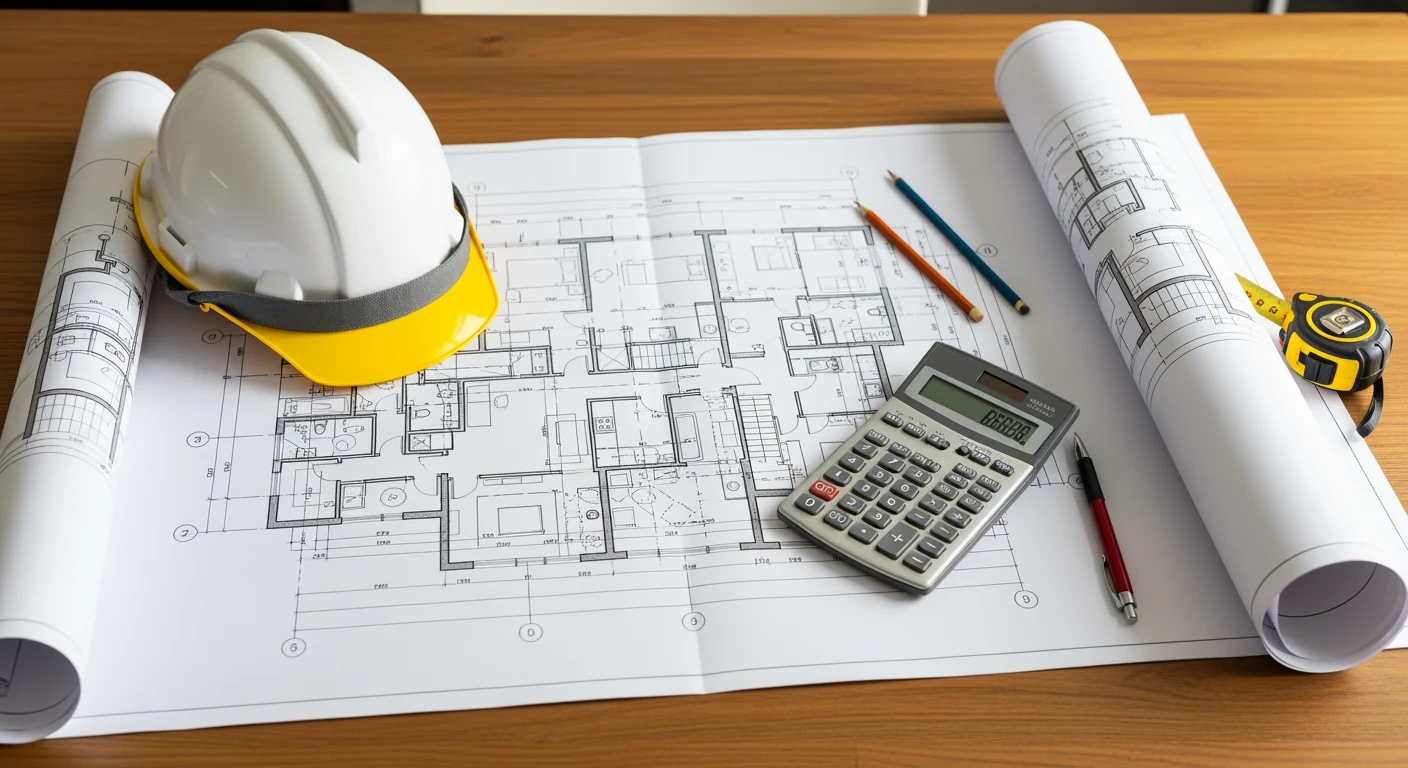
Why Rebuilding After Remediation Requires a Different Materials Strategy
Rebuilding after professional mold remediation calls for a two-part strategy: controlling moisture through vapor barriers, air sealing, and dehumidification, and selecting non-organic, tested materials in the areas most exposed to humidity. Neither step alone prevents recurrence. Together, they reduce the conditions mold needs to grow.
If you’re reading this, someone already scoped out the mold, removed the affected materials, and cleared the space. Now you’re standing in front of studs and subfloor, and a contractor or big-box associate is asking what you want to rebuild with. This is a different decision than a normal renovation. You’re not picking materials for looks or budget alone. You’re picking materials that won’t put you back in the same position eighteen months from now.
Here’s the honest framing, and it matters because a lot of marketing in this space overpromises: no material guarantees mold will never return. Materials manage risk. They lower the odds and slow the clock if moisture does get in again. The real prevention happens at the assembly level, meaning how air, vapor, and liquid water move through your walls, floors, and ceilings. A “mold-resistant” panel installed over a leaking pipe with no vapor control will still grow mold. The framework below treats materials and moisture control as one decision, not two.
The Science of Mold Resistance: What ASHRAE Standard 160 Tells Us About Materials and Humidity
ASHRAE Standard 160 sets performance criteria limiting mold growth risk on building surfaces using running-average relative humidity thresholds: a 30-day average below 80%, a 7-day average below 98%, and a 24-hour average below 100%, for surface temperatures between 41°F and 104°F. Naturally resistant or treated materials can tolerate higher surface RH for longer.
ANSI/ASHRAE describes Standard 160 as providing “performance-based design criteria for predicting, mitigating, or reducing moisture damage to the building envelope, materials, components, systems, and furnishings, depending on climate, construction type, and HVAC system operation,” according to the ANSI/ASHRAE 160-2016 standard summary. In plain terms: the standard acknowledges that different climates and mechanical systems create different moisture loads, and it gives engineers a numeric target instead of a vague instruction to “keep things dry.”
The most useful piece for a homeowner rebuilding a wall isn’t the humidity math, it’s the material sensitivity classification built into the Standard 160 addendum. ASHRAE sorts common building materials into four tiers based on how tolerant they are of sustained surface humidity before mold becomes likely.
| Sensitivity Class | Example Materials | What It Means for Your Rebuild |
|---|---|---|
| Very Sensitive | Untreated wood | Avoid in basements, behind tile, and near plumbing chases |
| Sensitive | Wood-based boards, paper-coated products (standard drywall) | Acceptable in dry, well-ventilated living spaces only |
| Medium Resistant | Cement-based and plastic-based materials (cement board, fiber cement) | Preferred backer in wet areas and below-grade walls |
| Resistant | Glass, metal (tile, aluminum flashing, metal studs) | Best choice for high-moisture zones and structural framing in damp basements |
A separate finding reinforces why untreated wood sits in the “very sensitive” tier: research by Mantha and Arena, presented at an IBPSA/ASHRAE building performance simulation conference, notes that roughly 20% wood moisture content corresponds to about 80-90% relative humidity, which is squarely in mold’s preferred growth range. That’s the scientific reason framing lumber in a damp basement is a slower-motion repeat of the problem you just paid to fix.
Understanding “Mold-Resistant” Labels: ASTM C1396 and the ASTM D3273 Test Score Homeowners Should Ask For
ASTM C1396/C1396M is the product specification governing gypsum board, including the criteria for calling a panel “mold resistant.” ASTM D3273 is the lab test behind that label, exposing a sample to roughly 90°F and 95-98% humidity for four weeks and scoring surface mold coverage on a 0-10 scale, where 10 means no growth.
Here’s where marketing and standards diverge. ASTM C1396 defines mold-resistant gypsum board as a product showing no more than 20% mold coverage by surface area when tested under ASTM D3273, a threshold confirmed in both the 2013 and 2017 versions of the specification. The Gypsum Association calls ASTM C1396 “the applicable product standard for mold-resistant gypsum board,” and describes appropriate uses such as behind tile and in other moisture-prone areas, per its 2016 publication “Mold/Moisture-Resistant Gypsum Panels: Commercial Applications.”
That 20% threshold is a pass/fail line, not a performance ceiling, and it’s why the actual D3273 score matters more than the words “mold resistant” printed on the packaging. Model building code language, as compiled by UpCodes referencing Section 2506.3 (“Mold Resistance”), requires gypsum or cement board on interior faces of exterior basement and below-grade walls, around shower and tub surrounds, and within 2 feet of kitchen sinks to carry the highest D3273 score of 10. Architectural specification templates go a step further, defining a “good vs. best” tier: acceptable moisture-resistant board scores 8 or higher on D3273, while top-tier products score a full 10.
Manufacturer testing shows this benchmark is achievable in real products, not just on paper. American Gypsum’s M-Bloc Type X panel is documented as achieving a perfect D3273 score of 10 at an ISO 17025-accredited lab. Comparable specification sheets from other gypsum manufacturers cite the same top score for their moisture- and mold-resistant lines, typically alongside a water absorption spec of 5% or less after two-hour immersion. When you’re standing in a supply house, the number to ask for is the D3273 score, ideally 10, minimum 8.
Best Materials by Room: Basements, Bathrooms, Kitchens, and Crawl Spaces/Attics
Material choice should shift by room based on expected moisture exposure. Basements and crawl spaces need cement board, treated framing, and vapor control at grade. Bathrooms and kitchens need cement board or moisture-resistant gypsum behind all wet surfaces. Attics need continuous ventilation paired with resistant sheathing, not just insulation upgrades.
| Room | Recommended Materials | D3273 Score to Ask For |
|---|---|---|
| Basement (below-grade walls) | Cement board, metal framing, closed-cell foam or rigid foam with a vapor barrier | 10 |
| Bathroom (shower/tub surround) | Cement board or moisture-resistant gypsum, tile finish, PVC or metal trim | 10 |
| Kitchen (within 2 ft of sink) | Moisture-resistant gypsum or cement board, tile or sealed backsplash | 8-10 |
| Crawl space / Attic | Treated lumber where wood is unavoidable, vapor barrier over crawl space soil, continuous soffit/ridge ventilation | 8-10 where board is used |
Notice the pattern: every wet or below-grade zone leans on cement- or gypsum-based board with a documented D3273 score, not standard drywall with a “moisture resistant” sticker of unknown origin. Living areas outside these zones don’t need the same treatment. Standard drywall is fine in a bedroom with normal humidity and no plumbing behind the wall.
Material Hierarchy: Why Cement Board, Tile, Metal, and Glass Outperform Organic Materials Like Wood and Standard Drywall
Cement board, tile, metal, and glass sit in ASHRAE’s “medium resistant” and “resistant” tiers because they lack the organic cellulose that mold digests. Wood-based boards and paper-faced drywall sit in the “sensitive” and “very sensitive” tiers because their surfaces provide a food source once moisture content climbs.
This is the underlying reason the room-by-room table above keeps pointing toward the same handful of materials. Mold needs an organic substrate, moisture, and a survivable temperature range to establish itself. Cement board and tile remove the substrate. Metal framing removes it from the structural side of the wall. Glass shower enclosures remove it from the finish side. None of these choices are exotic or expensive relative to standard alternatives; cement board typically installs at a similar labor cost to drywall in wet areas, and the material premium is modest compared to a repeat remediation bill.
Where wood is structurally necessary, such as floor joists or wall studs, borate-treated lumber and proper moisture separation (sill plates, vapor barriers, adequate clearance from grade) shift that wood’s practical risk profile without changing the framing material entirely. The goal isn’t eliminating every organic material in the house. It’s making sure organic materials aren’t sitting where the previous mold problem started.
Beyond Materials: Vapor Barriers, Air Sealing, and Dehumidification in Northeast Homes
Moisture control breaks into three strategies: keeping moisture from entering the assembly, preventing accumulation where it does enter, and actively removing residual moisture with dehumidification and ventilation. Every rebuild in the tri-state area’s cold, humid climate needs at least one air barrier and one correctly placed vapor barrier, not material selection alone.
This is the section homeowners skip, and it’s usually the one that determines whether the new materials perform as tested. Common vapor-impermeable materials include rubber membranes, polyethylene film, glass, aluminum foil, sheet metal, oil-based paints, vinyl wall coverings, and foil-faced insulating sheathing, according to technical guidance distributed through Sweets Construction under “Moisture Control For Buildings.” Placement matters as much as material. In cold Northeast climates, a vapor barrier belongs toward the warm, interior side of the wall assembly. Installed on the exterior side instead, it traps moisture inside the wall cavity through the winter, which raises mold risk even when every visible material is a resistant type.
Dehumidification closes the loop. Basements across the region routinely run above the 80% 30-day average RH threshold from ASHRAE Standard 160 during humid summer stretches, even in a well-sealed rebuild, simply because the ground and foundation walls are cooler than the surrounding air. A continuously running dehumidifier sized to the square footage, combined with sealed sump covers and graded exterior drainage, keeps that running average under the threshold that governs mold viability.
Quick gut-check: If your rebuild plan includes mold-resistant board but no mention of vapor barrier placement or a dehumidifier for the basement, the plan is incomplete. Materials and moisture control are one decision, not two.
What to Ask Your Contractor or Supplier Before You Rebuild
Before approving any rebuild material list, ask for the ASTM C1396 designation on gypsum board, the specific ASTM D3273 score (target 8 minimum, 10 for below-grade and wet areas), and a written explanation of where the vapor barrier sits in the wall assembly relative to your climate zone.
Ask before you buy: Does this gypsum board meet ASTM C1396/C1396M? What is its ASTM D3273 mold resistance score, and can you show documentation? Is cement board specified for the basement, shower surround, and within 2 feet of kitchen sinks? Where does the vapor barrier sit in this wall assembly, and does that placement suit a cold Northeast winter? What’s the dehumidification plan for the basement or crawl space once drywall goes back up?
A contractor or supplier who can answer these five questions specifically, with product documentation rather than a general assurance that “this board is mold resistant,” is working from the same standards referenced throughout this guide. Vague answers are the signal to ask more questions before materials go on order.
When to Call in Professionals: Why Post-Remediation Rebuilds Benefit from Expert Assessment
Post-remediation rebuilds benefit from a professional assessment because moisture sources, humidity readings, and assembly design are hard to verify without instrumentation and remediation experience. A contractor experienced in mold-informed rebuilds can confirm the original moisture source is resolved before new materials go in, preventing a repeat of the original failure.
The riskiest moment in any post-remediation rebuild isn’t material selection, it’s skipping verification that the original moisture source is actually gone. A finished basement can look and smell dry while a foundation crack, an underinsulated cold spot, or an undersized dehumidifier keeps surface RH above safe running averages. Moisture meters, hygrometers, and a clear read on ASHRAE Standard 160’s thresholds turn that judgment call into a documented number.
Rebuilding after mold remediation and want a professional read on your materials plan and moisture sources before you close up the walls?
Frequently Asked Questions
Is mold-resistant drywall actually different from regular drywall?
Yes. Mold-resistant gypsum board is manufactured to meet ASTM C1396/C1396M, which requires no more than 20% mold surface coverage when tested under ASTM D3273. Standard drywall carries no such rating. The paper facing and core composition differ, and top-tier mold-resistant boards score 8 to 10 out of 10 on the D3273 test, according to ASTM specifications and manufacturer test documentation.
What should go behind my shower, tub, or basement walls?
Cement board is the standard choice behind tile in showers and tubs, and on interior faces of below-grade basement walls, per model building code Section 2506.3 as compiled by UpCodes. It falls into ASHRAE’s “medium resistant” material class, unlike wood-based products, which are classified as sensitive or very sensitive to mold growth.
How do I know if a “mold-resistant” claim is real or just marketing?
Ask for the product’s ASTM D3273 test score and confirm it meets ASTM C1396/C1396M specification requirements. A legitimate mold-resistant gypsum board will have documented lab testing, often from an ISO 17025-accredited lab, showing a numeric score rather than just a package label reading “mold resistant.”
Do I still need dehumidifiers or vapor barriers if I use mold-resistant materials?
Yes. ASHRAE Standard 160 notes that resistant materials tolerate higher surface humidity longer, but they don’t eliminate moisture risk. A correctly placed vapor barrier, air sealing, and basement dehumidification are still necessary to keep running-average relative humidity below the standard’s thresholds.
Can any material guarantee mold won’t come back?
No. Materials reduce the likelihood and slow the progression of mold growth by removing the organic substrate mold needs, but they don’t guarantee prevention. Recurrence depends heavily on moisture control, including vapor barrier placement, air sealing, and dehumidification, alongside material choice.
Where does the vapor barrier belong in a Northeast climate wall assembly?
In cold Northeast climates, the vapor barrier typically belongs on the warm, interior side of the wall assembly. Placing it on the exterior side can trap moisture inside the wall cavity during winter months, increasing mold risk even when mold-resistant materials are used elsewhere in the assembly.
What ASTM D3273 score should I request for a kitchen rebuild?
For gypsum or cement board within 2 feet of a kitchen sink, model building code guidance (Section 2506.3, as compiled by UpCodes) calls for the highest ASTM D3273 mold resistance score of 10. Architectural specification templates set 8 or higher as an acceptable minimum for general moisture-resistant applications.
Rebuilding After Mold Remediation?
Get a professional assessment of your materials plan and moisture sources before you close up the walls.
Sources
- ANSI/ASHRAE, “Standard 160-2016: Criteria for Moisture-Control Design Analysis in Buildings” (2016)
- ASHRAE, Addenda to Standard 160, Material Sensitivity Classification (2009/2016)
- ASTM International, “ASTM C1396/C1396M-17: Standard Specification for Gypsum Board” (2017)
- ASTM International, “ASTM D3273: Standard Test Method for Resistance to Growth of Mold on the Surface of Interior Coatings in an Environmental Chamber”
- Gypsum Association, “Mold/Moisture-Resistant Gypsum Panels: Commercial Applications” (2016)
- American Gypsum, M-Bloc Type X Product Documentation
- UpCodes, Model Building Code Section 2506.3, “Mold Resistance”
- Sweets Construction, “Moisture Control For Buildings,” Technical Guidance
- Mantha, P. and Arena, L., IBPSA/ASHRAE Conference Paper on Wood Moisture Content and Relative Humidity
- Conspectus, “Tech Tips” Industry Technical Guidance on ASTM D3273 Testing
This content is for general informational purposes only and is not legal, medical, or insurance advice. Remediation scope, timelines, and costs vary by site conditions. Contact Upper Restoration for a professional assessment. Licensing and certifications apply per jurisdiction.