When Long Island and NYC homeowners search for mold removal prices, they find wildly inconsistent numbers—$500 from one company, $10,000 from another, national averages that don’t reflect what work actually costs in this market. This guide breaks down real 2026 mold removal costs for New York by room type, square footage, and the specific factors that drive prices up or down in our area.
Average Mold Removal Costs in New York (2026)
| Location / Project Type | Typical Cost (LI/NYC) | Notes |
|---|---|---|
| Bathroom (single room) | $1,500–$4,000 | Grout, tile, drywall behind fixtures |
| Attic mold (typical LI home) | $3,000–$8,000 | Roof deck + framing treatment |
| Basement mold | $2,000–$8,000 | Framing, drywall, concrete block |
| Crawl space mold | $2,500–$7,000 | Access difficulty increases cost |
| HVAC/duct mold cleaning | $1,500–$4,000 | Per system, plus duct cleaning |
| Whole-house remediation | $10,000–$30,000+ | Multiple areas, systemic moisture issue |
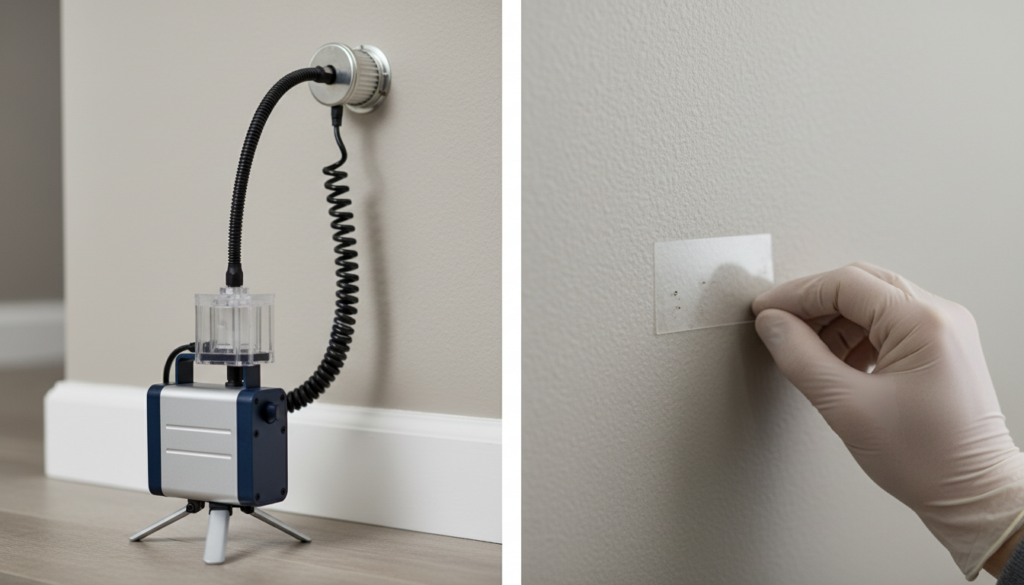
| Mold assessment (independent) | $400–$1,000 | Required separately under NYS Mold Law |
| Post-remediation clearance testing | $300–$800 | Air sampling after remediation |
Cost by Location in the Home
Attic Mold
Attic mold remediation costs $3,000–$8,000 for most Long Island homes. The primary cost driver is the extent of coverage on the roof deck—mold that covers significant sections of sheathing requires more labor, HEPA vacuuming, antimicrobial treatment, and encapsulant than isolated spots. If structural wood is compromised, board replacement adds cost. Correcting the ventilation or exhaust fan issue that caused the mold (critical for preventing recurrence) is typically an additional $200–$800.
Basement Mold
Basement mold costs $2,000–$8,000 depending on whether the growth is on concrete block walls (easier to treat) or finished framing and drywall (requires demolition of drywall). Finished basement mold remediation requires removing and disposing of moldy drywall, treating the framing, and rebuilding the finished surfaces—similar in scope to a partial basement renovation.
Bathroom Mold
Surface mold in bathroom tile grout is a cosmetic issue that can often be addressed with professional cleaning. When mold has penetrated behind tile or into drywall—common when shower pans or tub surrounds have been leaking—the cost increases because tile demo and drywall removal are required. A bathroom with mold behind the tile runs $2,000–$5,000 for remediation and tile reset.
Crawl Space Mold
Crawl space access adds labor cost. A crawl space with mold on framing and joists runs $2,500–$7,000 depending on size and access. Adding a vapor barrier after remediation (critical to preventing recurrence) typically adds $1,500–$4,000 and is strongly recommended.
What Factors Affect Mold Remediation Cost in New York?
- Square footage of affected area: The primary cost driver. More affected area = more labor, materials, and disposal.
- Mold species: Stachybotrys (black mold) requires more extensive protocols than common surface molds.
- Material type: Mold on concrete block can be cleaned. Mold in porous drywall or insulation requires demolition and disposal.
- Moisture source status: If the moisture source is active (ongoing leak), remediation must wait or proceed with simultaneous repairs. Active moisture makes remediation more complex and expensive.
- Access difficulty: Crawl spaces, attics, and wall cavities require more labor than open basement areas.
Why New York Mold Removal Costs More: The NYS Mold Law
New York is one of the few states with a formal Mold Law (signed 2015, effective 2016) that requires licensed assessors and licensed remediators—and prohibits the same company from doing both. This adds cost compared to states with no mold contractor licensing requirements:
- You pay separately for the licensed assessor’s report
- You pay the licensed remediator for the actual work
- Post-remediation clearance testing is performed by the original assessor (another fee)
The total adds $700–$1,800 in assessment and clearance costs to every project. But the law exists for good reason: it prevents contractors from over-recommending remediation scope when they profit from the work, and it creates an independent verification that the remediation was successful.
If a company offers to assess and remediate in the same transaction in New York, that’s a red flag. They’re either unlicensed or operating illegally.
Does Homeowner’s Insurance Cover Mold Removal in New York?
Standard homeowner’s insurance policies in New York typically cover mold remediation when mold results from a sudden, covered water event—a burst pipe, a washing machine overflow, storm-related water intrusion. They typically exclude mold resulting from:
- Gradual leaks or long-term moisture problems
- Flooding (usually requires separate flood insurance)
- Maintenance neglect
- Pre-existing mold conditions
Coverage disputes are common in mold claims. Document the moisture source thoroughly and get the assessor’s report before your insurer’s adjuster visits. Upper Restoration works with all major insurance carriers and can help document a mold claim properly.
How to Get an Accurate Mold Removal Quote
To get a meaningful quote, have this ready before calling:
- Location of mold (attic, basement, bathroom, etc.)
- Approximate size of affected area
- Whether mold is on surface materials or inside walls/framing
- Any known moisture source (active or resolved)
- Whether you have an existing assessment report
Upper Restoration provides free mold inspections and written estimates across Nassau County, Suffolk County, and NYC. We’re a licensed NYS mold remediator—we can’t do your assessment, but we’ll connect you with a certified assessor and coordinate the full process.
Call: | Request a Free Inspection
Frequently Asked Questions
Why does mold remediation cost so much in New York?
NY costs more than national averages due to required separate licensing for assessors and remediators under the NYS Mold Law, higher labor costs in the metro area, and stricter disposal requirements. The separate assessment and clearance testing adds $700-$1,800 to every project but protects homeowners from conflicts of interest.
Can mold just be painted over?
No. Painting over mold does not kill it and does not address the moisture source that caused it. Mold will grow through paint within weeks. Surface mold must be remediated, not covered. Mold-resistant primer can be used after remediation as a preventive measure in high-humidity areas.
How long does mold remediation take?
A single-room mold remediation typically takes 1–3 days. Attic or large basement projects take 2–5 days. The process includes containment setup, treatment, HEPA cleaning, and antimicrobial application. Add 24–48 hours for post-remediation clearance air sampling results.
Industry context: According to the EPA, mold can begin growing on wet surfaces within 24–48 hours. The IICRC S520 standard — the industry benchmark for mold remediation — classifies jobs by contamination level (Condition 1, 2, or 3), which directly drives cost. Condition 3 jobs requiring full containment average 3–5× more than surface-level Condition 2 work.
Related Restoration Services
- How Much Does Mold Cleanup Cost? A Straightforward Guide for NYC and Long Island Homeowners
- Mold Remediation Cost Per Square Foot: Real Numbers for NYC and Long Island (2025)
- Article 32 Work Plans: What a Compliant NYS Mold Remediation Plan Must Include