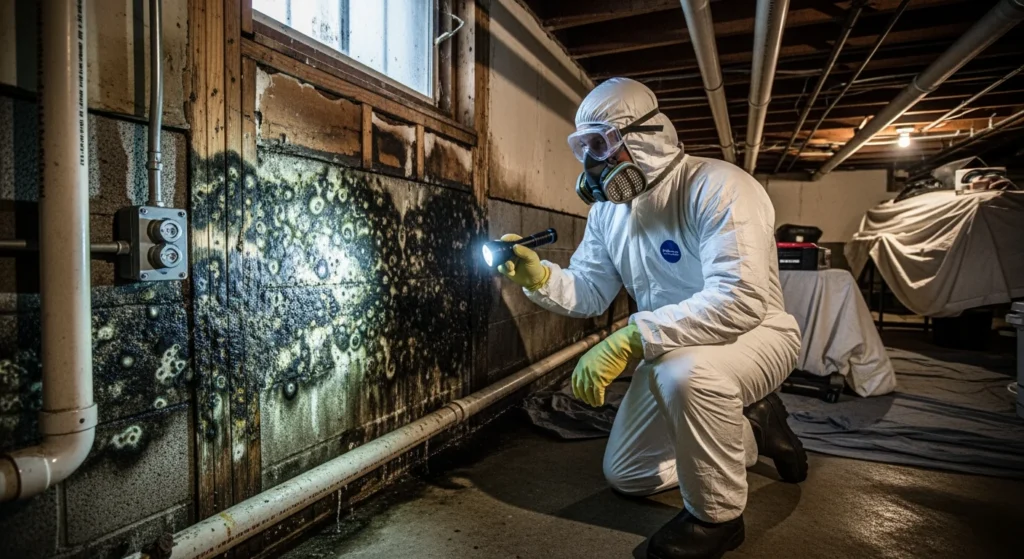
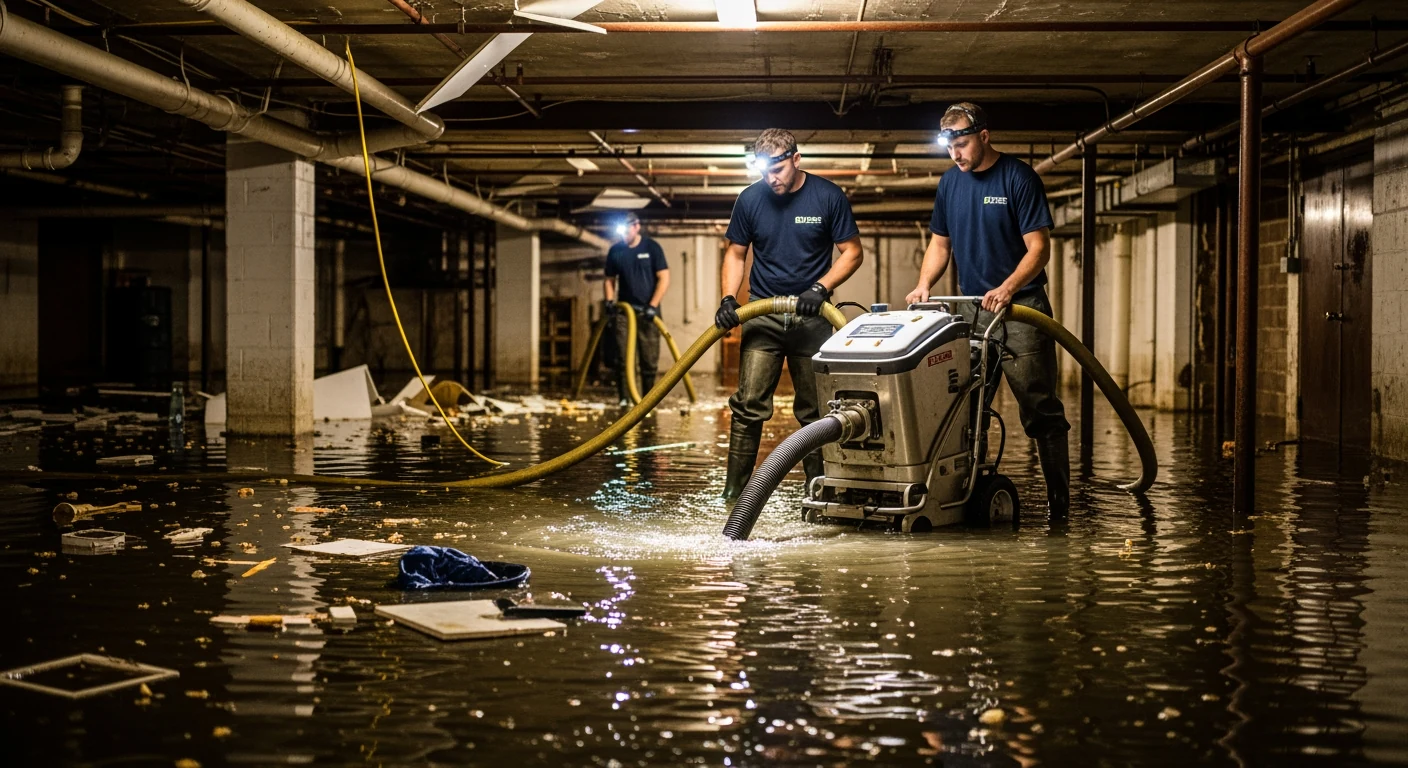
The Town of Brookhaven contains more geographic and building stock diversity than any other Long Island township, and its mold remediation profile reflects this diversity completely. The south shore Mastic Peninsula — where Sandy’s damage was documented as among the most severe in Suffolk County — carries the post-storm hidden mold legacy common to western Long Island’s coastal communities, but in a housing stock that is older and more modest than Nassau’s south shore, with fewer resources for comprehensive post-storm remediation. Coram and Medford in the interior carry a mold risk driven entirely by shallow groundwater rather than storm events. Stony Brook and Port Jefferson on the north shore carry Sound-shore historic construction mold risk. For the regulatory framework, see the Long Island Mold Remediation Master Guide.
Mastic Beach and Shirley: Accumulated Storm Legacy Mold
The Mastic Peninsula’s housing stock — predominantly small 1950s and 1960s Cape Cods on modest lots, some of the most affordably priced waterfront housing in Suffolk County — experienced near-complete inundation during Sandy and has been repeatedly flooded in subsequent storm events. The community’s lower income profile relative to western Long Island’s coastal communities means that post-storm remediation has often been limited to what insurance covered or what homeowners could afford — surface cleaning, paint-over, and cosmetic repair rather than the full Article 32 Category 3 protocol that the bay water contamination required. The result is a community where hidden mold in wall assemblies from 2012 and subsequent flooding events is widespread, and where the mold discovery during renovation projects routinely reveals multi-year colony growth.
Coram and Medford: Hydrostatic Basement Mold
Coram and Medford sit on Long Island’s central outwash plain where the water table is unusually shallow — as close as 3 to 5 feet below grade in many neighborhoods. This shallow water table creates chronic hydrostatic pressure against basement and crawl space foundations throughout the spring and early summer high-water-table period. Unlike the storm surge mold common on the south shore, Coram and Medford basement mold is driven by ground pressure rather than surface flooding — water seeps through foundation walls and floor-slab joints from the saturated soil outside, wetting the assembly from the outside in. The mold that results is Cladosporium on exposed concrete, Penicillium on fiberglass insulation backing, and Stachybotrys in chronic wet areas where the floor-wall junction never fully dries. Standard sump pump infrastructure does not resolve hydrostatic wall seepage — exterior drainage systems or interior drainage with sump management are required.
Port Jefferson and Stony Brook: Historic North Shore
Port Jefferson’s historic downtown sits at the base of Port Jefferson Harbor, and the village’s oldest structures — some dating to the 19th century — carry all the historic construction mold risk common to Long Island’s north shore waterfront communities. Stony Brook’s residential communities include significant mid-century Colonial stock alongside newer development, with mold risk profiles consistent with the standard Nassau/western Suffolk pattern for homes of that era.
Cost Benchmarks
- Mastic Beach or Shirley post-Sandy mold (wall cavity, multi-year accumulation): $8,000–$30,000. The multi-year accumulation pattern in Mastic-Shirley often produces more extensive mold than a single-event Sandy loss, because repeated flooding has wetted and re-wetted assemblies over multiple seasons.
- Coram or Medford hydrostatic basement mold: $5,000–$15,000 for mold remediation. Recurrence prevention requires exterior drainage correction — a separate and additional construction scope.
- Port Jefferson historic or Stony Brook standard: $3,500–$12,000 depending on construction era and scope.