Start Here: Stop the Water, Then Assess the Damage
Found mold or standing water in a Montauk home? Shut off the moisture source first, then dry the space within 24 to 48 hours using fans, dehumidifiers, or open windows if weather allows. Clean hard surfaces with detergent and water, and discard porous materials that stayed wet too long, per U.S. EPA guidance.
Every mold problem in Montauk traces back to water: a roof that gave way in a nor’easter, a slow leak under a kitchen sink in a house that sat empty from Labor Day to Memorial Day, a sump pump that couldn’t keep up during a heavy rain event. The EPA’s guide “A Brief Guide to Mold, Moisture, and Your Home” makes the point plainly: moisture control is the strategy, not an afterthought. If you don’t correct the source, cleaning the visible mold is cosmetic. It comes back.
Once the leak is stopped, move fast on drying. Pull up soaked carpet padding, prop up wet furniture, and get air moving through the space. The EPA recommends drying within 24 to 48 hours when possible, because that’s roughly the window before mold colonization accelerates on wet drywall, wood, and insulation. If materials are still damp after two days, or if you can’t get airflow into a crawlspace or wall cavity, that’s your signal to bring in someone who can inspect what you can’t see.
Do not paint or caulk over a moldy surface before cleaning and drying it. It seals moisture in and hides a problem that keeps growing behind the new coat, a mistake the EPA specifically warns against in its basic cleanup guidance.
Can You Handle It Yourself? The 10-Square-Foot Rule
The EPA’s practical threshold: homeowners can generally clean up moldy areas smaller than about 10 square feet, roughly a 3-foot by 3-foot patch, using proper safety precautions. Larger areas, recurring mold, or mold tied to significant water damage call for professional consultation rather than a DIY attempt.
That 10-square-foot figure isn’t arbitrary. It’s the line the EPA draws in “Mold Cleanup in Your Home” between a job a homeowner can reasonably contain with gloves, a properly fitted respirator, and detergent, versus a job that risks spreading spores through HVAC systems or into wall cavities you can’t see. A patch of mold on bathroom grout or a small ceiling stain from a one-time leak that’s already dried out often falls under that line. A moldy basement wall after a flood, or a musty smell coming from behind kitchen cabinets, does not.
DIY or Call a Pro? The 10-Square-Foot Rule: Under roughly 10 square feet (about 3 ft by 3 ft), with the moisture source already fixed, EPA guidance suggests homeowners can often clean it themselves with gloves, N95 protection, and detergent. Larger than that, recurring, storm-related, hidden behind walls, or affecting someone with respiratory sensitivity: call a licensed professional.
If you’re on the larger side of that line, don’t guess at containment. Sealing off the work area, controlling airflow, and confirming the moisture source is fully resolved are exactly the steps a New York-licensed mold professional is trained and legally required to follow.
Why Montauk Homes Face Moisture Challenges Worth Taking Seriously
Montauk’s coastal exposure, seasonal vacancy patterns, and older housing stock create logical conditions for hidden moisture problems, not a documented elevated mold rate. No Suffolk County or Montauk-specific mold statistics exist; the risk factors below are reasoning from known conditions, not measured local data.
A house that sits closed up from October through May, common for seasonal owners on the East End, loses the benefit of daily airflow and human attention that catches a slow leak early. A dripping supply line under a guest bathroom sink can run for months undetected in a property nobody’s walking through. That’s a structural reality of vacation-home ownership, not a Montauk-specific hazard, and it applies just as much to a shuttered lake house in the Adirondacks as it does to a beach cottage on Old Montauk Highway.
Coastal storm exposure is the other logical factor. Nor’easters and hurricane-adjacent systems bring wind-driven rain that finds its way through roof flashing, window seals, and foundation cracks that might never get tested in a drier inland climate. None of this means Montauk homes get more mold than homes elsewhere in the tri-state area. It means the combination of storm frequency and stretches of unoccupied time raises the odds that water intrusion goes unnoticed long enough to become a mold problem instead of a quick dry-out.
The practical takeaway for owners: walk the property regularly during off-season months, check attic and crawlspace access points after major storms, and treat any musty odor as worth investigating immediately rather than waiting for the next visit.
New York’s Mold Licensing Law: What It Means for Hiring Help
New York Labor Law Article 32 requires anyone performing mold assessment, remediation, or abatement work to hold a state license. It is unlawful for a contractor to advertise or perform these services without one, and license applicants must complete NYSDOL-approved training, including PPE instruction, before qualifying.
This matters more than most homeowners realize until they’re mid-crisis and hiring under pressure. New York State Department of Labor’s Mold Program, along with its Licensing Requirements and Minimum Work Standards (document SH120), sets out who is legally allowed to inspect, assess, and remediate mold in this state, and what minimum procedures they must follow on the job. A contractor who shows up with a spray bottle and no license number isn’t just cutting corners on paperwork; they’re operating outside a framework designed to protect you from incomplete or unsafe cleanup.
The licensing bar isn’t trivial either. Under the Mold Remediation Contractor License Application (SH126), individual license applicants must be at least 18 and complete state-approved coursework covering safety procedures and PPE use. That training requirement exists because mold remediation done wrong, without proper containment or protective equipment, can spread contamination rather than resolve it.
New York City’s Department of Environmental Protection illustrates how seriously some NY jurisdictions treat this: NYC imposes penalties from $800 to $10,000 for failing to hire a licensed mold assessor or file required post-remediation documentation. That’s a New York City rule specifically, not a Suffolk County or Montauk requirement. But it signals something worth internalizing wherever you live in the state: formal assessment, licensed remediation, and written documentation aren’t bureaucratic extras. They’re the difference between a job that holds up and one that has to be redone.
Not sure if your situation calls for a licensed remediation team? Upper Restoration holds the credentials New York requires, plus EPA and IICRC certifications, and can tell you honestly whether this is a DIY job or not.
Health Precautions During Mold Cleanup
Anyone cleaning mold should wear at minimum gloves and an N95 respirator, and avoid actions that stir spores into the air unnecessarily. People with asthma, allergies, chronic lung disease, or weakened immune systems face higher risk from exposure and should avoid participating in cleanup, consulting a healthcare provider about their individual situation.
This isn’t about scaring anyone away from a bathroom grout patch. It’s about matching precaution to the actual job. For a small, contained area under the 10-square-foot threshold, gloves and a properly fitted N95 are enough for most healthy adults. For larger jobs, add goggles, and keep kids, pets, and anyone in a vulnerable health category out of the work area and, ideally, out of the house entirely during active cleanup.
If someone in your household has a respiratory condition, don’t try to power through a bigger job “carefully.” Step back and call a licensed remediation professional instead, both for their sake and because they shouldn’t be exposed to spore counts higher than what’s typically found in the air. This piece can’t tell you what your specific health risk is; that’s a conversation for a doctor, not an article.
After a Storm or Flood: Special Precautions
Storm and flood damage requires stricter PPE than routine mold cleanup: at minimum an N95 respirator, goggles, and gloves, per the interagency Homeowner’s and Renter’s Guide to Mold Cleanup After Disasters. Contaminated materials need careful handling, and full cleanup should finish before anyone moves back into the home.
Floodwater brings more than moisture. It can carry bacteria, sewage, and chemical contaminants depending on the source, which is why the joint guidance from EPA, HUD, FEMA, NIH, and CDC treats disaster cleanup as a distinct category from ordinary household mold. Waterlogged drywall, insulation, and carpet that were submerged, not just dampened, generally need to be removed rather than dried and salvaged.
Storm or Flood Damage? Extra Precautions: Wear an N95 respirator, goggles, and gloves as a minimum baseline. Don’t return to full occupancy until cleanup is complete. Treat any material that was submerged, not just damp, as likely needing removal rather than drying. Keep children, pets, and anyone with respiratory sensitivity out of the affected area until the work is done.
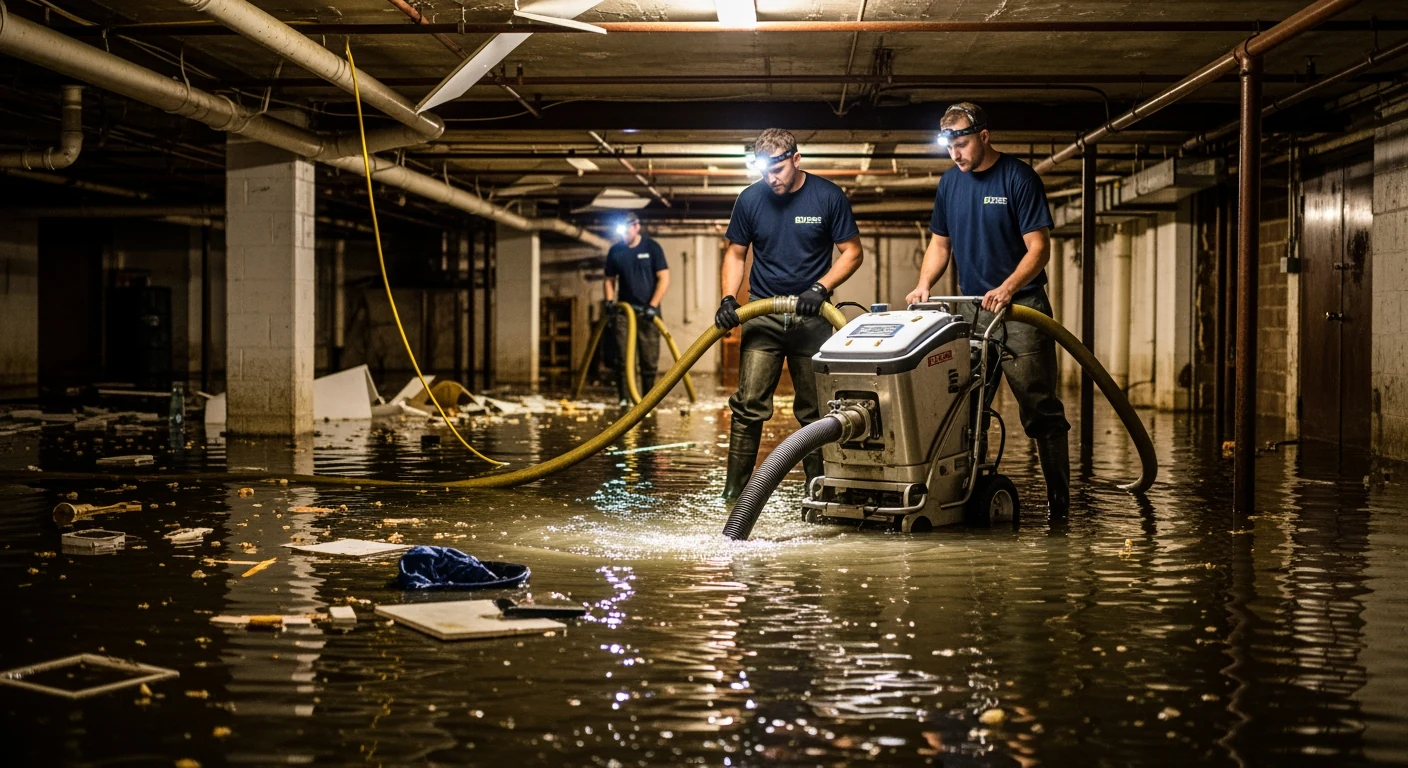
After a Montauk nor’easter with real flooding, this is not a weekend DIY project. Between the volume of affected material, the contamination risk, and the containment work needed to keep spores from spreading through the rest of the house, this is squarely licensed-professional territory.
How to Vet a Mold Remediation Contractor Before You Hire
Before hiring, homeowners should confirm the contractor’s New York mold license number, ask how they’ll identify and correct the moisture source, request a written containment and air-handling plan, and get documentation of the completed work. These four checks separate a compliant contractor from one operating without proper credentials.
A rushed decision made during a stressful moment, water actively coming through a ceiling, a musty smell that’s finally scared you into action, is exactly when corners get cut. A few direct questions protect you:
- What is your New York mold assessment or remediation license number? A legitimate contractor will give it without hesitation.
- How will you identify and fix the moisture source, not just remove visible mold? If the answer skips this, keep looking.
- What containment and air-handling measures will you use to keep spores from spreading to unaffected areas during the work?
- Will you provide written documentation of the scope, the work performed, and post-remediation conditions?
Under New York Labor Law Article 32, a licensed assessor and a licensed remediation contractor are typically separate roles by design, meant to create a check on the work rather than one company grading its own results. Ask how the contractor’s process accounts for that separation, or how they document independent verification that the job is actually finished.
What to Expect From Professional Remediation
Licensed remediation typically includes assessing the size and source of the moisture problem, building a remediation plan, selecting appropriate PPE and containment, removing and cleaning affected materials, correcting the underlying moisture issue, and checking for recurrence, following the EPA’s framework for mold remediation in buildings.
Expect a walkthrough and assessment before any cleanup starts, not a same-visit demolition. A contractor should be able to explain what they found, why it happened, and what the containment setup will look like before they touch a wall. Expect protective barriers around the work area, negative air pressure or air scrubbing in larger jobs, and removal of materials that can’t be adequately cleaned rather than an attempt to salvage everything.
What you shouldn’t expect: a guarantee that every trace of contamination is eliminated forever, or that mold can never return under the right moisture conditions. No responsible remediation company promises that, because it isn’t true. What a licensed professional can commit to is following the EPA’s and New York’s established process, correcting the moisture source that caused the problem, and documenting the work so you have a record if questions come up later, including for insurance.
On insurance: document everything with photos and dates before cleanup begins, and keep any contractor paperwork. This article can’t tell you what your policy covers or guarantee a claim outcome; that determination sits with your insurer and the specific language in your policy.
If your situation is over the 10-square-foot threshold, storm-related, hidden behind walls, or involves someone with respiratory sensitivity, it’s time for a licensed assessment.
Frequently Asked Questions
Can I clean mold myself, or do I need a professional in Montauk?
EPA guidance suggests homeowners can generally handle mold patches smaller than about 10 square feet themselves, using gloves, an N95 respirator, and detergent, once the moisture source is fixed. Larger areas, storm-related damage, hidden mold behind walls, or situations involving vulnerable household members call for a licensed mold professional under New York Labor Law Article 32.
Is mold remediation regulated in New York State?
Yes. New York Labor Law Article 32 requires anyone performing mold assessment, remediation, or abatement work to hold a state license through the New York State Department of Labor. It is unlawful to advertise or perform these regulated services without the appropriate license, and license holders must complete state-approved training covering safety procedures and personal protective equipment.
What should I do immediately after finding mold or flood damage in my home?
Stop the water source first, then begin drying affected materials within 24 to 48 hours using fans, dehumidifiers, or ventilation. Clean hard surfaces with detergent and water, and discard porous materials that stayed wet too long. Never paint or caulk over mold before cleaning and fully drying the surface, per EPA guidance.
Is it safe for my family to stay home during mold cleanup?
It depends on the extent of the problem and individual health factors. People with asthma, allergies, chronic lung disease, or immune suppression face higher risk from mold exposure and should avoid the work area, per EPA disaster cleanup guidance. Anyone with health concerns about mold exposure should consult a healthcare professional rather than rely on general guidance alone.
Will my homeowner’s insurance cover mold remediation?
Coverage depends entirely on your specific policy and the cause of the moisture problem, and no article can guarantee a claim outcome. Document the damage with photos and dates before cleanup starts, keep all contractor documentation, and confirm coverage details directly with your insurer or agent.
How do I verify a mold contractor is actually licensed in New York?
Ask the contractor directly for their New York mold assessment or remediation license number; a legitimate, licensed contractor will provide it without hesitation. New York Labor Law Article 32 makes it unlawful to advertise or perform mold assessment or remediation work without this license, so a company unable or unwilling to produce a license number should not be hired.
Does Montauk have a higher mold risk than other parts of New York?
No documented statistic shows Montauk or Suffolk County has an elevated mold rate compared to other areas. Coastal storm exposure and seasonal vacancy patterns in Montauk create logical conditions for undetected moisture problems, such as leaks going unnoticed in unoccupied vacation homes, but this is a reasoning-based risk factor, not a measured local statistic.
Sources
- New York State Department of Labor, “Mold Program” (New York Labor Law Article 32)
- New York State Department of Labor, “Licensing of Mold Inspection, Assessment and Remediation Specialists and Minimum Work Standards” (SH120)
- New York State Department of Labor, “Application for a Mold Remediation Contractor License” (SH126)
- U.S. Environmental Protection Agency, “A Brief Guide to Mold, Moisture, and Your Home” (2014)
- U.S. Environmental Protection Agency, “Mold Cleanup in Your Home” (2014)
- U.S. Environmental Protection Agency, “What Are the Basic Mold Cleanup Steps?” (2019)
- U.S. Environmental Protection Agency, “Mold Remediation in Schools and Commercial Buildings, Chapter 3: Cleanup Methods” (2020)
- U.S. Environmental Protection Agency, U.S. Department of Housing and Urban Development, Federal Emergency Management Agency, National Institutes of Health, and Centers for Disease Control and Prevention, “Homeowner’s and Renter’s Guide to Mold Cleanup After Disasters” (2017)
- U.S. Environmental Protection Agency, “Mold” (2013)
- New York City Department of Environmental Protection, “Mold Abatement”
This content is for general informational purposes only and is not legal, medical, or insurance advice. Remediation scope, timelines, and costs vary by site conditions. Contact Upper Restoration for a professional assessment. Licensing and certifications apply per jurisdiction.