Mold Remediation in East Hampton, NY: What Hamptons Homeowners Need to Know in 2026
East Hampton Township — encompassing East Hampton Village, Wainscott, Amagansett, Springs, and Montauk — has a mold problem that is structurally different from anywhere else on Long Island. The problem is seasonal vacancy. Properties that sit empty from October through May provide ideal conditions for undetected moisture accumulation: no HVAC running to dehumidify, no occupants to notice water stains or musty odors, no one to respond when a pipe freezes, a heating system fails, or a roof leak begins during a January nor’easter. By the time the owners return in late spring, mold has established throughout affected areas and the remediation scope is far larger than it would have been if the problem had been caught within 48 hours of the moisture event.
This guide covers how mold develops in East End seasonal properties, what New York State law requires before anyone removes it, and what remediation costs in East Hampton in 2026.
Why East Hampton Properties Are Especially Vulnerable to Mold
Three conditions combine in East Hampton properties to create mold risk that exceeds the rest of Long Island. First, the Atlantic Ocean humidity: East Hampton sits between the Atlantic to the south and Gardiner’s Bay to the north, with near-ocean ambient humidity levels year-round that prevent natural drying of any moisture that penetrates the building envelope. Second, the seasonal vacancy window: most properties are empty for six to eight months, allowing any moisture event — pipe failure, roof leak, foundation seepage — to persist without intervention for weeks or months. Third, the housing stock: East Hampton’s mix of pre-war bungalows, 1950s and 1960s construction, and heavily renovated period structures includes attic configurations, crawlspaces, and wall assemblies that trap moisture without the modern vapor barriers and ventilation that newer construction provides.
Montauk deserves special mention. Montauk’s position at the terminus of Long Island — exposed to ocean on three sides, subject to sustained Atlantic wind events, with groundwater close to the surface throughout the peninsula — makes it the highest-humidity, highest-exposure community on the East End. Mold in Montauk properties is not just from moisture events; it is endemic in poorly ventilated crawlspaces and basement areas where the combination of salt air and near-surface groundwater creates persistent conditions above the 70 percent relative humidity threshold for mold growth. Annual mold inspections in Montauk properties are not overcautious — they are standard practice for property managers serving seasonal owners.
NYS Article 32: The Law That Governs Every East Hampton Mold Project
New York State Article 32 of the Labor Law applies to every mold remediation project in East Hampton Township, as throughout New York State. The requirements are the same here as in Nassau County or Queens — distance from New York City provides no exemption:
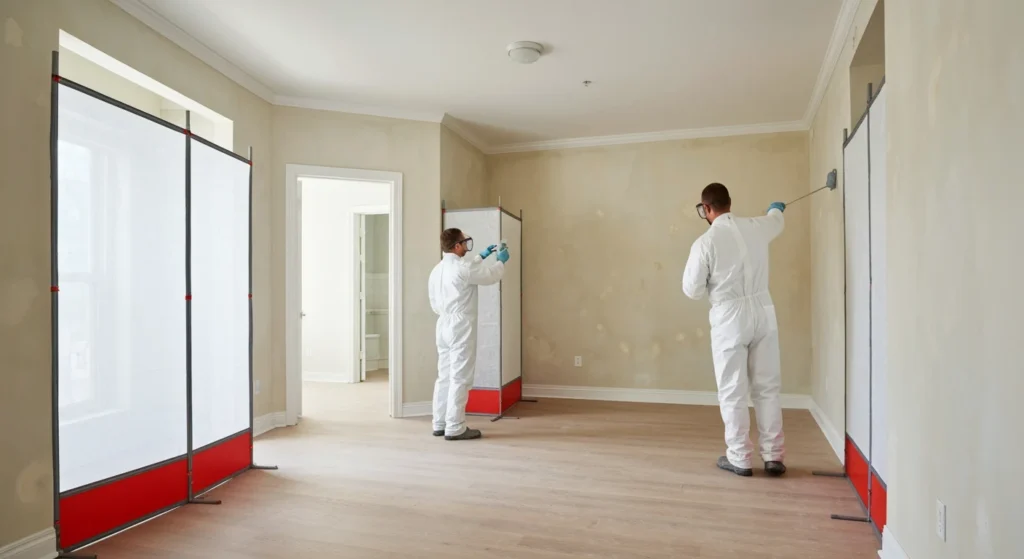
Any mold project involving 10 or more square feet requires a licensed NYS Mold Assessor to inspect the property, collect air or surface samples as warranted, and produce a written Mold Remediation Plan (MRP). The MRP specifies exactly what work is required. A separate licensed NYS Mold Remediator then executes the MRP — the assessor and remediator cannot be the same company on the same project. After remediation is complete, the original assessor returns to conduct post-remediation verification: air samples compared to outdoor baseline to confirm clearance.
For East Hampton real estate transactions — which routinely involve mold inspection as part of buyer due diligence — this documentation chain (assessor report, MRP, remediator work documentation, post-remediation clearance report) is what satisfies the buyer’s inspector and their attorney. A mold remediation without proper Article 32 documentation is not a solved mold problem in the eyes of a Hamptons real estate transaction. Get the paperwork.
Common Mold Scenarios in East Hampton Properties
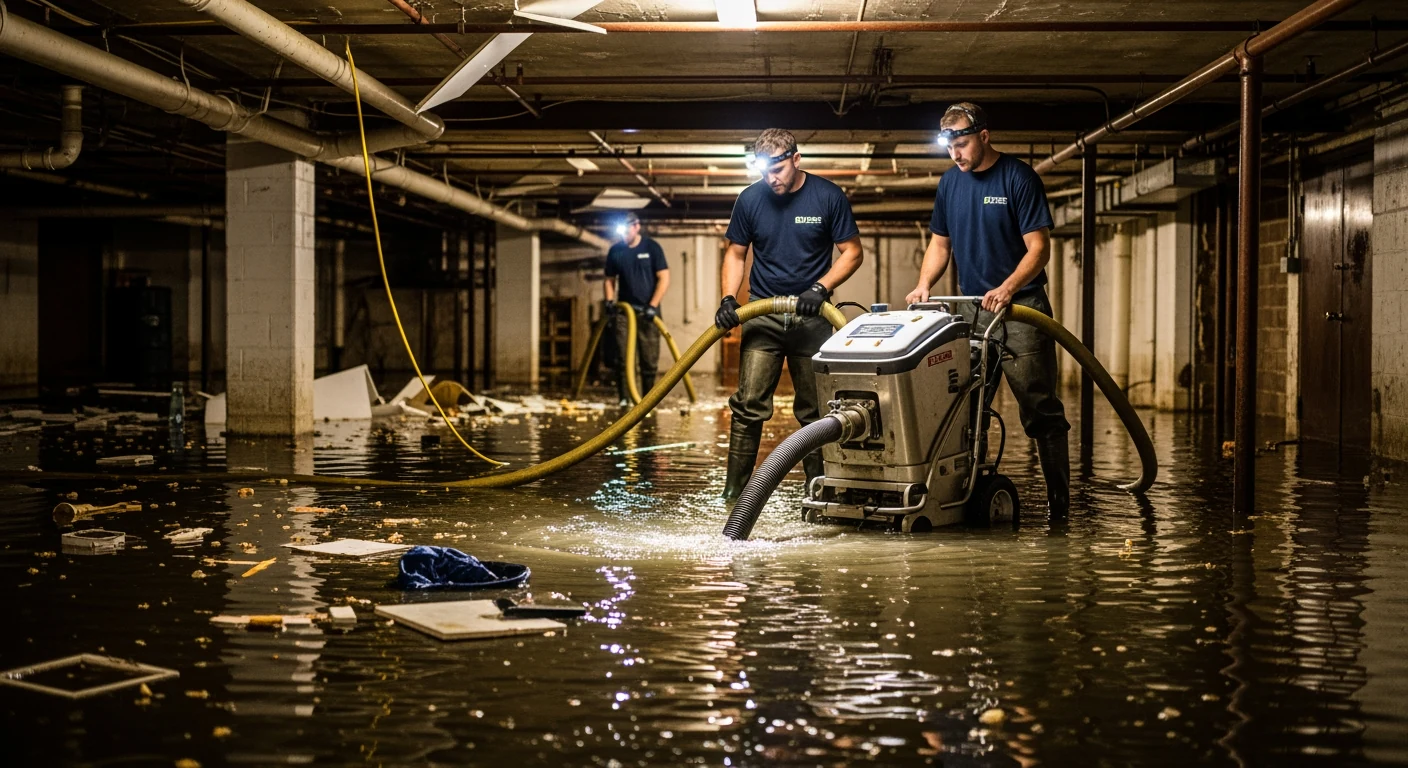
Winter freeze-and-burst with undetected moisture. This is the most common significant mold event in East Hampton. A supply line freezes in January, water runs for days or weeks, saturates wall and floor assemblies, and mold establishes throughout. Discovered at spring opening, the visible mold is extensive — but the hidden mold in wall cavities, under flooring, and in ceiling assemblies above saturated areas is usually more extensive than the visible surface growth. Assessment must include invasive inspection of concealed areas before the full scope can be determined.
Roof leaks in original or aging construction. East End bungalows and cottages from the 1920s through 1950s have cedar shake, slate, or original asphalt roofing that has exceeded service life. A winter storm that breaches the roof assembly allows water to soak attic insulation and framing throughout the storm season before anyone opens the property. Attic mold in these properties is often extensive by the time it is discovered — rafters, sheathing, and insulation throughout the attic space.
Crawlspace mold from inadequate vapor control. Many East Hampton properties — particularly original cottages on the ocean side and bay side — have crawlspaces rather than basements. Without adequate vapor barriers and ventilation, coastal groundwater evaporation produces chronic high humidity in the crawlspace that supports year-round mold on wood joists, subfloor assemblies, and insulation. This mold often goes undetected for years because no one enters the crawlspace.
HVAC system mold from extended shutdown. Properties where the HVAC system is turned off at seasonal closing and restarted in spring without inspection sometimes present with mold in the air handler coil, evaporator pan, and ductwork — the result of residual moisture and organic debris in the system during the shutdown period. Running a contaminated HVAC system re-distributes mold spores throughout every room with supply registers.
Mold Remediation Costs in East Hampton (2026)
East Hampton mold remediation costs reflect East End labor markets, trade availability in the off-season, and the finish quality required for reconstruction after demolition. Remediators capable of working in Hamptons-quality properties command premium rates, and post-remediation reconstruction to pre-loss finish standards often exceeds remediation costs in absolute dollars.
NYS Article 32 mold assessment and Mold Remediation Plan: $400–$900. Post-remediation clearance testing: $300–$600. These are fixed costs on every Article 32 project regardless of scope.
Small projects (under 10 sq ft, surface growth in one room): $800–$2,500 for remediation. Medium projects (10–100 sq ft, one to two rooms, wall cavity involvement): $3,000–$9,000. Large projects (attic system, crawlspace, multi-room, or whole-property seasonal vacancy loss): $10,000–$45,000+. Post-remediation reconstruction to Hamptons finish standards adds significantly to these ranges.