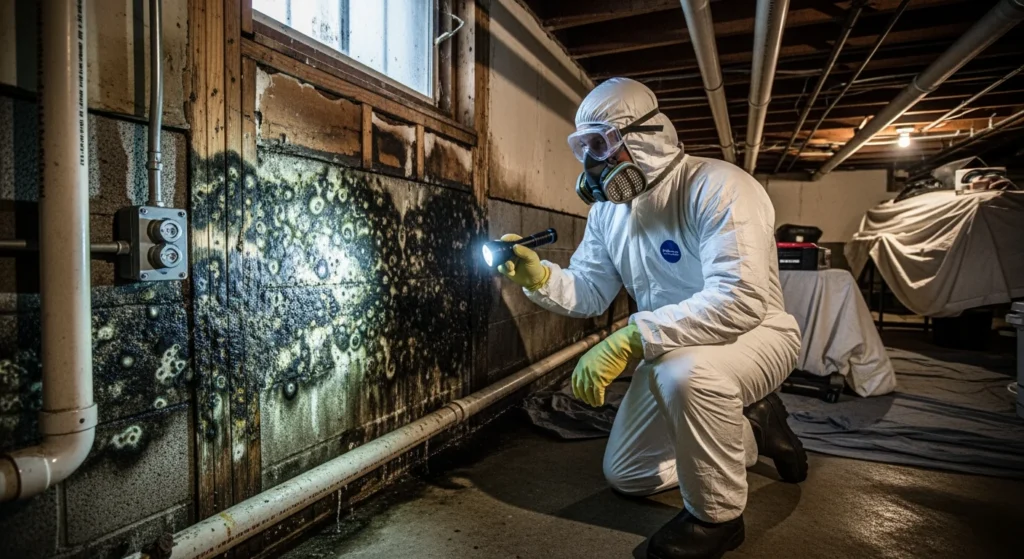
Mold discovered during a Long Island property inspection is a contract-timeline emergency. The buyer’s inspector finds mold in the attic or basement, reports it to the buyer’s attorney, and the clock starts ticking on contingency periods that were set without any knowledge that a licensed Article 32 assessment and remediation sequence would be required. The seller wants the deal to close. The buyer wants the mold remediated. The attorneys want documentation. Article 32 requires a licensed assessor, a compliant work plan, a licensed remediator, and post-remediation clearance — each step sequential and time-dependent. Understanding how these timelines interact is essential for every party to a Long Island property transaction.
New York Seller Disclosure Requirements
New York’s Property Condition Disclosure Act requires sellers to complete a disclosure statement that includes questions about known mold conditions. A seller who is aware of existing mold and fails to disclose it faces potential liability. Sellers who have previously remediated mold should retain their Article 32 documentation — work plan, clearance test results, assessor clearance letter — as disclosure evidence that the condition was professionally addressed. Buyers can waive the disclosure statement in exchange for a $500 credit at closing, but waiving the statement does not waive inspection rights.
Inspection Discovery Protocol
When a buyer’s inspector identifies suspected mold during a home inspection, the typical next step is negotiation between buyer and seller over who pays for Article 32 assessment and remediation and how the timeline fits into the existing contract. Several patterns emerge consistently in Long Island real estate transactions: seller agrees to complete remediation and provide clearance documentation before closing; seller provides a credit to buyer for estimated remediation cost; or parties agree to a closing escrow held for remediation completion. The third option — proceeding to closing with an escrow — requires an accurate cost estimate from a licensed remediator before closing, which in turn requires an Article 32 assessment and work plan before the estimate can be accurate.
Article 32 Timeline in a Transaction Context
A realistic Article 32 timeline for a standard Levittown attic mold project: assessment and work plan (2 to 3 business days); scheduled remediation start (1 to 5 business days depending on contractor availability); remediation execution (1 to 2 days for standard scope); clearance testing scheduling (1 to 2 days); laboratory turnaround (3 to 5 business days for standard analysis); clearance letter issuance (1 business day after results). Total elapsed time from discovery to clearance documentation: 10 to 20 business days in favorable conditions. This timeline frequently does not fit within standard Nassau County contract contingency periods without extension negotiation. Upper Restoration prioritizes transaction-driven mold projects and works to compress the assessment-to-clearance timeline for property transaction clients.