As a homeowner in Long Island, whether you reside in the historic neighborhoods of Nassau County, the sprawling suburbs of Suffolk, or the vibrant streets of New York City, your home is more than just an investment—it is your sanctuary. When a disaster strikes, be it a burst pipe in Mineola, a kitchen fire in Queens, or storm damage in the Hamptons, that sanctuary is violated. In the frantic hours following a loss, you are likely bombarded with terms you’ve never had to consider: mitigation, remediation, build-back, and reconstruction.
Understanding the distinction between mitigation vs. reconstruction is not merely an academic exercise; it is the difference between a project that moves smoothly and one that leaves you stranded in a “half-finished” home for months. At Upper Restoration, we have seen far too many homeowners fall into the “Gap”—the period where the emergency crew leaves, the fans are pulled out, and the homeowner is left staring at exposed studs with no idea who will put the walls back together. This guide is designed to help you navigate this complex process, ensuring you have the knowledge to advocate for your home’s full recovery.
Defining Mitigation: Stopping the Damage in Its Tracks
Mitigation is the “emergency room” phase of property restoration. Its primary goal is stabilization. When a disaster occurs, damage is rarely static; it is progressive. Water seeps into subfloors and wick up drywall; smoke odors permeate porous materials; and structural compromises can worsen under the weight of saturated materials. Mitigation is the immediate action taken to stop the clock.
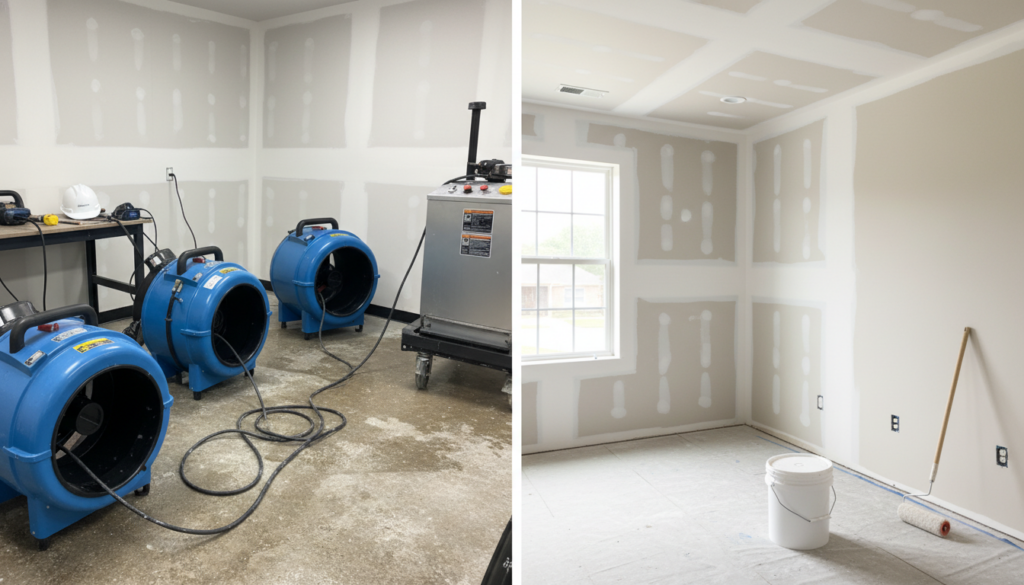
During the mitigation phase, the focus is on “Category 3” or “Category 2” water extraction, professional-grade dehumidification, and selective demolition. This is not the time for aesthetics; it is the time for science. Our technicians use thermal imaging and moisture meters to track the movement of water behind walls. The goal is to create a “dry standard,” ensuring that the environment is no longer conducive to mold growth or structural rot.
Common Mitigation Activities:
- Water Extraction: Using heavy-duty pumps and vacuums to remove standing water.
- Structural Drying: Deploying industrial air movers and LGR (Low Grain Refrigerant) dehumidifiers.
- Board-Up and Tarping: Securing a property after fire or wind damage to prevent theft or weather intrusion.
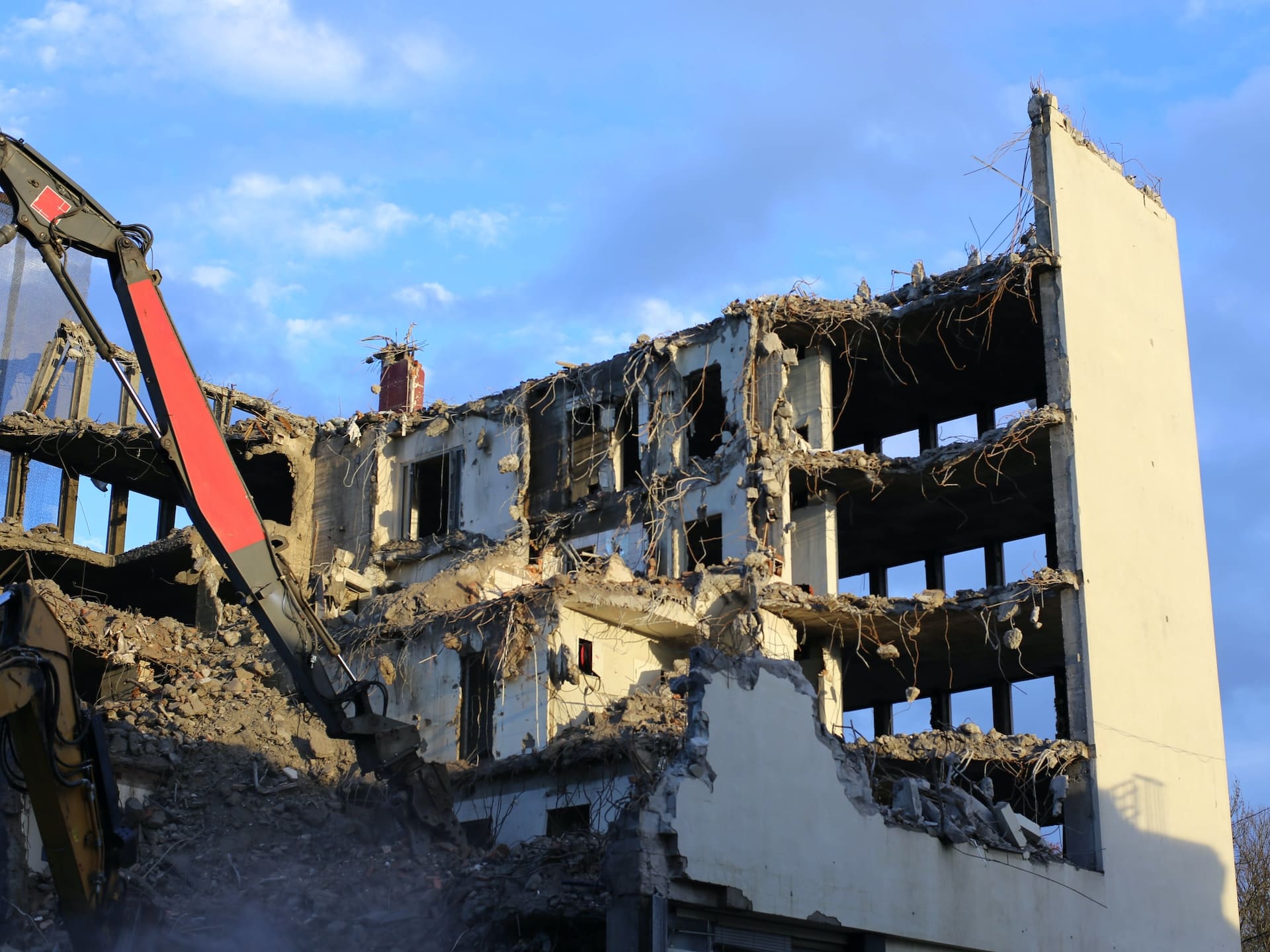
- Demolition (Controlled): Removing saturated insulation, “flood-cutting” drywall, and pulling up ruined carpeting to allow the structure to breathe.
- Antimicrobial Application: Treating surfaces to prevent the onset of fungal growth.
Defining Reconstruction: The Art of Rebuilding
If mitigation is the emergency room, reconstruction is the reconstructive surgery and physical therapy that follows. Once the property is dry, clean, and safe, the reconstruction phase begins. This is where the focus shifts from “stopping the loss” to “restoring the beauty.”
Reconstruction is a comprehensive construction process. It requires a different set of skills—carpentry, electrical work, plumbing, painting, and flooring. In many New York homes, this phase requires navigating local building codes, securing permits in towns like Hempstead or Oyster Bay, and ensuring that the new materials match the existing character of the home. This is the stage where your house becomes a home again.
Common Reconstruction Activities:
- Hanging and Finishing Drywall: Replacing the sections removed during mitigation and seamless blending with existing walls.
- Flooring Installation: Laying down new hardwood, tile, or laminate that matches your home’s aesthetic.
- Cabinetry and Millwork: Reinstalling kitchen cabinets or custom trim and baseboards.
- Electrical and Plumbing: Re-routing or updating systems that were damaged or exposed during the loss.
- Final Paint and Finishes: The final touches that erase all evidence that a disaster ever occurred.
The ‘Gap’ Problem: Why Many Homeowners Get Stuck
The “Gap” is a phenomenon unique to the restoration industry. Many companies in the NYC and Long Island area are “mitigation-only” firms. They specialize in the “wet work”—the loud fans, the demolition, and the drying. They are excellent at getting your home dry, but once the moisture meters read zero, they pack up their equipment, collect their check from the insurance company, and leave.
This leaves the homeowner in a precarious position. You are left with a home that is dry but unlivable. You then have to begin the grueling process of finding a general contractor who is willing to take on a “build-back” job. Most high-end contractors prefer large-scale renovations over insurance-claim repairs, leading to delays. Furthermore, a new contractor may disagree with how the mitigation company handled the demolition, leading to disputes over costs and structural integrity. This fragmentation causes stress, extends the timeline of your displacement, and complicates the insurance claim.
The Start-to-Finish Advantage: Bridging the Gap
At Upper Restoration, we recognized years ago that the traditional “split” model was failing homeowners. We pioneered a Start-to-Finish process that eliminates the Gap entirely. As both a certified restoration firm and a licensed general contractor, we manage the entire lifecycle of the project.
When our mitigation team is on-site, they aren’t just thinking about drying; they are consulting with our construction team. We perform “surgical” demolition, meaning we only remove what is absolutely necessary, keeping the eventual reconstruction in mind. Because we handle both phases, there is no “hand-off” delay. As soon as the drying certificates are signed, our carpenters and painters are already scheduled to begin the rebuild. This integrated approach ensures a single point of accountability for the homeowner.
For more information on how our integrated approach can simplify your recovery, visit our Residential Restoration and Construction service page.
The Phase Comparison Table
To help you visualize the journey your property will take, refer to the table below which outlines the distinct goals and activities of each phase.
| Phase | Primary Goal | Typical Activities | Insurance Code |
|---|---|---|---|
| Mitigation | Stop Damage | Extraction, Drying, Demolition | Emergency Services |
| Reconstruction | Restore Property | Drywall, Paint, Flooring, Trim | Repairs/Build Back |
| Upper Restoration | Total Solution | Seamless handoff from Dry to Build | Single Claim Mgmt |
Navigating the Insurance Shift
One of the most complex aspects of mitigation vs reconstruction is how insurance companies view the two phases. In most policies, mitigation falls under “Emergency Services.” This money is often paid out quickly to prevent further loss. Reconstruction, however, falls under “Dwelling Coverage” or “Structure Repairs.”
Insurance adjusters use a software called Xactimate to price these jobs. A mitigation-only company will write an estimate for their work, and then you—the homeowner—must find someone to write an estimate for the rebuild. If these two estimates don’t align, or if the reconstruction contractor misses items that were destroyed during mitigation, you may find yourself underfunded. Upper Restoration uses the same industry-standard software and manages the entire claim documentation. We ensure that the “Build Back” estimate accurately reflects the materials lost, protecting you from out-of-pocket surprises.
Case Study Example: A Long Island Success Story
Consider a recent project we managed in Garden City. A second-floor laundry room leaked while the family was away for the weekend, causing water to migrate through the ceiling into the custom kitchen below.
The Mitigation Phase: Our emergency crew arrived within 90 minutes. We extracted water from the hardwood floors and used specialized “injection drying” systems to save the expensive kitchen cabinetry. We removed the saturated ceiling and insulation. Within four days, the home was certified dry.
The ‘Gap’ Avoided: While the drying fans were still running, our Project Manager was already meeting with the homeowner to select the new ceiling texture and matching paint. There was no “waiting for a contractor.”
The Reconstruction Phase: The day the fans were removed, our drywall team moved in. We replaced the ceiling, matched the ornate crown molding found in many Nassau County homes, and refinished the hardwood floors to ensure a perfect color match. Because we managed both phases, the homeowner only had to deal with one project manager, one insurance claim, and one timeline. The home was restored to better-than-new condition in record time.
Frequently Asked Questions
Q: Can Upper Restoration rebuild my kitchen after a fire?
A: Yes, we are a full-service general contractor handling everything from the initial soot and smoke cleanup to the final installation of cabinets, countertops, and appliances.
Q: Do I have to use two different companies for my claim?
A: No. While some insurance companies might suggest specific vendors, you have the right to choose a “Full-Service” firm like Upper Restoration that handles both mitigation and reconstruction. This is often the most efficient way to handle a claim.
Q: Why is reconstruction more expensive than mitigation?
A: Mitigation is primarily labor and equipment-based. Reconstruction involves the cost of high-quality materials (lumber, flooring, paint) and skilled tradespeople. However, by using one company for both, you often save money by eliminating redundant administrative fees.
Q: How long does the transition from drying to rebuilding take?
A: With our Start-to-Finish model, the transition is near-instantaneous. Typically, reconstruction begins within 24 to 48 hours of the mitigation phase being completed.
Conclusion: A Partner Through the Entire Process
The journey from a flooded or fire-damaged house back to a beautiful home is a marathon, not a sprint. However, the most dangerous part of that marathon is the “hand-off” between the mitigation and reconstruction phases. By understanding the difference between these two stages, you can see why choosing a partner that specializes in both is the most effective way to protect your property and your peace of mind.
Whether you are in the middle of Suffolk County or the heart of Brooklyn, don’t let your home get stuck in the “Gap.” Choose a team that understands the science of drying and the craftsmanship of building.
Choose a partner that stays until the job is done. Call us today. Contact Upper Restoration