The Governance of the Proprietary Lease in Manhattan Water Losses
In the dense architectural landscape of Manhattan, from the pre-war cooperatives of the Upper West Side to the converted lofts of Tribeca, water damage is rarely a straightforward issue of repair. Because of the unique legal structure of a co-op, where residents are shareholders rather than fee-simple owners, manhattan co-op water damage liability is governed almost entirely by the proprietary lease. This document serves as the “constitution” of the building, and while most leases follow the standard Blumberg form, many boards have adopted custom amendments that significantly shift the burden of repair from the corporation to the individual shareholder.
When a pipe bursts or a dishwasher overflows, the first instinct is often to look for “fault.” However, in the realm of New York City real estate, liability and the responsibility to repair are two different legal concepts. The proprietary lease generally dictates that the building corporation is responsible for the “structure” and “common elements”—typically defined as everything behind the finished surface of the walls—while the shareholder is responsible for “interior” elements. At Upper Restoration, we frequently see disputes arise when a leak originates in a common riser but damages high-end shareholder improvements, such as custom cabinetry or imported hardwood flooring. Understanding who is responsible for the dry-down and reconstruction is the first step in a successful recovery.
The proprietary lease is the source of truth. Before calling your insurance broker, the first document you should retrieve is the lease agreement and any subsequent Alteration Agreements signed during previous renovations.
Delineating Boundaries: The “Walls-In” Rule vs. Common Elements
The standard dividing line for manhattan co-op water damage liability is often described as “studs-out” or “walls-in.” Under this framework, if a leak occurs in a pipe that serves only one apartment (such as the branch line under a kitchen sink), the shareholder is typically responsible for the damage. If the leak occurs in a vertical riser that serves multiple floors, the co-op board water damage responsibility kicks in. However, the building’s responsibility is usually limited to restoring the unit to its “original condition” as it was when the building was first incorporated.
This creates a significant “insurance gap” for Manhattan residents. If your 1920s Park Avenue co-op originally featured plaster walls and basic oak floors, but you have since installed Venetian plaster and hand-scraped mahogany, the building’s master policy will only pay to restore the plaster and oak. The shareholder must rely on their own coverage for the “betterments and improvements.”
The Impact of Alteration Agreements
If you have renovated your Manhattan apartment, you likely signed an Alteration Agreement. These documents often contain “indemnification” and “maintenance” clauses that can override the standard proprietary lease. For example, if you moved a plumbing fixture during a renovation, the board may have required you to accept manhattan co-op water damage liability for any leaks related to that specific plumbing, even if the pipe itself is technically behind the wall. This is a common point of contention during the adjustment process, as building managers may use these agreements to deny claims that would otherwise be the corporation’s responsibility.
- Building Responsibility: Roof leaks, window perimeter leaks (usually), vertical risers, main waste lines, and structural slabs.
- Shareholder Responsibility: Appliance hoses, branch lines serving only the unit, window AC units, and all “interior” finishes (paint, wallpaper, flooring).
- Negligence Factors: If a shareholder leaves a window open during a storm or allows a radiator to freeze, the board may seek to hold the shareholder liable for damage to common areas and neighboring units.
Insurance Coverage: The Interaction Between HO-6 and Master Policies
Determining co-op water damage who pays involves a coordinated effort between the building’s master policy and the shareholder’s individual insurance. For co-op owners, the correct policy type is an HO-6 (unit-owner policy), though many residents mistakenly believe they are covered by an HO-3. When reviewing coverage, it is essential to understand the hp-6 vs ho-3 policy distinction: an HO-3 is designed for stand-alone homes and covers the entire structure, whereas an HO-6 is designed for “walls-in” coverage, specifically tailored to the insurance gaps inherent in co-op and manhattan condo water damage scenarios.
The building’s master policy usually carries a high deductible—often $10,000, $25,000, or even $50,000 in large Manhattan high-rises. If the total damage to the common areas is less than this deductible, the building may choose not to file a claim, instead paying for repairs out of the reserve fund. This does not, however, absolve the building of its responsibility to fix the source of the leak and restore the shareholder’s unit to “white box” condition. Upper Restoration works closely with both the building’s adjuster and the shareholder’s private adjuster to ensure that the scope of work aligns with IICRC S500 standards for professional water damage restoration.
Shareholders should ensure their HO-6 policy includes “Loss Assessment” coverage. If the building’s master policy is insufficient to cover a massive loss (such as a fire-sprinkler discharge that affects 20 floors), the board may issue an assessment to all shareholders. Loss assessment coverage can protect the individual from having to pay these costs out of pocket.
NYC Regulatory Compliance: Asbestos, Mold, and Professional Mitigation
In Manhattan, water damage is never just about drying out a room. Because of the age of the building stock, any intrusion of water into a wall cavity necessitates a strict adherence to New York City Department of Environmental Protection (DEP) and Department of Health and Mental Hygiene (DOHMH) regulations.
Asbestos Testing and the ACP-5
Any building in NYC constructed before April 1, 1987, is presumed to contain asbestos-containing materials (ACM) in its joint compound, plaster, or floor tile mastic. When Upper Restoration is called to a manhattan co-op water damage liability site, our first step before any demolition or “opening of the walls” is to ensure an asbestos survey is performed. Under NYC law, a certified investigator must issue an ACP-5 (Asbestos Control Program) form if the materials are found to be non-ACM or if the amount of material being disturbed is under certain square-footage thresholds. Failure to comply with these DEP regulations can result in five-figure fines for both the shareholder and the board.
Article 32 and Local Law 55 (The Mold Law)
New York City’s Local Law 55 of 2018 (often referred to as the “Mold Law”) mandates that buildings with 3 or more units must follow specific protocols for mold remediation. If the area of moisture exceeds 10 square feet, the building or shareholder must hire an independent Mold Assessor to create a remediation plan, followed by a separate Mold Remediation Contractor to perform the work. This “separation of powers” prevents conflicts of interest. As an IICRC-certified firm, Upper Restoration adheres to the S520 Standard for Professional Mold Remediation, ensuring that every project meets the rigorous “Clearance Criteria” required by NYC Article 32.
Proper mitigation isn’t just a legal requirement; it’s a financial necessity. In the context of manhattan co-op water damage liability, the party responsible for the repair is also responsible for the “consequential” mold damage if they fail to act within 24 to 48 hours. If a board waits a week to fix a riser leak, they may be liable for the entire cost of mold remediation in the shareholder’s apartment, regardless of what the proprietary lease says about interior finishes.
Legal Protections and the HP Action in Manhattan Co-ops
There are instances where a co-op board water damage response is inadequate. The board may claim the leak is “settling” or that it is the shareholder’s responsibility to find the source, even when the moisture is clearly originating from a common riser. In these cases, Manhattan shareholders have a powerful legal tool at their disposal: the HP Action (Housing Part action).
An hp action water damage case is brought in NYC Civil Court. It is a summary proceeding designed to force a landlord (in this case, the co-op corporation) to perform repairs and remove “violations.” While co-ops are often treated differently than rental buildings, the Warranty of Habitability still applies. If a leak is so severe that it renders a bedroom unusable or creates a hazardous mold condition, the court can issue an order to correct, compelling the board to perform the necessary repairs within a strict timeframe.
However, shareholders should use this as a last resort. Boards have significant power in NYC, and an HP action can lead to a “blacklisting” of the unit, making it difficult to sell or refinance in the future. It is almost always better to have a professional restoration firm like Upper Restoration provide a detailed moisture map and infrared thermography report. When presented with empirical evidence—thermal images showing the exact path of the water from the floor above—most boards will concede manhattan co-op water damage liability rather than face a courtroom.
Frequently Asked Questions
If my upstairs neighbor’s washing machine overflows, who is liable for my damage?
In a Manhattan co-op, the first line of recovery is usually your own HO-6 insurance policy. Your insurance company will then “subrogate” against the upstairs neighbor’s insurance. However, unless you can prove the neighbor was negligent (e.g., they left the machine running while they were on vacation), you may still be responsible for your deductible. The proprietary lease usually prevents you from suing the board for a neighbor’s leak.
Does the co-op board have to replace my custom wallpaper if they had to break the wall to fix a pipe?
Usually, no. Most proprietary leases state that the board only needs to restore the wall to a “paint-ready” condition or its original building-standard finish. The cost of replacing high-end finishes like custom wallpaper or silk wall coverings typically falls on the shareholder’s insurance policy.
What is the difference between an HO-6 and an HO-3 policy?
An HO-3 is a traditional “Homeowners” policy for a house you own entirely. An HO-6 is a “Unit-Owner” policy specifically for co-ops and condos. It focuses on “walls-in” coverage, personal property, and loss assessment, accounting for the fact that the building’s master policy covers the roof and exterior shell. Understanding the hp-6 vs ho-3 policy nuances is critical to ensure you aren’t underinsured for a Manhattan high-rise loss.
How long does the board have to fix a leak before I can take legal action?
Under NYC law, “emergency” conditions (like a major water leak) should be addressed immediately. For non-emergencies, the board generally has 30 days to correct a violation once notified. If the board is unresponsive, filing a 311 report or initiating an hp action water damage proceeding are the standard next steps.
Talk to Upper Restoration
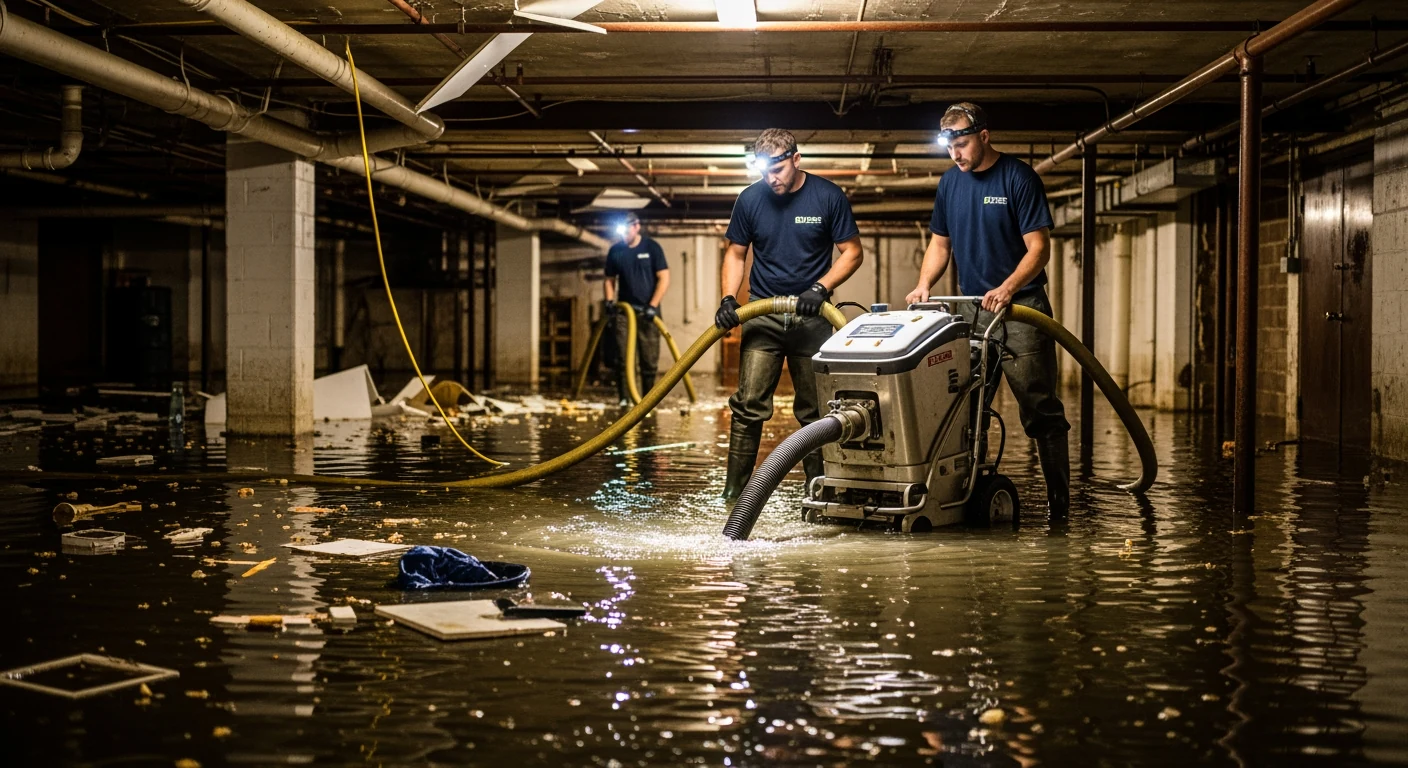
Navigating a water loss in a Manhattan co-op requires more than just industrial fans; it requires an understanding of the delicate relationship between shareholder, board, and insurer. Upper Restoration provides comprehensive moisture mapping and IICRC-standard mitigation for co-ops throughout Manhattan, from the Financial District to Inwood.
We understand the logistical challenges of working in NYC high-rises—managing COIs (Certificates of Insurance), adhering to strict “work hours,” and protecting common area carpets and elevators. Our team provides the empirical data and professional documentation necessary to help you navigate manhattan co-op water damage liability and ensure your home is restored to its pre-loss condition quickly and safely. If you are dealing with an active leak or a board dispute regarding moisture, contact Upper Restoration for a professional assessment.