Why Long Island Properties Are Especially Prone to Mold
Long Island’s mold problems come down to geography and building age. The Atlantic Ocean on one side and the Long Island Sound on the other keep relative humidity elevated for much of the year, and that moisture finds its way into homes through condensation on windows, damp crawlspaces, and basements that were never designed to stay dry. Add a housing stock where many properties were built decades before modern vapor barriers and basement waterproofing were standard, and you have a region where mold isn’t a rare event, it’s a recurring maintenance issue.
Basements are the biggest culprit. Nassau and Suffolk County homes frequently have partially finished or unfinished basements below the water table, where seasonal groundwater and heavy rain events cause seepage through foundation walls. Combine that with aging roofs, older plumbing prone to slow leaks, and insulation that’s lost its effectiveness over 40 or 50 years, and you get the conditions mold needs: a moisture source, an organic surface (drywall, wood, insulation paper), and time. The New York State Department of Health identifies moisture control as the essential first step in any mold response, which tells you where the root cause almost always sits (NYSDOH, “Indoor Air Quality: Mold Health Information”).
The Health Risks of Untreated Mold Exposure
Mold exposure is a legitimate health concern, but for most healthy people the symptoms are mild and manageable rather than dangerous. The CDC identifies nasal stuffiness, eye or throat irritation, coughing, wheezing, and skin irritation as the most common reactions to mold exposure, and notes that people with asthma or mold allergies can experience more severe reactions (CDC, “Mold Clean Up Guidelines and Recommendations,” 2024).
The risk profile changes for specific groups. The CDC advises that people with chronic respiratory disease, weakened immune systems, or existing mold allergies should not personally participate in mold cleanup, full stop. This isn’t about panic, it’s about matching the task to the person’s risk tolerance, and it’s one of the clearest, most practical reasons professional crews exist. If anyone in your household or building falls into one of these categories, that alone is a reason to bring in a trained remediation team rather than handle it yourself.
Who Should Not Attempt DIY Mold Cleanup: The CDC advises against personal involvement in mold cleanup for people with asthma, chronic obstructive pulmonary disease (COPD), mold or other allergies, or a weakened immune system. If this applies to anyone in the home, a licensed remediation professional should handle the work.
The First 24 to 48 Hours: Why Fast Response Matters
The window immediately after water intrusion is discovered determines whether you’re dealing with a drying job or a demolition job. The EPA’s guidance on mold remediation states that wet materials should be dried within roughly 24 to 48 hours to prevent mold growth from taking hold (EPA, “Mold Remediation in Schools and Commercial Buildings,” EPA 402-K-01-001). The CDC echoes the same timeframe in its 2008 advisory on mold cleanup, urging that buildings be dried within 24 to 48 hours and that porous items still wet after that point, and unable to be fully dried, be removed (CDC, “CDC Urges Caution When Cleaning Up Mold,” 2008).
That’s not a marketing number, it’s a biological one. Mold spores are present in nearly every indoor environment already; they just need sustained moisture to colonize. Once drywall, carpet padding, or insulation stays damp past that 48-hour mark, you’ve likely crossed from a “dry it out” scenario into a “remove and replace” scenario, which adds cost and time. This is the single biggest reason a fast professional response matters more than almost any other factor in how a mold job unfolds.
What Professional Mold Remediation Actually Involves, Step by Step
Professional mold remediation follows a defined sequence, not guesswork. The EPA’s framework for schools and commercial buildings, which is directly applicable to Long Island apartment complexes, HOAs, offices, and other multi-unit properties, lays out the process in stages: designate a remediation manager, assess the size and scope of the problem, identify and stop the moisture source, communicate with occupants about the plan, establish containment, select the right personal protective equipment, clean and dry salvageable materials, discard materials that can’t be salvaged, and monitor the space afterward for recurrence (EPA, “Mold Remediation in Schools and Commercial Buildings,” Chapter 3).
The specifics of cleaning depend heavily on what material is affected. EPA’s cleanup-methods guidance details material-specific approaches (Chapter 5): hard, non-porous surfaces can typically be cleaned and disinfected, while porous materials with heavy contamination usually cannot be salvaged. NYSDOH backs this up directly, stating that porous materials with extensive mold growth, drywall, carpeting, paper products, ceiling tiles, should generally be discarded rather than cleaned (NYSDOH, “Indoor Air Quality: Mold Health Information”). The New York Attorney General’s consumer guidance makes the same point in its “Mold in Your Home” and “Fighting Mold” publications: fix the moisture source first, and expect that heavily contaminated porous materials will likely need to be removed, not scrubbed.
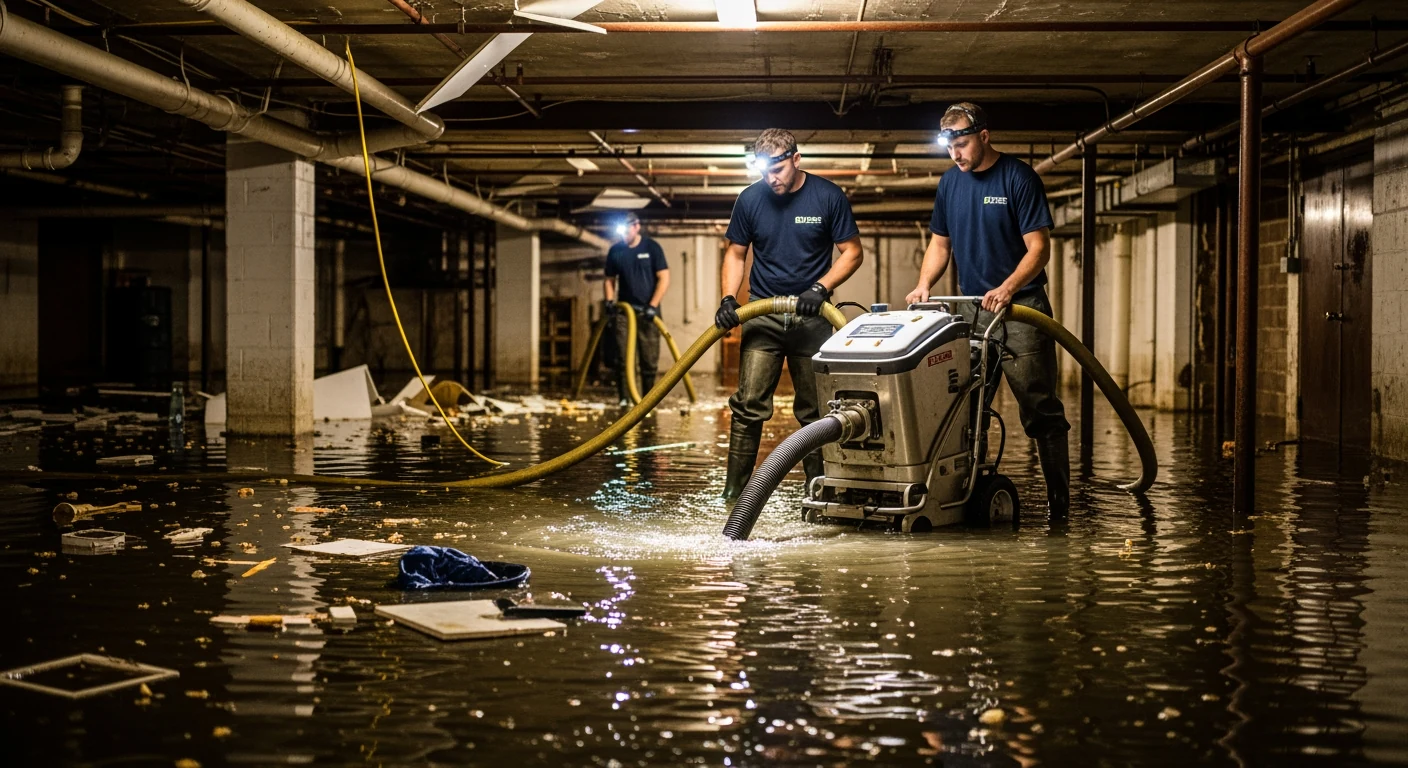
PPE matters throughout. The CDC recommends, at minimum, a NIOSH-approved N95 respirator, non-latex gloves, and eye protection for anyone doing cleanup work, and specifically warns against ever mixing bleach and ammonia, a combination that produces toxic fumes (CDC, “Mold Clean Up Guidelines and Recommendations,” 2024). On larger jobs, containment using plastic sheeting or negative air pressure keeps spores from spreading to unaffected rooms while work is underway.
For a regional benchmark of what “done right” looks like, New York City’s Local Law 55 of 2018 requires that completed mold work areas be left dry and visibly free of mold, dust, and debris, with contaminated materials and containment sheeting properly disposed of, and residual dust removed via wet-cleaning or HEPA vacuuming. It’s a New York City law, not a Long Island one, but it illustrates the standard that reputable remediation crews across the region hold themselves to.
How Long Does Mold Remediation Take? A Realistic Timeline
Timelines vary by scope, but most jobs follow a recognizable arc. Treat the ranges below as a general guide, not a guarantee, since site conditions, material types, and the extent of moisture damage all shift the schedule.
What to Expect: A Typical Remediation Timeline
First 24 to 48 hours: Emergency response, stopping the active moisture source, and beginning structural drying. This is the window EPA and CDC guidance identifies as critical to preventing further mold growth.
Following days (roughly days 3 to 7): Full assessment of affected materials, containment setup, removal of unsalvageable porous materials, and HEPA-filtered cleaning of remaining surfaces.
Follow-up weeks: Rebuilding removed materials (drywall, flooring, insulation), continued dehumidification, and post-remediation monitoring to confirm the space stays dry.
A single bathroom with a small leak might move through this entire arc in under a week. A finished basement with a slow foundation seep that went unnoticed for months can take several weeks once you factor in drying, material removal, and rebuild. The variable that matters most isn’t square footage, it’s how long the moisture was present before anyone addressed it.
DIY vs. Professional Remediation: When You Need to Call an Expert
Small, contained mold spots on hard, non-porous surfaces, a bit of mildew on bathroom tile grout, for instance, can often be cleaned by a healthy adult using basic protective equipment. NYSDOH guidance itself acknowledges this while recommending that larger problems, or situations involving occupants who are highly sensitive to mold, be handled by an experienced professional (NYSDOH, “Indoor Air Quality: Mold Health Information”).
The line to watch for is size and material. If the affected area is larger than roughly a few square feet, if it’s spread across porous materials like drywall or carpet, if you can’t identify or stop the moisture source yourself, or if anyone in the household has asthma, COPD, allergies, or a compromised immune system, professional remediation is the appropriate call rather than a DIY attempt. Musty odors persisting after a surface cleaning are also a sign that mold has spread somewhere you can’t see, often inside wall cavities or under flooring, which is a job for a crew with moisture meters and containment equipment, not a spray bottle.
If you’re weighing whether your Long Island property needs professional remediation, a same-day assessment can tell you exactly what you’re dealing with before it spreads further.
What Landlords and Property Managers on Long Island Should Know
Mold complaints put landlords in a position where speed of response matters both for tenant health and for legal exposure. NYSDOH guidance applies to rental properties the same way it does to owner-occupied homes: identify and fix the moisture source first, and expect that heavily contaminated porous materials need removal rather than surface cleaning. The New York Attorney General’s consumer guidance on mold reinforces that same sequence for any property owner responding to a complaint.
While New York City’s Local Law 55 of 2018 is a New York City requirement and does not directly govern Nassau or Suffolk County properties, it’s a useful benchmark for landlords who own or manage units in both markets. It sets a clear standard: completed remediation work areas must be dry, visibly free of mold, dust, and debris, with contaminated materials properly disposed of and residual dust removed through wet-cleaning or HEPA vacuuming. Long Island property managers who apply that same completion standard, even without a legal mandate to do so, put themselves in a stronger position if a tenant dispute or habitability question ever arises.
Preventing Mold From Coming Back: Moisture Control and Monitoring
Remediation removes existing mold; it doesn’t change the underlying conditions that let it grow in the first place. NYSDOH’s guidance is explicit that moisture control, fixing leaks, addressing flooding, and reducing condensation, is the essential foundation of any mold response, and that principle applies just as much to prevention as it does to cleanup.
For Long Island properties specifically, that usually means a few recurring fixes: grading and drainage adjustments around basement foundations, sump pumps or French drains in chronically damp basements, dehumidifiers set to keep basement humidity below the range where mold thrives, and attention to roof flashing and gutters before the next coastal storm season. A simple self-check can catch problems early.
Signs You Have a Long Island Moisture Problem: Water stains or seepage along basement walls, persistent condensation on windows or pipes, a musty odor in enclosed spaces, visible discoloration on drywall or ceiling tiles, or peeling paint near exterior walls.
None of these signs mean you have an active infestation, but each one is worth investigating before the next humid stretch of summer or the next nor’easter gives moisture the time it needs to become a mold problem.
Frequently Asked Questions
Why does my Long Island home keep getting mold even after cleaning it?
Recurring mold usually means the underlying moisture source was never fixed. The New York State Department of Health identifies moisture control, addressing leaks, flooding, or condensation, as the essential first step; cleaning visible mold without correcting the moisture source typically results in regrowth within weeks or months.
Is mold in my basement dangerous to my family’s health?
For most healthy people, mold exposure causes mild symptoms like nasal congestion, eye irritation, or coughing. The CDC notes that people with asthma, COPD, allergies, or weakened immune systems face a higher risk of more serious reactions and should avoid personal involvement in cleanup.
How long does professional mold remediation typically take?
Timelines vary by scope and moisture exposure duration. A small, contained issue may resolve within days, while larger jobs involving material removal and rebuilding can take several weeks. Emergency drying should begin within 24 to 48 hours of discovery, per EPA and CDC guidance, to limit further growth.
Can I remove mold myself instead of hiring a professional?
Small areas on non-porous surfaces can sometimes be cleaned safely by a healthy adult using an N95 respirator, gloves, and eye protection. NYSDOH recommends professional remediation for larger mold problems or when occupants are highly sensitive to mold, since porous materials with heavy contamination often need removal rather than cleaning.
What are my responsibilities as a landlord if a tenant reports mold?
New York guidance directs property owners to identify and fix the moisture source and properly remove contaminated porous materials. While New York City’s Local Law 55 of 2018 sets specific completion standards for mold remediation in NYC, it serves as a useful benchmark for Long Island landlords addressing similar complaints, even though it isn’t legally binding outside the city.
How do I know if mold remediation was done correctly?
A properly completed job leaves the work area dry, visibly free of mold, dust, and debris, with contaminated materials and containment sheeting disposed of and residual dust removed via wet-cleaning or HEPA vacuuming, a standard illustrated by NYC’s Local Law 55. Follow-up monitoring for moisture and odor is also part of a complete process.
Will mold come back after remediation?
Remediation removes existing mold growth, but recurrence is possible if the original moisture source isn’t fully corrected. Ongoing moisture control, drainage fixes, dehumidification, and monitoring reduce the likelihood of regrowth, though no remediation process can guarantee mold will never return under new moisture conditions.
Sources
- EPA, “Mold Remediation in Schools and Commercial Buildings” (EPA 402-K-01-001)
- CDC, “CDC Urges Caution When Cleaning Up Mold” (2008 press advisory)
- CDC, “Mold Clean Up Guidelines and Recommendations” (2024)
- New York State Department of Health, “Indoor Air Quality: Mold Health Information”
- New York State Office of the Attorney General, “Mold in Your Home”
- New York State Office of the Attorney General, “Fighting Mold”
- New York City Local Law 55 of 2018 (Indoor Allergen Hazards)
This content is for general informational purposes only and is not legal, medical, or insurance advice. Remediation scope, timelines, and costs vary by site conditions. Contact Upper Restoration for a professional assessment. Licensing and certifications apply per jurisdiction.