Lead paint is hiding in more Long Island homes than most homeowners realize. If your home was built before 1978, there’s a better-than-even chance it contains lead-based paint – and if it’s pre-1940, that number jumps to nearly 90%. Lead paint abatement on Long Island is a licensed, regulated process, and attempting it without a certified contractor puts your family at serious risk.
What Is Lead Paint Abatement?
Lead paint abatement is the permanent elimination of lead-based paint hazards from a property. Unlike encapsulation – which covers lead paint with a sealant – abatement physically removes or treats the source so it no longer poses a risk. The EPA defines three abatement methods:
- Removal: Stripping lead paint from surfaces entirely
- Enclosure: Covering surfaces with rigid materials (drywall, paneling) that create a permanent barrier
- Encapsulation: Applying specialized coatings that bond to and seal lead paint (only valid where paint is intact and not on friction/impact surfaces)
In New York, all abatement work must be performed by contractors certified under the EPA’s Renovation, Repair and Painting (RRP) Rule and New York State Department of Health regulations.
Does Your Long Island Home Have Lead Paint?
The single biggest indicator is age. Homes built before 1978 – when the federal government banned residential use of lead paint – are the primary concern. On Long Island, where housing stock skews older (Nassau County’s median home age is well over 50 years), lead paint is extremely common. High-risk areas include:
- Window sills and frames (friction surfaces cause paint dust)
- Door frames and jambs
- Exterior painted surfaces and trim
- Older radiators and pipes
- Staircase banisters and railings
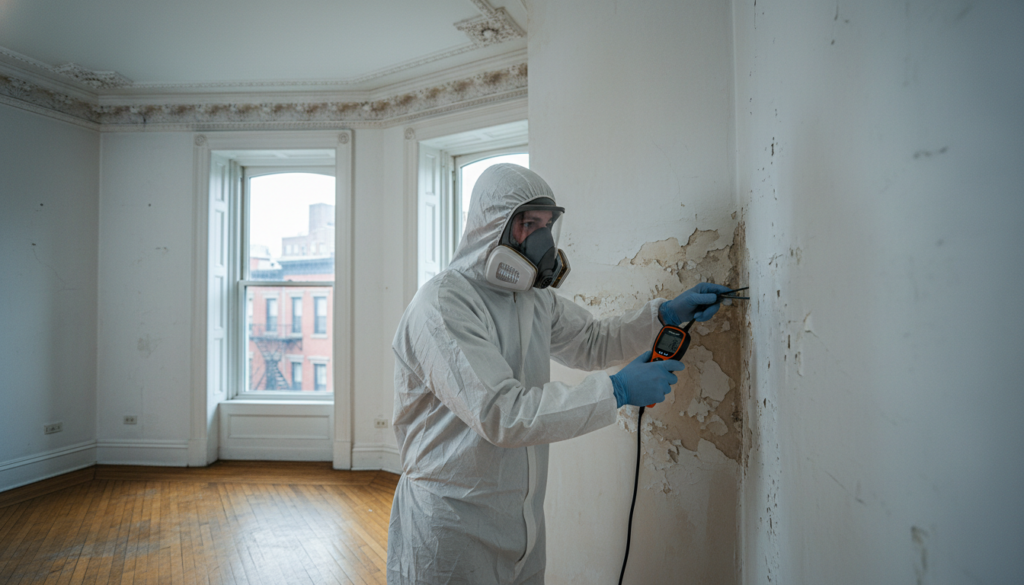
A certified lead inspector or risk assessor can perform a lead paint inspection using XRF (X-ray fluorescence) technology or paint chip sampling to confirm the presence and condition of lead paint before any work begins.
EPA RRP Rule: What Contractors Must Follow on Long Island
Any contractor disturbing more than six square feet of lead-painted surface inside a pre-1978 home – or more than 20 square feet outside – must be RRP-certified. This applies to renovation contractors, not just abatement specialists. Key requirements include:
- Containing the work area with plastic sheeting and barriers
- Using HEPA vacuums for cleanup (standard vacuums spread lead dust)
- Prohibiting certain work practices that generate excessive dust (open-flame burning, power sanding without HEPA)
- Providing homeowners with the EPA’s “Renovate Right” pamphlet before work begins
- Post-work cleaning verification by a certified renovator
New York State adds additional requirements under the Lead Poisoning Prevention Act, particularly for rental properties with children under 6 present.
Lead Paint Abatement Cost on Long Island (2026)
Abatement costs vary significantly based on the scope of work, the method used, and property size. Here are typical ranges for Long Island projects in 2026:
- Single room (encapsulation): – ,500
- Single room (full removal): ,500 – ,000
- Full home encapsulation: ,000 – ,000
- Full home removal: ,000 – ,000+
- Exterior lead paint removal: ,000 – ,000 depending on siding type
These figures reflect Nassau and Suffolk County labor rates. Projects requiring significant containment setup, disposal of lead-contaminated materials, or post-abatement clearance testing will be on the higher end. Always request itemized quotes from at least two certified contractors.
Choosing a Certified Lead Abatement Contractor on Long Island
Not every general contractor is qualified for lead abatement. When hiring, verify:
- EPA RRP Certification: Searchable at EPA.gov’s contractor database
- NYS DOH Certification: New York requires state-level certification for abatement firms
- Liability insurance: Should include environmental/pollution liability coverage
- Clearance testing protocol: A reputable contractor will offer or arrange post-work air and dust sampling to confirm the area is safe
Upper Restoration serves Nassau and Suffolk County with full lead abatement services, including pre-abatement inspection coordination, certified removal, and clearance testing documentation. Contact our team for a free assessment.
Frequently Asked Questions
Is lead paint dangerous if it’s not peeling?
Intact lead paint that is not chipping, peeling, or on a friction/impact surface poses lower immediate risk – but it is not risk-free. Deterioration over time, renovation work, or children chewing on painted surfaces can cause exposure. A certified risk assessor can evaluate whether your specific paint condition requires action.
Do I need lead abatement before selling my home?
New York law requires sellers of pre-1978 homes to disclose known lead paint hazards but does not require abatement before sale. However, buyers may negotiate abatement as a condition of sale, and lenders (especially FHA/VA loans) may require it if visible deterioration is present.
How long does lead paint abatement take?
A single-room encapsulation project can be completed in one day. Full-home removal projects typically take 3-7 days depending on scope, containment requirements, and drying time for encapsulants. Clearance testing adds 1-2 days after work is complete.
Can I stay in my home during lead abatement?
Occupants – especially children and pregnant women – must vacate the work area during abatement. For whole-home projects, temporary relocation is typically required. Your contractor will provide specific clearance instructions based on the scope of work.
Is lead abatement covered by homeowners insurance?
Standard homeowners insurance policies generally do not cover lead abatement as a routine maintenance or environmental remediation expense. Coverage may apply if lead exposure was caused by a sudden covered event (like a pipe burst damaging painted surfaces), but this varies by policy. Check with your insurer before assuming coverage.
Conclusion
Lead paint is one of the most common environmental hazards in Long Island homes – and one of the most manageable when handled by licensed professionals. Whether you’re preparing for a renovation, addressing a landlord notice, or protecting young children, certified lead paint abatement on Long Island is the only safe path forward. Upper Restoration’s team of certified abatement specialists serves Nassau and Suffolk County. Call us today for a free site assessment and quote.
Frequently Asked Questions
How do I file a property damage insurance claim?
Contact your insurer immediately, document damage with photos and video, get a contractor estimate, and submit your claim with evidence.
What should I do before filing a claim?
Document all damage, take photos before cleanup, keep receipts for emergency repairs, and avoid major repairs until adjuster inspects.
Will my insurance cover restoration?
Standard homeowners policies cover sudden, accidental property damage from fire, wind, and water. Gradual damage is usually excluded.
What is depreciation in insurance claims?
Depreciation is the reduction in value of building materials over time. Insurers deduct it from replacement cost (ACV vs RCV).
Should I hire a public adjuster?
For large or complex losses, a public adjuster can identify missed damage and negotiate higher settlements, taking 5-15% commission.
How long does a claim settlement take?
Timeline varies from 2 weeks (small claims) to 6+ months (complex cases). Undisputed claims typically settle faster.