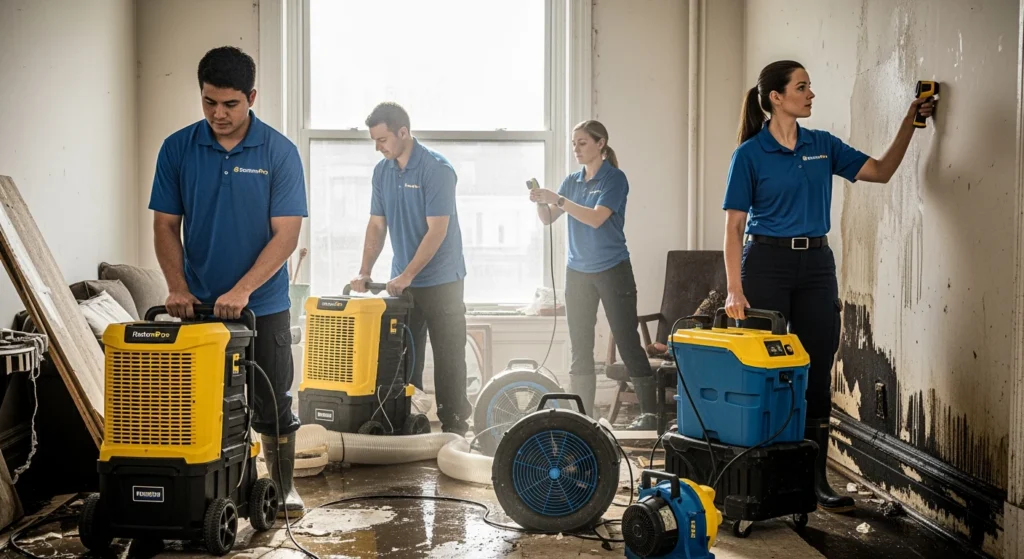
Winter brings freezing temperatures, snow, and ice, but the real threat to your basement often comes during the thaw. When all that accumulated snow and ice melts, the sudden influx of water can easily overwhelm your home’s defenses, leading to a flooded basement.
Protecting your home from water damage is far easier and more affordable than dealing with the aftermath of a flood. Before the first deep freeze sets in, follow this homeowner checklist to seal and protect your basement for the winter ahead.
Your Pre-Winter Basement Protection Checklist
1. Clean Gutters and Downspouts
This is one of the most critical and overlooked steps. Gutters filled with fall leaves and debris can’t direct water away from your home. When they overflow, water pools directly against your foundation, where it can easily find its way inside.
- Action: Clear all leaves, twigs, and debris from your gutters. Ensure downspouts are clear and extend at least 6-10 feet away from your foundation.
2. Inspect and Seal Foundation Cracks
Walk the perimeter of your home and inspect the foundation for any visible cracks or gaps. Do the same on the inside of your basement. Even a tiny crack can allow a significant amount of water to seep through under pressure.
- Action: Fill any cracks you find with epoxy sealant or hydraulic cement. For larger or more numerous cracks, it’s best to consult a foundation specialist.
3. Check Your Sump Pump
Your sump pump is your last line of defense. Don’t wait for a flood to find out it’s not working.
- Action: Pour a bucket of water into the sump pit to ensure the pump activates, removes the water, and shuts off properly. Check that the discharge line is clear and directs water away from your home. Consider a battery backup system in case of a power outage during a storm.
4. Examine Window Wells
Window wells are a common entry point for water. If they aren’t properly sealed and drained, they can fill up like a fishbowl, putting immense pressure on your basement windows.
- Action: Clear any leaves and debris from your window wells. Consider installing window well covers to keep out snow, rain, and debris while still allowing light in.
5. Improve Exterior Grading
The ground around your foundation should slope away from your home, not towards it. A negative grade directs water right to your basement walls.
- Action: Check the slope. You should have a drop of at least 6 inches over the first 10 feet away from your foundation. If needed, add compacted soil to build up the grade.
6. Clear Nearby Storm Drains
If you have a storm drain on your street, make sure it’s clear of leaves, snow, and ice. If the drain is blocked, melting snow and rain have nowhere to go but towards your property.
When to Call a Professional
If you’ve completed this checklist and still experience dampness, or if you find significant foundation issues, it’s time to call in the experts.
At Upper Restoration, we specialize in identifying and resolving water intrusion issues before they become catastrophic. Taking these preventative steps now can save you from costly repairs and the stress of a flooded basement this winter. Contact us today for a consultation.