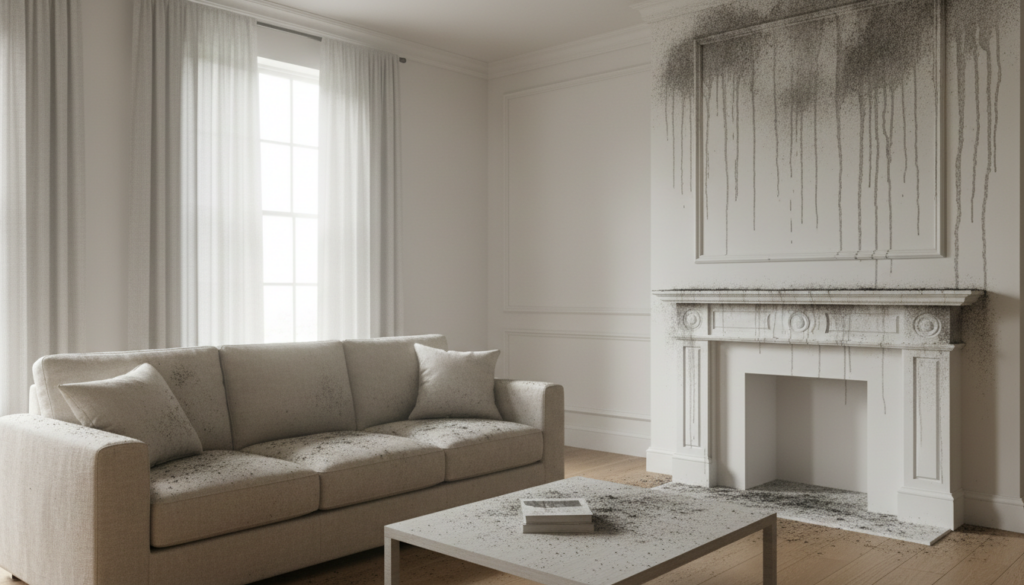
You go to start your fireplace or turn on your oil-fired furnace for the first time this season, and suddenly—WHOOSH. A small explosion or “puff back” sends a cloud of black, oily soot billowing into the room.
Within seconds, your walls, furniture, and curtains are covered in a fine, greasy, black film. A puff back is a common heating season mishap, and it creates one of the most difficult types of messes to clean.
Here’s what causes a puff back, the safety risks, and how to handle the soot cleanup process correctly.
What is a “Puff Back”?
A puff back is a small explosion that occurs inside a furnace or fireplace.
- In an Oil Furnace: It typically happens when the burner doesn’t ignite immediately. Oil vapor builds up in the combustion chamber, and when it finally does ignite, it does so with a small, contained explosion that forces soot and smoke out through the system’s exhaust and into your home’s ductwork.
- In a Wood Fireplace: It can be caused by a poorly-timed downdraft, a clogged chimney, or lighting a fire in a very cold flue, which causes the smoke to be pushed back into the room instead of up the chimney.
The result is a widespread “soot web” that can cover multiple rooms in your home.
The Dangers of Soot
The soot from a puff back is not the same as the dry ash in a fireplace. It’s a greasy, oily, petroleum-based residue that is hazardous and difficult to clean.
- Health Hazard: Soot is a toxic carcinogen. Inhaling these fine particles can cause respiratory distress, especially for children, the elderly, and those with asthma or other breathing issues.
- Property Damage: Because it’s oily, this soot smears easily and is quickly absorbed by porous materials like drywall, paint, and upholstery. Its acidic nature will also corrode metals and etch glass if left untreated.
How to Handle Soot Cleanup After a Puff Back
Your first instinct will be to start wiping, but stop. Improper cleaning will make the problem significantly worse.
Step 1: Safety First
- Ventilate: Open windows to get fresh air circulating, but…
- Shut Down Your HVAC: Turn off your heating and cooling system immediately. This will stop it from pulling the soot into the ductwork and spreading it to every room in your house.
- Wear PPE: Do not attempt any cleanup without proper Personal Protective Equipment (PPE). This includes N95 or P100 respirators, safety goggles, and gloves.
Step 2: Avoid These DIY Cleaning Mistakes
- Don’t Use a Household Vacuum: A standard vacuum (even one with a HEPA filter) is not designed to contain microscopic soot particles. The exhaust will simply blow the soot back into the air, making it airborne and breathable again.
- Don’t Use Water or Wet Wipes: The soot from a puff back is oil-based. Trying to clean it with water or a “wet” cleaner will smear the soot, creating a permanent, black stain and driving it deeper into the surface.
Step 3: Call a Professional Soot Cleanup Service
A soot puff back is not a DIY job. It requires the same techniques and equipment used for professional fire damage restoration.
- HEPA Vacuuming: Professionals use specialized vacuums with multi-stage filtration to safely capture the soot without re-contaminating the air.
- Dry Chemical Sponging: The primary cleaning method involves using “chemical dry sponges” (also called soot sponges). These sponges are used dry to gently lift the oily soot from walls, ceilings, and other surfaces without smearing.
- HVAC & Duct Cleaning: The entire HVAC system and ductwork must be professionally cleaned. If this step is skipped, the next time you turn on your heat, you’ll simply re-contaminate the entire house.
- Odor Removal: Finally, the lingering smell of oil and smoke is removed using professional deodorization equipment, such as thermal foggers or hydroxyl generators.
A fireplace puff back can be a shocking and messy event. To protect your health and your property, avoid DIY cleanup and call a certified restoration professional to handle the soot cleanup safely and completely.