The galvanized steel supply pipes installed throughout Nassau County’s post-war housing boom are approaching or past the end of their design service life. A supply pipe installed in 1952 is now 74 years old. The standard design life for galvanized steel water supply pipe is 40 to 70 years. The arithmetic is unambiguous: the oldest Nassau County Cape Cods have plumbing that has been failing for years and will continue to fail at an accelerating rate as the remaining wall thickness thins through continued corrosion.
How Galvanized Pipe Fails
Galvanized pipe is steel coated with zinc to resist corrosion. The zinc coating protects the steel while it lasts, but zinc is sacrificial — it corrodes preferentially to protect the underlying steel. Once the zinc layer is consumed at a given location, the underlying steel begins to corrode directly. The corrosion products (iron oxides) accumulate on the pipe’s interior, reducing flow diameter over time while the pipe wall thins. Failure occurs when the wall thickness reaches the point where water pressure exceeds the pipe’s structural capacity — usually at a point where corrosion has concentrated, such as at a threaded fitting, at a dissimilar metal junction, or at an elbow where turbulence has accelerated corrosion.
Warning Signs in Nassau County Homes
The symptoms of approaching galvanized pipe failure are visible in the water quality before the pipe fails: reddish-brown water when a cold-water tap is first opened after a period of non-use (iron from corrosion products washing off the pipe interior), reduced flow at fixtures that previously had adequate pressure (corrosion buildup narrowing the interior diameter), and persistent metallic taste in the water. These signs indicate that the pipe has been corroding for years and that failure risk is elevated.
Where Failures Concentrate
In Levittown and adjacent Nassau County Cape Cods, the highest-risk locations for galvanized pipe failure are: supply runs to 1960s and 1970s bathroom or kitchen additions (where copper-to-galvanized transition fittings have been corroding at the galvanic junction for 50+ years), horizontal runs in unheated basement ceiling spaces (where temperature cycling accelerates corrosion), and any exterior wall runs in homes with inadequate insulation (where freeze-thaw cycling has stressed the pipe).
What Happens When It Fails
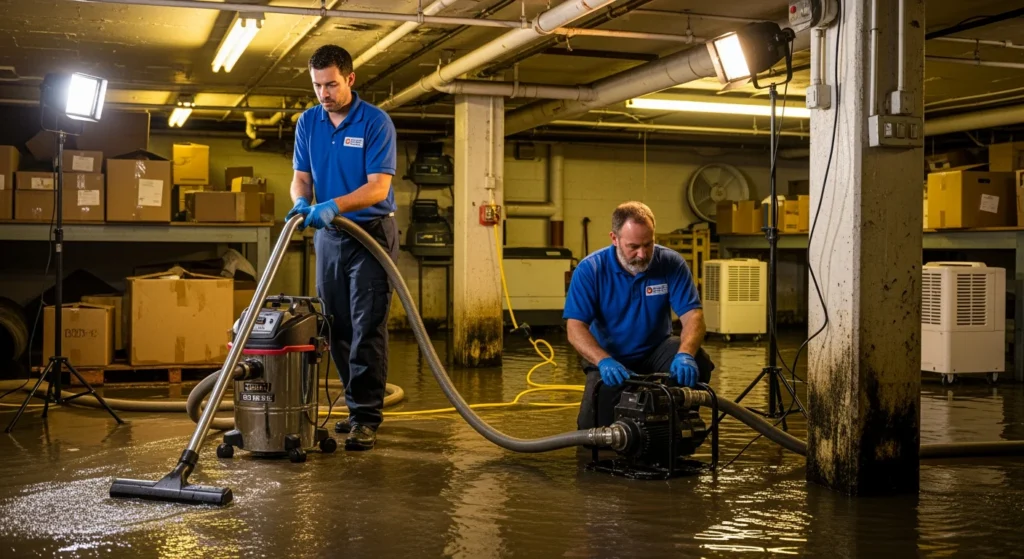
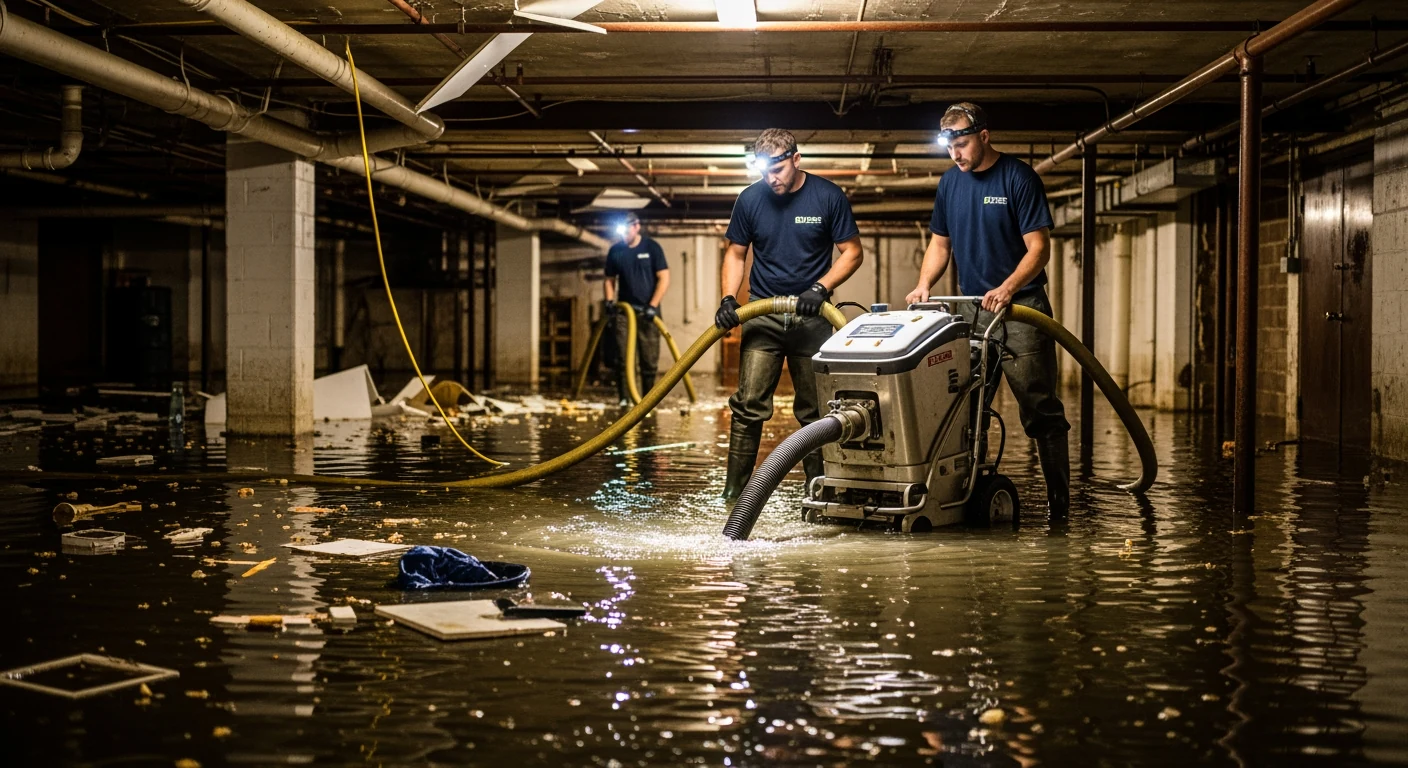
Supply pipe failure in a Nassau County Cape Cod produces water flow at line pressure — typically 50 to 80 PSI — until the water is shut off. The volume of water released depends entirely on when the failure is discovered. A failure during the homeowner’s absence over a weekend can release thousands of gallons, producing Category 1 water damage throughout the basement and adjacent rooms. Upper Restoration responds to galvanized pipe failure emergencies throughout Nassau County 24 hours a day with extraction and drying equipment staged for rapid deployment.