Flood Damage Restoration on Long Island: What Happens After the Water Recedes
Long Island sits between the Long Island Sound to the north and the Atlantic Ocean to the south, making flooding one of the most common and destructive property damage events in Nassau and Suffolk Counties. Whether from a nor’easter, hurricane-related storm surge, failed sump pump, or municipal sewer backup, flood damage requires an immediate, structured response to prevent structural compromise and mold growth.
Upper Restoration responds to flood damage emergencies across Long Island 24 hours a day. This guide explains what the restoration process looks like, what to expect from your insurance claim, and why timing matters more than almost anything else in flood recovery.
Why Flood Response Speed Is Critical
Water moves fast — and so does the damage it causes. Within hours of a flooding event, wood framing begins to absorb moisture. Drywall becomes saturated. Insulation collapses. And within 24 to 48 hours, conditions become favorable for mold growth in concealed cavities behind walls and under flooring.
The longer water sits, the more categories of damage compound. A basement that floods from a sump pump failure is a very different project on day one than it is on day five. Fast extraction and drying saves structural materials, reduces mold risk, and significantly reduces the total cost of restoration.
The Flood Damage Restoration Process: Step by Step
Step 1: Emergency extraction
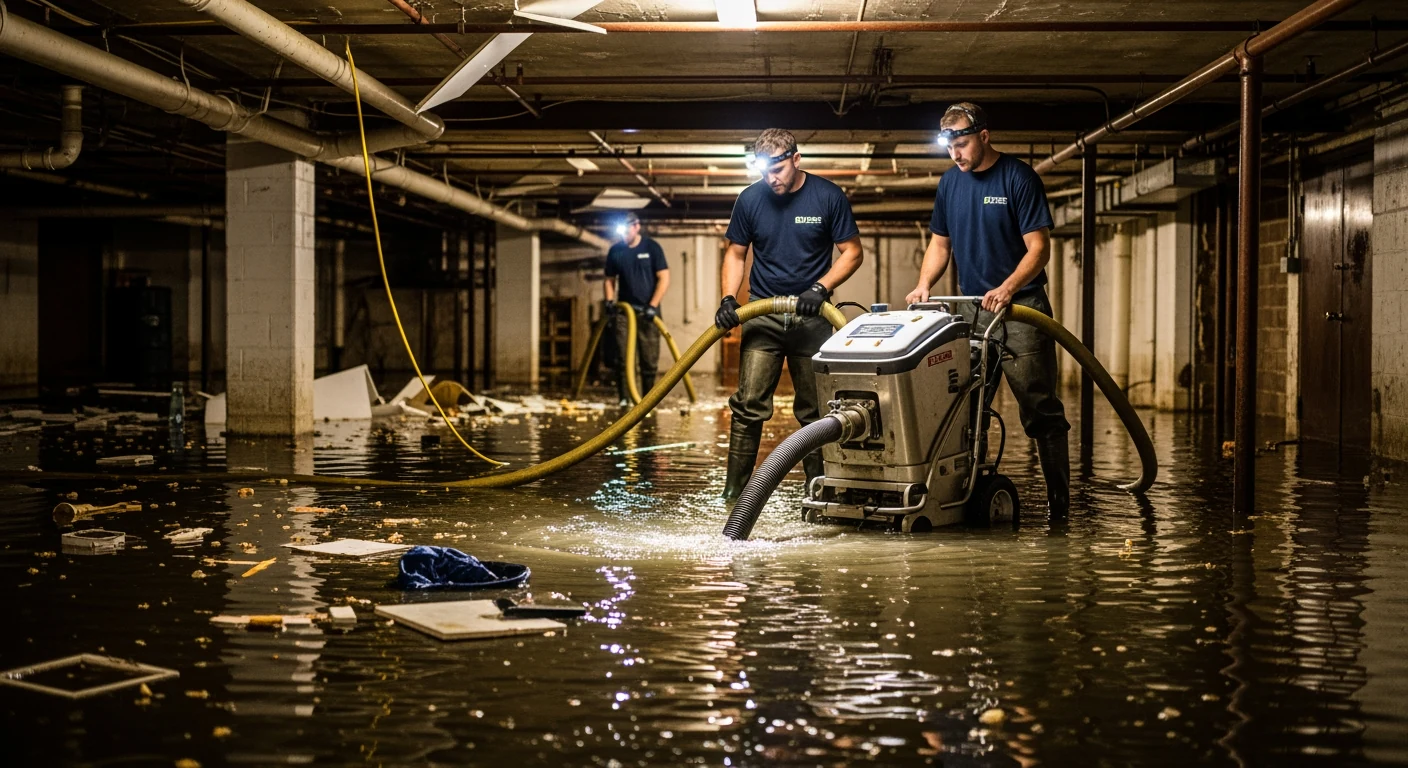
The first priority is removing all standing water using truck-mounted extractors and submersible pumps. For basement flooding, we establish a pumping sequence that prevents structural hydrostatic pressure imbalance during extraction.
Step 2: Moisture mapping
After visible water is removed, our technicians use thermal imaging cameras and moisture meters to map hidden moisture in walls, subfloors, ceiling assemblies, and structural framing. This step defines the true scope of the drying project.
Step 3: Category determination
Flood water is classified into three categories based on contamination level. Category 1 (clean water from supply lines) has different handling requirements than Category 2 (gray water from appliances or overflow) or Category 3 (black water from sewage backup or flooding with ground contact). Category 3 flooding requires full personal protective equipment and specialized disposal of all porous materials that absorbed contaminated water.
Step 4: Structural drying
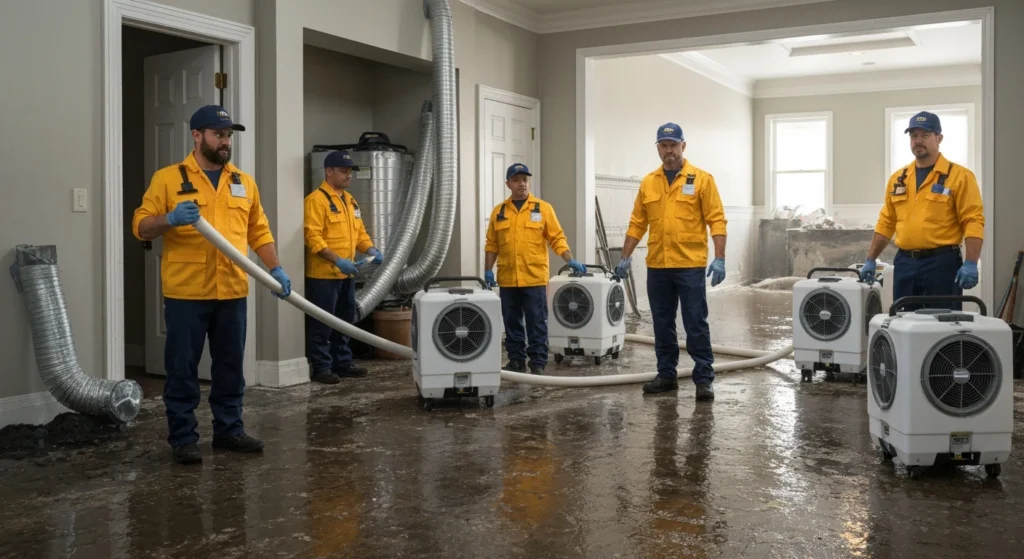
Commercial-grade dehumidifiers, high-velocity air movers, and desiccant units are placed based on the moisture map. Drying typically takes three to five days, with daily monitoring of moisture readings to confirm progress and adjust equipment placement.
Step 5: Demolition and debris removal
Flooring, drywall, insulation, and cabinetry that cannot be dried to acceptable moisture levels must be removed. Our crews perform careful demolition that preserves structural elements and prepares the space for reconstruction.
Step 6: Antimicrobial treatment
All affected surfaces receive EPA-registered antimicrobial treatment before reconstruction begins. This step is critical in Category 2 and Category 3 flood events to prevent mold and bacterial growth in the restored structure.
Step 7: Reconstruction
Once the structure passes final moisture verification, our reconstruction team restores the property — framing, insulation, drywall, flooring, painting, and finish work — to its pre-loss condition.
Flood Damage and Homeowners Insurance on Long Island
Standard homeowners insurance policies do not cover flood damage caused by external flooding — rising water from storms, coastal surge, or overflowing waterways. Flood coverage requires a separate policy through the National Flood Insurance Program (NFIP) or a private flood insurer.
However, flood damage caused by sudden and accidental internal failures — a burst pipe, failed sump pump, or appliance malfunction — is typically covered under standard homeowners policies as “water damage.” The distinction matters enormously when filing a claim.
Upper Restoration works directly with insurance adjusters. We document scope of loss, provide photo evidence from initial response through completion, and prepare detailed repair estimates in formats adjusters use to process claims.
Long Island Flood Zones and Common Flooding Sources
FEMA flood zone maps identify much of coastal Nassau and Suffolk as Special Flood Hazard Areas (SFHAs). Communities like Freeport, Oceanside, Baldwin Harbor, and Lindenhurst in Nassau, and Babylon, Islip, and East Hampton in Suffolk, have documented histories of significant flood events. Inland areas are not immune — flash flooding from heavy rain events regularly affects homes across both counties.
Common sources of flood damage we respond to on Long Island include:
- Storm surge and coastal flooding from nor’easters and tropical storms
- Sump pump failures during prolonged heavy rain events
- Municipal sewer backup into basements
- Roof drainage failures causing interior flooding
- Burst pipes from frozen water supply lines in winter
Frequently Asked Questions About Flood Damage Restoration
How long does flood damage restoration take?
Structural drying alone typically takes three to five days. The full restoration — including demolition, drying, reconstruction, and finishing — can range from two weeks to several months depending on the severity of damage and the scope of reconstruction required.
Can I dry out a flooded basement myself?
Consumer-grade fans and dehumidifiers are not powerful enough to dry structural assemblies to acceptable moisture levels. More importantly, they cannot remove moisture from inside wall cavities and subfloor spaces where mold grows. Professional drying equipment and moisture monitoring are required for genuine structural drying.
Is flood water dangerous?
Flood water that has contacted the ground, storm drains, or sewer systems is classified as Category 3 black water and must be treated as a biohazard. It contains bacteria, sewage, and other contaminants that pose direct health risks. All porous materials that absorbed Category 3 water must be removed and disposed of rather than dried in place.
Will mold grow after flooding?
Mold can begin developing in flooded areas within 24 to 48 hours under the right conditions of moisture, temperature, and organic material. Prompt extraction, drying, and antimicrobial treatment are the primary defenses against mold growth after a flood event.
Does flood damage restoration include reconstruction?
Upper Restoration handles the complete restoration — from emergency water extraction through final reconstruction. We are a full-service restoration contractor, not just a mitigation company. You work with one team from the emergency response through the finished project.
What is the difference between flood restoration and water damage restoration?
The terms are often used interchangeably, but technically, flood damage refers to water that entered from outside the structure (storms, overland flooding), while water damage typically refers to internal failures (burst pipes, appliance leaks). The distinction matters primarily for insurance purposes.