The terms “water mitigation” and “flood damage cleanup” are used interchangeably by many property owners — and the confusion is understandable. Both involve water in a building, extraction equipment, and professional contractors. But they are fundamentally different problems with different contamination levels, different insurance coverage pathways, and different regulatory requirements. Using the wrong term with your insurance carrier — or hiring a contractor who treats them the same way — can cost you thousands in denied claims or incomplete remediation.
Defining Water Mitigation
Water mitigation refers to the professional response to water damage originating from within the building’s systems — a burst supply pipe, failed appliance (dishwasher, washing machine, refrigerator ice maker), overflowed toilet or bathtub, leaking roof allowing rain infiltration, or condensation from HVAC systems. The water source is internal or weather-related, but it does not carry external contaminants into the building.
Under the IICRC S500 Standard, internal water sources are classified by contamination level. A clean supply pipe break is Category 1 (potable water, no significant contamination). An overflow from a dishwasher or washing machine is typically Category 2 (some contamination from soaps and organics, but not biohazardous). These contamination levels allow selective drying in place for non-porous materials and, for Category 1 events addressed promptly, porous materials as well.
Standard homeowners insurance covers water mitigation for sudden and accidental internal water events. This coverage is why the terminology matters: filing a claim as “flood damage” rather than “water damage from burst pipe” can trigger the flood exclusion in a standard policy and result in denial of a claim that should have been covered.
Defining Flood Damage Cleanup
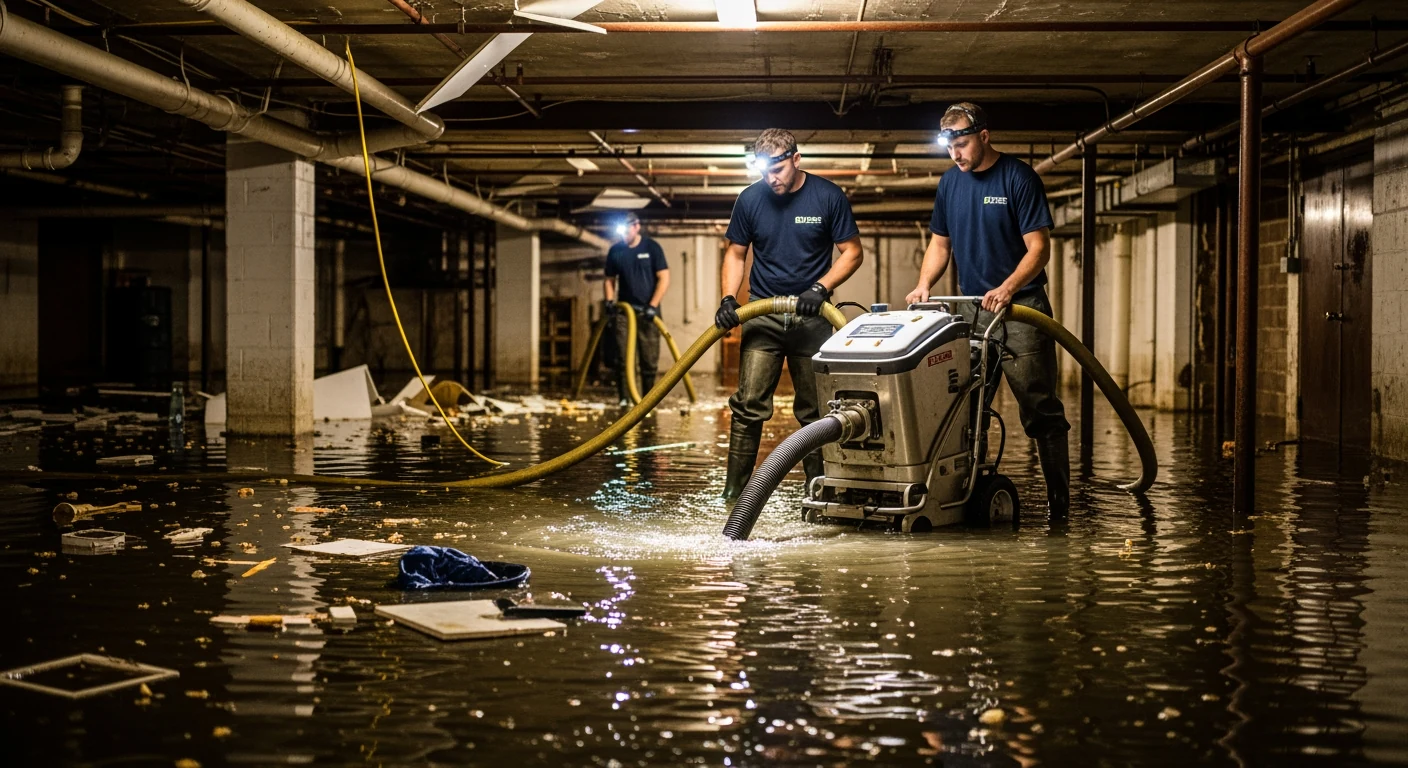
Flood damage, as defined by the insurance industry and the IICRC, refers specifically to water that enters a building from an external source — rising groundwater, storm surge, overflowing rivers or streams, surface runoff during extreme rainfall. This water is IICRC Category 3 (black water) by definition: it has traveled across exterior ground surfaces, through municipal storm systems, or through contaminated soil before entering the building, and it carries biological contaminants, chemical pollutants, and in coastal areas, saltwater.
For NYC and Long Island, the relevant flood scenarios are storm surge from coastal nor’easters and hurricanes (saltwater Category 3 with high corrosive damage to structural metals), combined sewer overflow backup during major rain events (raw sewage mixed with stormwater), and groundwater intrusion into below-grade spaces during heavy snowmelt or sustained heavy rainfall. All three are Category 3 by contamination.
Category 3 flood cleanup requires removal of all porous materials that contacted the water — no exceptions. Drywall, carpet, carpet pad, insulation, paper-faced products, and any other organic material must be removed. Hard surfaces require OSHA-compliant biohazard decontamination using EPA-registered antimicrobial agents. Workers must use appropriate PPE including waterproof gloves, goggles, N95 minimum respirators, and protective coveralls.
The Insurance Coverage Divide
This is where the distinction has the most immediate financial impact for NYC and Long Island property owners:
Standard homeowners insurance covers: Water damage from sudden and accidental internal events (burst pipes, appliance failures, roof leaks from storm damage). Both the mitigation phase and the reconstruction phase for covered events. Additional living expenses if the property is uninhabitable during repairs.
Standard homeowners insurance does NOT cover: Flood damage — any water that enters from an external source, including storm surge, surface flooding, or groundwater intrusion. Sewer backup damage (unless a specific rider is added). Long-term slow leaks attributed to maintenance neglect.
NFIP and private flood insurance covers: Flood damage up to the policy limits ($250,000 building coverage for NFIP; higher limits available with private carriers). Coverage is typically limited to structure and does not cover temporary housing, loss of use, or certain personal property without additional endorsements. NFIP policies have a 30-day waiting period before coverage takes effect — there is no such thing as buying flood coverage the day before a storm.
How Saltwater Flood Damage Differs from Freshwater
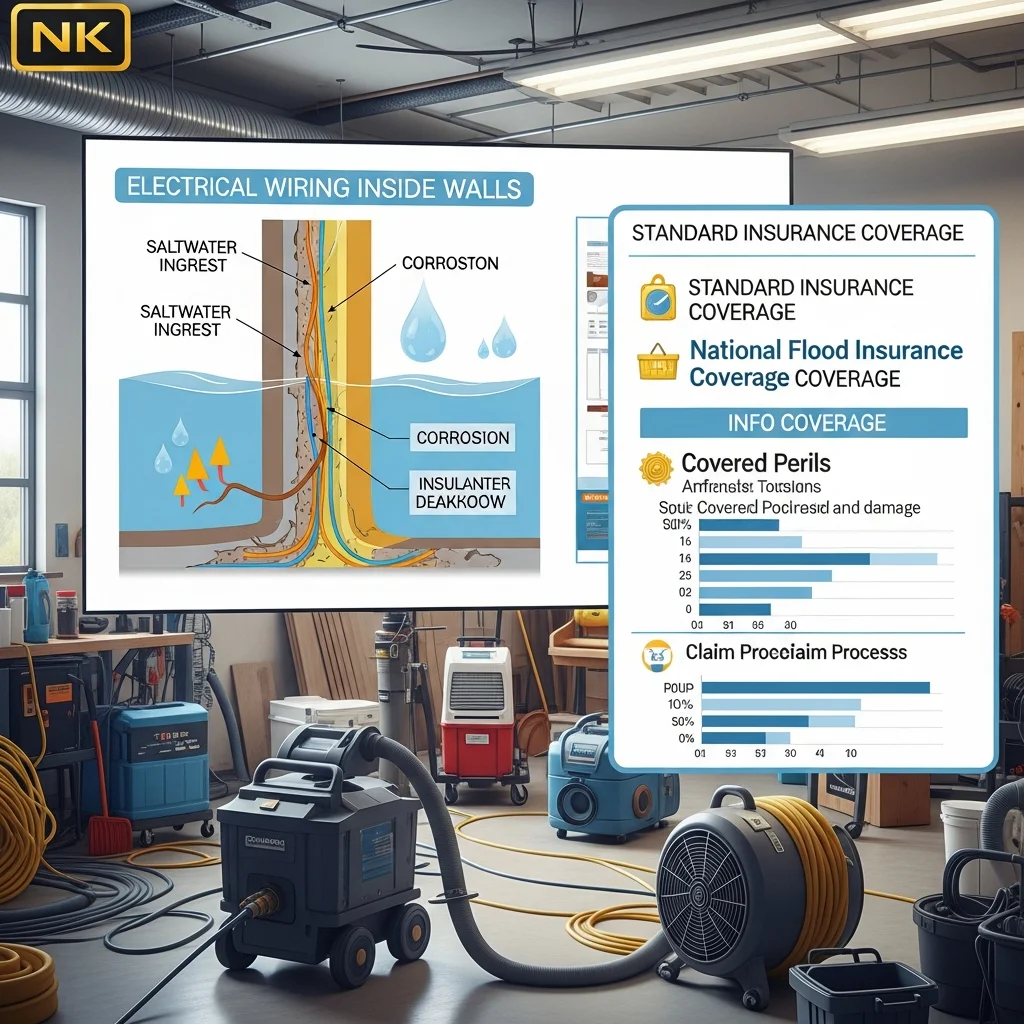
For NYC and Long Island coastal properties, the distinction between freshwater and saltwater flooding is operationally significant beyond the already-Category-3 contamination issue. Saltwater is highly corrosive to structural steel, electrical systems, and HVAC equipment. Standard drying protocols do not address salt crystal formation in building materials — salt draws moisture from the air and prevents materials from reaching dry standard even with commercial drying equipment running continuously.
Saltwater flood cleanup requires a flush-and-neutralize step that freshwater Category 3 cleanup does not: affected materials must be thoroughly flushed with fresh water to dilute and remove salt deposits before any drying can be effective. All structural metal (anchor bolts, joist hangers, metal stud track, electrical conduit) must be inspected for corrosion and replaced if compromised. This step is frequently omitted by contractors unfamiliar with coastal flooding — the result is accelerated corrosion that manifests as structural problems years after the flood event.
Frequently Asked Questions
If my basement floods during a storm, is that covered by homeowners insurance? Almost certainly not under a standard homeowners policy — external water entering the building from a storm event is flood damage and requires a separate flood insurance policy. If the flooding was caused by a burst interior pipe that coincided with the storm, that’s a covered event. The adjuster will investigate the cause of loss.
Does NYC’s combined sewer backup count as flood damage? Yes, for insurance purposes. Sewer backup is excluded from standard homeowners policies and requires a specific sewer backup rider. For coverage to apply to storm-driven combined sewer overflow events, you need either the sewer backup rider or a flood policy that covers sewer backup.
Can the same contractor handle both water mitigation and flood cleanup? Yes — IICRC-certified water damage restoration contractors are trained in all contamination categories. What matters is that they follow Category 3 protocols for flood events: full porous materials removal, biohazard decontamination, OSHA PPE requirements. Ask specifically whether they will be following IICRC S500 Category 3 protocol before authorizing work.
How do I document flood damage for an insurance claim? Document with video and photos before anything is moved or cleaned. Note the water level (mark it on a wall if possible), photograph all affected materials, and document any contamination evidence (sewage smell, visible waste, debris indicating external origin). Call your carrier immediately — both the homeowners carrier and your flood policy carrier if you have one. Do not dispose of any materials until an adjuster inspects or specifically authorizes disposal.