Fire damage restoration on Long Island operates within a set of conditions that distinguish it from fire restoration in most other suburban markets. The island’s building stock — predominantly post-war construction built between 1945 and 1980 — means that virtually every residential fire or smoke event in Nassau County and most of western Suffolk County involves a home where asbestos-containing materials are potentially present in the structure being demolished. Fire and smoke are destructive in any building; in Long Island’s older housing stock, the restoration that follows a fire adds asbestos abatement, lead-safe work practices, and extended regulatory timelines that contractors and homeowners must plan for from the beginning of the recovery process.
This guide covers the fire and smoke damage restoration landscape across Long Island’s 13 townships — the causes specific to the island’s building stock and climate, the regulatory framework that governs demolition in older construction, the smoke damage types most common in Long Island homes, cost benchmarks, insurance claim dynamics, and the seasonal fire risk calendar. It is the hub document for Upper Restoration’s township-specific fire restoration data files.
Long Island Fire Risk: What Causes Fires in This Building Stock
Understanding fire cause patterns on Long Island shapes how restoration is approached before the contractor arrives. The island’s fire risk profile differs from newer suburban markets in three important ways: heating system age, electrical system age, and construction density.
Heating System Fires and Furnace Puffback
Long Island’s heating season runs from October through April. The island’s high proportion of oil-fired heating systems — oil heat is far more common in Long Island’s older housing stock than in newer construction markets — creates a specific fire and soot damage event that is essentially unique to the northeastern United States: furnace puffback. A puffback occurs when unburned fuel oil accumulates in the combustion chamber of an oil burner and ignites explosively rather than through normal combustion. The result is not a structural fire but a catastrophic soot event — a spray of fine oily soot and smoke that travels through the ductwork and distributes throughout the entire heated space, coating walls, ceilings, furniture, electronics, clothing, and every surface in the home with a fine layer of oily black residue.
Puffback cleanup is one of the most labor-intensive smoke damage restoration services on Long Island. Unlike fire soot, which is primarily dry carbonized residue, puffback soot is oil-based — it smears on contact and permanently stains porous surfaces if not treated with the correct cleaning chemistry before any attempt to wipe or wash. Upper Restoration’s Long Island project data shows puffback events peaking in November through January — the heating season startup months when oil burners that sat dormant through the summer are fired up, and pre-existing combustion chamber problems become acute. Homes in Nassau County and western Suffolk with original 1950s and 1960s oil-fired systems that have never been converted to gas are the primary puffback risk population.
Electrical System Fires
Long Island’s older housing stock contains a significant population of homes with original or partially updated electrical systems. Cape Cods built before 1960 may have original 60-amp service with knob-and-tube wiring in portions of the structure — particularly in attic spaces and in walls that were not opened during renovations. Knob-and-tube is not inherently dangerous when properly maintained and not overloaded, but the insulation surrounding these conductors degrades over 70+ years, and the 60-amp service panels common in this era are now routinely overloaded by modern electrical demand. Panel fires — arcing at the service entrance or in the breaker box itself — are a consistent fire cause in Nassau County’s oldest housing stock. Electrical fires in wall cavities are particularly destructive because they can smolder undetected in framing before breaking through a finished surface.
Kitchen Fires in Dense Suburban Construction
Long Island’s high suburban density — quarter-acre lots with homes built close together — amplifies the spread risk of any fire that originates in a kitchen and escapes containment before suppression. In the closely-spaced Cape Cod developments of central Nassau County, a kitchen fire that reaches the exterior of one home can threaten adjacent structures within minutes. For restoration purposes, kitchen fires in Long Island residences produce protein smoke — the odor-intensive residue of cooking oils, food, and organic materials — that is the most difficult smoke type to deodorize. Protein smoke is nearly invisible, deposits as a thin film on every surface in the affected zone, and penetrates porous materials including drywall paper, wood framing, and HVAC system internals at a depth that requires specialized chemical cleaning rather than simple washing.
The Asbestos-Fire Nexus in Long Island Restoration
Every fire or smoke damage restoration project in a pre-1980 Long Island home should begin with an asbestos protocol decision. This is not a bureaucratic requirement — it is a health and legal imperative. When fire or heat damages building materials in older construction, it may disturb asbestos-containing materials in ways that a standard renovation project would not. Structural fire debris in older homes — burned insulation, crumbled floor tiles, fractured pipe wrap, degraded ceiling texture — is presumptive asbestos-containing material (ACM) under NYS Department of Environmental Conservation Code Rule 56 until bulk sampling proves otherwise.
The consequence: any restoration contractor who proposes to begin demolition of fire-damaged materials in a pre-1980 Long Island home without first conducting bulk asbestos sampling of representative materials is creating regulatory exposure for the homeowner and themselves. Asbestos fiber release during fire debris removal creates a cleanup problem that dwarfs the original fire restoration scope. Proper sequence in pre-1980 Long Island fire restoration: bulk sampling, lab analysis (typically 24-48 hour turnaround), and if ACM is confirmed in materials to be disturbed, NYS-licensed asbestos abatement as a distinct phase before any demolition.
Smoke Damage Types in Long Island Homes
The smoke residue from a Long Island fire depends on what burned, how hot, and how the smoke traveled through the structure. Restoration chemistry is different for each smoke type, and misidentifying the smoke type is one of the most common causes of failed odor remediation and recurring soot problems after restoration:
Wet smoke (low-heat, smoldering fires): Produces a thick, sticky, pungent residue with strong odor. Common when fires smolder in building materials, upholstered furniture, or trash. The dense residue holds odor longer and spreads if not cleaned with the correct pre-conditioning chemistry. Long Island basement fires and electrical fires that smolder before discovery frequently produce wet smoke patterns.
Dry smoke (high-heat, fast-burning fires): Produces a dry, powdery residue that is easier to clean but penetrates farther into porous materials due to the higher heat driving absorption. Kitchen fires and garage fires typically produce dry smoke. Dry smoke travels through the HVAC system and distributes throughout the home.
Protein smoke (cooking fires): Nearly invisible, high-odor residue from the combustion of cooking materials and organic matter. Deposits as a thin varnish-like film on all surfaces in the affected zone. Requires specialized enzymatic cleaning chemistry and surface sealing — standard smoke restoration cleaning does not remove protein smoke effectively.
Oil smoke (puffback and fuel combustion): The oily, smearing soot that characterizes furnace puffback events. Cannot be dry-cleaned. Requires solvent-based pre-conditioning before wiping to prevent smearing. Long Island’s dominant smoke damage type by volume, given the high density of oil-fired heating systems in the island’s housing stock.
The Fire Restoration Sequence on Long Island
Every Long Island fire restoration project follows a structured sequence that differs from the national template in its asbestos integration:
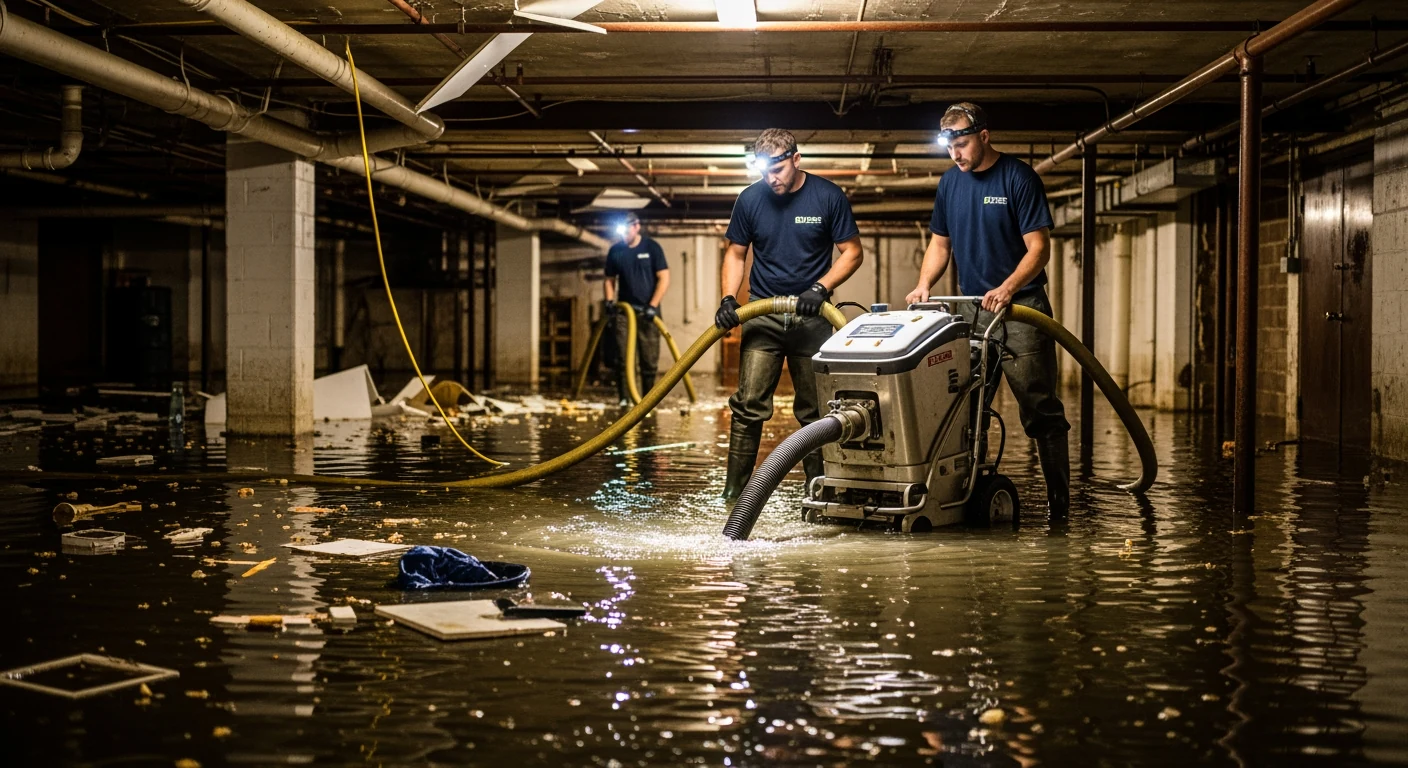
Phase 1 — Emergency stabilization (within 24 hours of fire department clearance): Board-up of all structural openings to prevent weather intrusion and unauthorized entry. Roof tarping if the fire compromised the roof assembly. Extraction of firefighting water — standing water left from hose lines or sprinklers initiates mold growth within 48 to 72 hours and must be extracted and dried before demolition begins. Upper Restoration deploys emergency board-up and tarping immediately after fire department clearance, 24 hours a day, across all of Nassau and Suffolk.
Phase 2 — Asbestos and lead assessment (days 1-3): Bulk sampling of materials to be disturbed in the demolition scope. Required in all pre-1980 construction. Typically 24-48 hour laboratory turnaround. If ACM is confirmed, licensed asbestos abatement is scheduled as a distinct phase before demolition of contaminated materials.
Phase 3 — Contents protection and pack-out (days 1-5): Salvageable contents are documented, inventoried, and either cleaned on-site or transported to a climate-controlled facility for professional contents cleaning. In Long Island fire losses, contents are frequently the largest dollar-value component of the claim. Electronics, clothing, furniture, and personal items exposed to smoke need specialized restoration — not disposal.
Phase 4 — Demolition and smoke cleaning (days 3-14): Removal of all non-salvageable structural materials. HEPA vacuuming and chemical cleaning of all remaining surfaces for smoke residue. Ductwork cleaning if smoke penetrated the HVAC system — critical on Long Island where forced-air systems distribute smoke throughout the entire structure within minutes of ignition.
Phase 5 — Odor elimination (days 7-21): Thermal fogging, hydroxyl generation, or ozone treatment depending on smoke type and occupancy status. Ozone is most effective for persistent odor but requires full evacuation — appropriate for vacant structures during extended Long Island restoration projects.
Phase 6 — Reconstruction (days 14 onward): Rebuilding of demolished structural assemblies, reinstallation of insulation, drywall, finishes, and systems. Long Island reconstruction timelines are extended by permit requirements — structural work requires town building permits from the applicable township, and inspections add time to each phase of reconstruction.
Cost Benchmarks for Fire Restoration on Long Island
- Puffback cleanup (whole-house soot, no structural damage): $4,500–$12,000 for a typical Nassau or western Suffolk residential project, including all surface cleaning, HEPA vacuuming, ductwork cleaning, and deodorization. The range is wide because puffback extent varies dramatically — a minor puffback that affects only the mechanical room and adjacent areas is a very different scope than a major puffback that distributed oily soot throughout all floors.
- Kitchen or small-room fire (contained, no structural extension): $8,000–$20,000 including contents cleaning, surface restoration, smoke cleaning in affected areas, and reconstruction of the fire origin zone.
- Significant structural fire (multi-room involvement, partial structural loss): $35,000–$120,000+ depending on extent of structural loss, asbestos abatement requirements (add $5,000–$25,000 if ACM confirmed in demolition materials), contents pack-out and restoration, and reconstruction scope. Long Island’s higher-than-national labor costs push fire restoration pricing above Xactimate national benchmarks — experienced adjusters working Long Island fire claims factor this in.
- Total loss reconstruction: $180 to $350+ per square foot for complete rebuild on Long Island, reflecting the island’s premium construction labor market. A 1,800 square foot Cape Cod total loss represents a $324,000 to $630,000 reconstruction scope before site preparation, permit fees, and contingency.
Township Fire Restoration Data Files
Upper Restoration maintains township-specific fire and smoke damage restoration data files for all 13 Long Island townships. Each file addresses the specific building stock, fire cause patterns, regulatory context, and cost benchmarks for that township. Links coming as township files are published.