Fire Damage Restoration in Suffolk County, NY: What You Need to Know in 2026
Suffolk County’s fire damage restoration environment spans from the densely-built South Shore neighborhoods of Babylon and Islip to the high-value, seasonally-vacant properties of Southampton and East Hampton. Each zone has distinct fire risk patterns and restoration challenges — but all share the same legal framework (NYS Code Rule 56 for asbestos, NYSDFS insurance regulations), the same IICRC standards for smoke and soot remediation, and the same oil-heat heritage that makes furnace puffback a recurring event in western Suffolk’s pre-1985 housing stock.
Fire Risk Patterns Across Suffolk County’s Townships
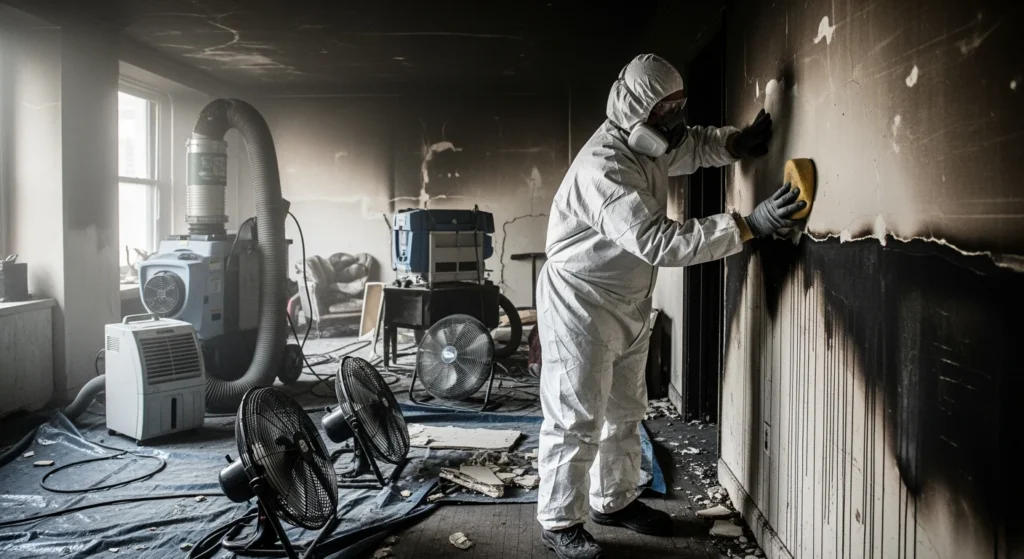
Town of Babylon and Town of Islip (western Suffolk) share Nassau County’s oil-heat-dominated South Shore profile. Furnace puffback events from aging oil-fired systems peak in November through January and are among the most labor-intensive smoke remediation projects in the county. Whole-house puffback cleanups in Lindenhurst, Bay Shore, and West Islip typically run $15,000–$25,000 for petroleum-soot remediation of every surface in every room.
Town of Huntington has a mix of oil heat (dominant in older and mid-century properties) and natural gas (more prevalent in post-1980 construction). The wooded North Shore communities — Cold Spring Harbor, Lloyd Harbor, Centerport — have a high proportion of original or one-generation-updated wood-burning fireplaces, and chimney fires from creosote accumulation in inadequately-cleaned flues are a recurring fire event. Chimney fires produce smoke damage throughout upper-floor rooms via the ceiling plane and often go undetected until homeowners smell persistent smoke odor days later.
Town of Brookhaven — the largest township — spans from South Shore communities with oil heat exposure to the wooded mid-island where electrical fires from overhead utility lines striking trees are common during storm events. Commercial and light industrial properties in the Route 25 and Route 112 corridors have distinct fire restoration needs including OSHA compliance for worker safety in contaminated industrial environments.
East End townships present the seasonally-vacant fire risk: a heating system failure in a vacant winter property, a power surge that arcs through unmonitored electrical, or a kitchen appliance left running. By the time a fire in a vacant East End property is discovered, smoke has been circulating for hours and damage is extensive. Reconstruction costs in the Hamptons reflect market-rate finish quality — a moderate fire loss in an East Hampton property that would cost $50,000 in Lindenhurst may cost $100,000–$150,000 in Southampton due to finish standards and trade rates.
Asbestos in Suffolk County Fire Restorations
NYS Code Rule 56 applies to all pre-1980 Suffolk County construction. Any fire-related demolition in homes built before 1980 requires a pre-demolition asbestos survey and licensed abatement of confirmed ACMs before reconstruction. Given Suffolk County’s 1970 median construction year, a significant proportion of fire restoration projects in western and central Suffolk involve asbestos scope. East End pre-war properties may require more extensive surveys covering a broader range of potential ACMs.
Fire Damage Restoration Costs in Suffolk County (2026)
Minor losses (puffback, contained kitchen fire, isolated electrical — western/central Suffolk): $8,000–$22,000. Moderate losses (structural involvement, suppression water): $22,000–$75,000. Major losses (multi-room demolition, asbestos abatement, reconstruction): $75,000–$200,000. East End properties with Hamptons-quality finish requirements run 25–50% above these ranges. Full details at our fire damage insurance guide.