How Common Are Home Fires? Understanding the Risk
Home fires are a routine, well-documented event in the United States, not a rare catastrophe. In 2024, home structure fires accounted for 329,500 incidents, 23% of all reported fires nationwide, according to the National Fire Protection Association’s annual research summary. These fires caused 2,920 civilian deaths and 8,920 injuries, roughly 75% of all fire-related deaths and injuries that year, along with $11.4 billion in direct property damage.
The U.S. Fire Administration’s broader dataset puts total fires (including vehicle and outdoor fires) at 1,414,191 in 2024, a figure that has climbed 7.6% since 2015. Readers who want a granular breakdown by cause, property type, or region can pull raw numbers from the USFA’s public Fire Data Sets. The takeaway isn’t alarm. It’s that fire recovery is a well-understood process with established phases, and knowing them in advance shortens the distance between disaster and a stable plan.
Immediate Steps to Take After a Fire (Before Restoration Begins)
The hours right after a fire matter most for safety and for the insurance claim that follows. Priorities are: confirm the property is safe to re-enter, document everything before cleanup starts, and notify your insurer immediately. Renters in NYC apartments should also contact their landlord or management company the same day.
Fire officials or the fire department typically clear a structure before anyone goes back inside, and that clearance should never be skipped, even if the damage looks minor from the street. Once cleared, the New York City Council’s Residential Fire Emergency Response Guide advises residents to photograph everything in the home before moving or discarding anything, since insurers rely heavily on this early visual record. The same guide urges renters specifically to contact their renters’ insurance provider and file a claim promptly so they receive the benefits they’re entitled to.
First 24-48 Hours Checklist:
- Wait for official clearance before entering the structure.
- Photograph every room, damaged item, and structural element before cleanup begins.
- Contact your homeowner’s or renters’ insurance provider and open a claim.
- Notify your landlord, co-op board, or condo association if you rent or live in a multi-family building.
- Arrange temporary housing or ask your insurer about additional living expense coverage.
- Avoid turning on HVAC, electrical, or gas systems until a professional confirms they’re safe.
Coordination between tenant, landlord, and insurer sets the pace for everything downstream. A property manager juggling multiple fire-affected units benefits from getting a professional assessment scheduled early, since it produces the documentation both the insurer and the building board will eventually ask for.
Assessing the Damage: What a Professional Inspection Covers
A professional fire damage inspection checks structural integrity, electrical systems, HVAC components, and the extent of smoke and soot penetration before anyone begins cleanup. FEMA’s homeowner guide recommends specific protective gear and a defined inspection sequence, starting outside the home and moving in only after exterior hazards are ruled out.
FEMA’s “Homeowner’s Guide to Risk Reduction and Remediation of Residential Smoke Damage” recommends wearing goggles, an N95 or P100 respirator, gloves, long sleeves and pants, and closed-toe shoes before inspecting any fire-damaged space, even areas that look untouched. The guide also advises walking the exterior first, checking the roof, overhangs, windows, doors, the electrical service, and HVAC components for ash or smoke buildup, since these areas often reveal how far smoke traveled before anyone steps inside.
PPE Checklist Before Entering a Fire-Damaged Home: Goggles, N95 or P100 respirator, work gloves, long sleeves and pants, closed-toe shoes. Skip entry entirely if you smell gas, see sagging ceilings or floors, or notice exposed electrical wiring.
FEMA stresses documenting all damage with photos before remediation begins, reinforcing the same point NYC Council guidance makes for renters: the record you create in these first days is the record your insurer works from later. The U.S. Environmental Protection Agency’s Healthy Homes guidance adds a useful layer here, tying restoration to indoor air quality standards and referencing Underwriters Laboratories safety benchmarks for sleeping areas. It’s a reasonable, non-alarmist point that children, older adults, and anyone with respiratory sensitivities warrant a little extra caution around ventilation and filtration before moving back in, not a reason to panic about air quality generally.
The Fire and Smoke Damage Restoration Timeline, Phase by Phase
Fire restoration moves through seven identifiable phases: emergency stabilization, assessment, water extraction and drying, soot and smoke cleaning, odor removal, demolition (if needed), and reconstruction. Industry sources place a moderate residential fire at roughly two to four months from incident to move-in, with larger structural losses extending past six months.
The ranges below come from restoration-industry sources, WrightWay’s fire damage restoration guidelines, Renovabilt’s fire restoration timeline data, and Palm Builders’ smoke cleanup guidance, synthesized rather than treated as one fixed schedule. Every fire is different, and square footage, severity, and local permitting all shift these numbers.
| Phase | Typical Duration | What Happens |
|---|---|---|
| Emergency board-up / stabilization | Same day | Securing openings, tarping the roof, shutting off utilities |
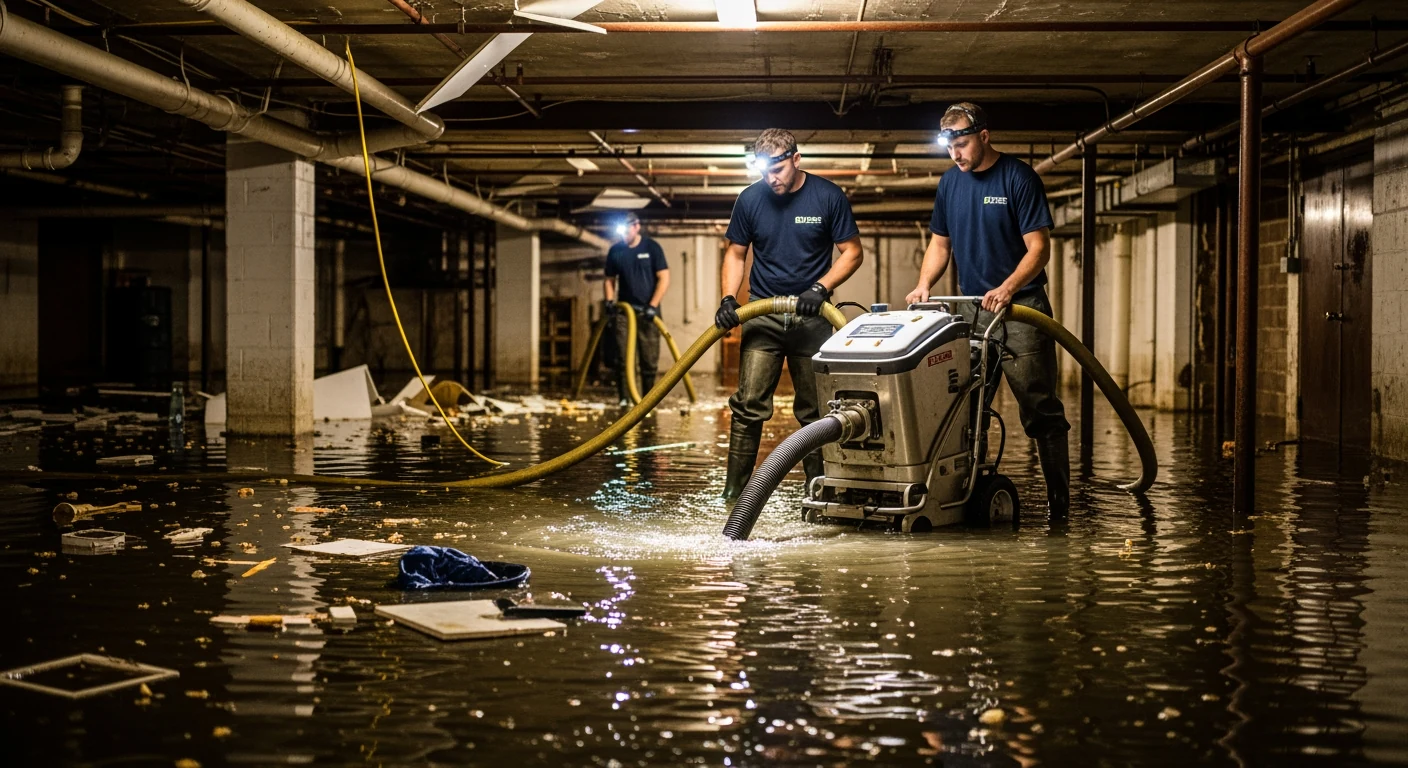
| Water extraction and drying | 2-7 days | Removing firefighting water, drying structure and contents |
| Soot and smoke cleaning | 3-14 days | Cleaning surfaces, contents, HVAC ducts of soot residue |
| Odor removal | Several days to 4 weeks | Ozone, thermal fogging, or hydroxyl treatment cycles |
| Demolition (if required) | 1-2 weeks | Removing unsalvageable drywall, flooring, framing |
| Reconstruction | 4-16+ weeks | Rebuilding to pre-loss condition, from minor repairs to full structural rebuilds |
Note the spread on reconstruction: a contained kitchen fire might rebuild in about four weeks, while a major structural loss can run four to six months, per WrightWay’s data. Palm Builders frames moderate whole-project restoration at two to six weeks, extending to two to three months for major structural repairs. None of these ranges are guarantees for any individual property. That’s precisely why a scope-specific, on-site assessment matters more than any published average.
Smoke Odor Removal: Why It Takes Time and What’s Involved
Smoke odor removal typically takes anywhere from several days to four weeks, depending on how deeply smoke penetrated porous materials like drywall, insulation, and fabric. A small kitchen fire may clear in days; a whole-house smoke event often needs multiple treatment cycles spread over weeks.
Smoke particles are microscopic and acidic, which lets them settle into wall cavities, HVAC ductwork, and fabric fibers well beyond the visibly burned area. Renovabilt’s timeline data puts odor treatment at several days to two weeks for lighter cases, while WrightWay and Palm Builders both note severe cases can stretch to a month across repeated treatment sessions using ozone, thermal fogging, or hydroxyl generators. For light smoke, soot, or odor damage without heavy visible residue, FEMA’s guide outlines a basic four-step process that starts with full ventilation, opening every window and door to air the interior out before any chemical or mechanical treatment begins.
Odor lingering longer than expected usually signals a source that hasn’t been fully addressed, not a failed treatment. A follow-up inspection to check ductwork, subflooring, or wall cavities is the standard next step rather than repeating the same surface cleaning.
Rebuild and Reconstruction: Setting Realistic Expectations
Reconstruction is the longest phase of fire restoration, ranging from about four weeks for a contained, single-room loss to four to six months for major structural damage. Permitting timelines, material availability, and the scope of demolition all factor into where a specific project lands within that range.
Renovabilt describes this stretch simply as “several weeks to several months,” which sounds vague until you consider how much variation exists between a scorched kitchen and a two-story structural fire. Local permitting adds its own variable: NYC Department of Buildings review timelines differ from permitting in suburban Long Island towns or municipalities across NJ, PA, and CT, and that difference alone can shift a project by weeks. Homeowners should ask their contractor for a written scope of work and a permit timeline specific to their municipality, rather than relying on a general estimate pulled from an online guide.
DIY vs. Professional Restoration: Where to Draw the Line
Homeowners can handle very light smoke odor and surface residue using ventilation and basic cleaning, following FEMA’s four-step approach for minor cases. Anything involving structural damage, electrical systems, HVAC contamination, heavy soot, or standing water calls for a licensed restoration professional.
| Situation | Handle Yourself | Call a Professional |
|---|---|---|
| Faint smoke smell, no visible soot, small localized fire (e.g., burnt toast) | Yes, open windows and ventilate | Not necessary |
| Visible soot on walls, ceilings, or fabric | No | Yes, specialized cleaning required |
| Any structural charring, sagging floors or ceilings | No | Yes, structural inspection required |
| Electrical outlets, panels, or wiring exposed to fire | No | Yes, licensed electrician plus restoration team |
| HVAC system ran during or after the fire | No | Yes, duct cleaning and inspection |
| Firefighting water saturation | No | Yes, professional extraction and drying within 24-48 hours |
The line isn’t really about ability, it’s about exposure risk and hidden damage. Soot residue and smoke particles that look cosmetic on the surface often mask deeper penetration into insulation or ductwork, and a professional inspection catches that before it becomes a second, larger repair.
Not sure which side of that line your property falls on? A same-day on-site assessment gives you a scope-specific answer instead of a general guess.
Regional Considerations: NYC, Long Island, NJ, PA, and CT
Fire recovery in an NYC apartment or multi-family building involves coordination with landlords, co-op boards, or condo associations that homeowners in suburban Long Island, NJ, PA, or CT don’t typically face. Building-wide utility shutoffs, shared HVAC systems, and board approval for reconstruction work can all extend timelines beyond what a single-family homeowner would experience.
In a multi-family building, one unit’s fire can affect several others through shared walls, ductwork, or plumbing, which means restoration scoping often needs sign-off from a building manager or board before work begins. The New York City Council’s Residential Fire Emergency Response Guide is written specifically with this reality in mind, pointing renters toward their own insurance provider rather than assuming a landlord’s policy covers personal losses. Property managers overseeing multiple affected units benefit from a single restoration company coordinating scope across every unit simultaneously, rather than each tenant hiring separately.
Outside the five boroughs, single-family homeowners across Long Island, New Jersey, Pennsylvania, and Connecticut generally deal with one insurance policy and one permitting authority, which simplifies coordination but doesn’t shorten the underlying restoration phases described above. Local building departments still set the pace for permitting and inspections, so a contractor familiar with your specific municipality’s process is worth more than one working from a generic timeline.
Frequently Asked Questions
How soon after a fire can I go back inside my home?
Only after the fire department or a fire official officially clears the structure as safe. Once cleared, FEMA recommends wearing protective gear, including a respirator and gloves, and inspecting the exterior before entering, since structural, electrical, and HVAC hazards may not be visible from inside alone.
How long does smoke odor take to go away after a fire?
Smoke odor removal typically ranges from several days for light, localized smoke damage to about four weeks for severe, whole-house smoke penetration, according to restoration industry data from WrightWay, Renovabilt, and Palm Builders. Odor lingering beyond expected treatment cycles usually indicates an unaddressed source, such as ductwork or subflooring.
How long does the entire fire restoration process take?
A moderate residential fire typically takes about two to four months from the incident to move-in, per WrightWay’s restoration data, while major structural losses can extend past six months. Actual timelines depend on fire severity, square footage, and local permitting, which vary by project and municipality.
Can I clean smoke damage myself, or do I need a professional?
Very light smoke odor without visible soot can often be addressed with ventilation, following FEMA’s basic four-step approach. Any visible soot, structural charring, electrical exposure, HVAC contamination, or water saturation from firefighting efforts should be handled by a licensed restoration professional to avoid hidden damage and health exposure.
What should I document for my insurance claim after a fire?
Photograph every room and damaged item before any cleanup or disposal begins, per guidance from the New York City Council’s Residential Fire Emergency Response Guide and FEMA’s homeowner remediation guide. Contact your insurance provider promptly to open a claim, and keep records of temporary housing and other fire-related expenses.
Do renters need their own insurance claim after an apartment fire?
Yes. The New York City Council’s Residential Fire Emergency Response Guide specifically advises renters to contact their own renters’ insurance provider and file a claim promptly, rather than assuming a landlord’s building policy covers personal belongings or additional living expenses.
Is it safe to run my HVAC system after a fire?
Not until a professional inspects it. FEMA’s remediation guide includes HVAC components in its exterior and interior inspection checklist because smoke and ash frequently travel through ductwork, and running the system before inspection can spread soot and particulates throughout the home.
Get a Scope-Specific Timeline for Your Property
General ranges help you plan, but every fire is different. Upper Restoration provides free same-day, 24/7 assessments across NYC, Long Island, NJ, PA, and CT from EPA, IICRC, and NYS certified technicians.
Sources
- NFPA Research, “U.S. Fire Loss in 2024” Research Summary (2026)
- NFPA Xchange, “Fire Loss in the United States During 2024” (2026)
- U.S. Fire Administration (USFA/FEMA), National Fire Statistics
- U.S. Fire Administration, Fire Data Sets
- FEMA, “Homeowner’s Guide to Risk Reduction and Remediation of Residential Smoke Damage” (2025)
- U.S. Environmental Protection Agency, Healthy Homes guidance
- New York City Council, “Residential Fire Emergency Response Guide”
- WrightWay, “Fire Damage Restoration Guidelines” (2026)
- Renovabilt, “Fire Restoration Timeline” (2026)
- Palm Builders, “Fire Damage Restoration Cost & 24/7 Smoke Cleanup”
This content is for general informational purposes only and is not legal, medical, or insurance advice. Remediation scope, timelines, and costs vary by site conditions. Contact Upper Restoration for a professional assessment. Licensing and certifications apply per jurisdiction.