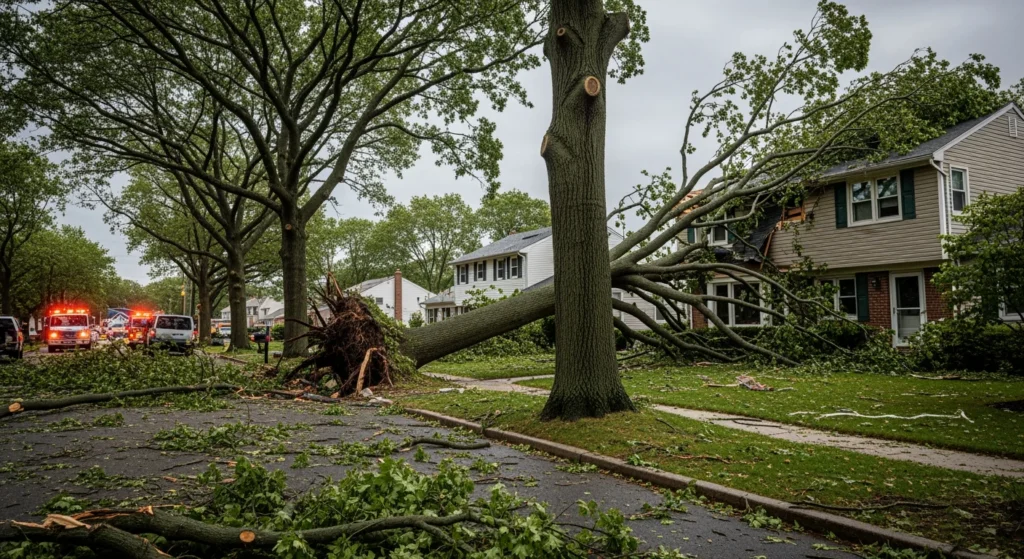
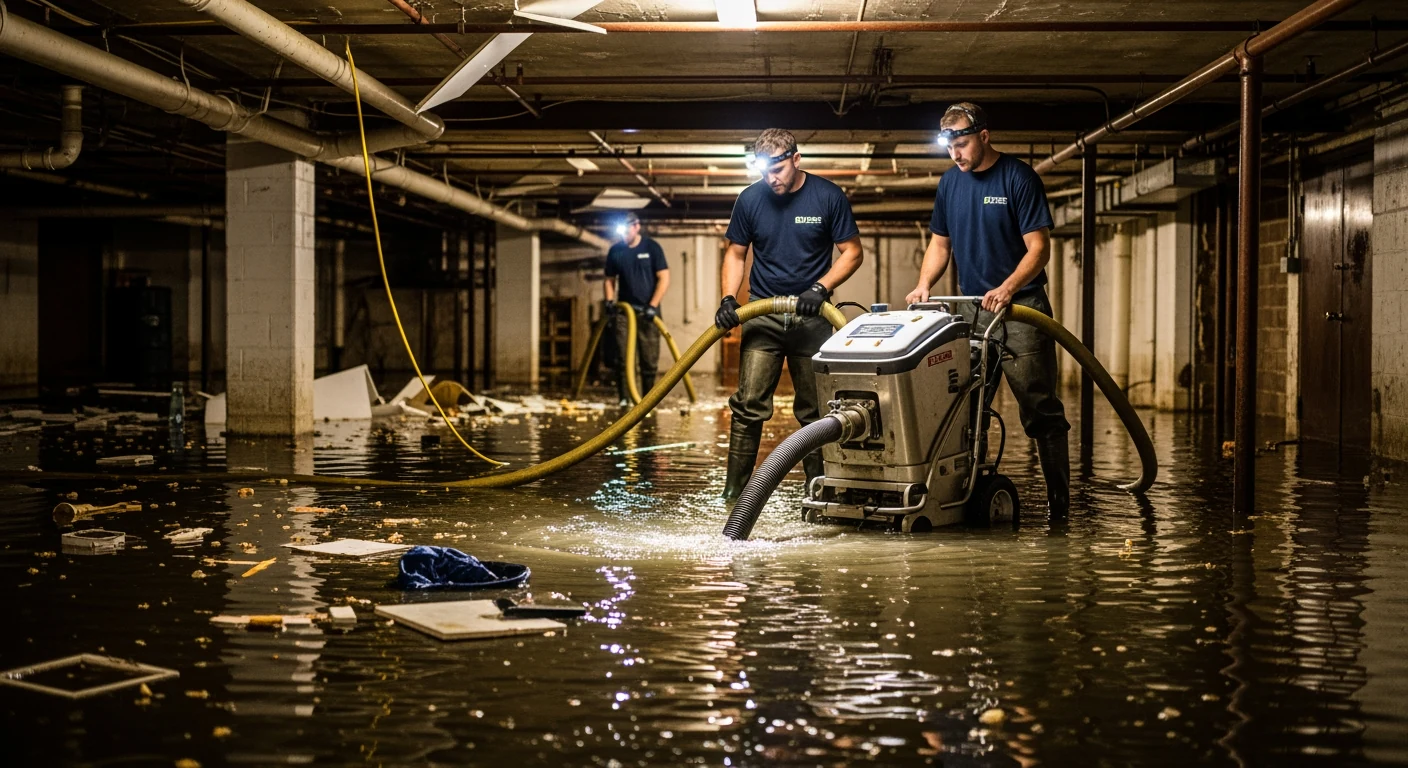
After a severe storm blows through Nassau or Suffolk County, the sight of a massive fallen tree is all too common. When that tree is lying across your yard, your car, or even your house, one of the first questions that comes to mind is: who pays for this? The answer can be complicated and often depends on where the tree came from and the circumstances under which it fell.
Here’s a guide to help Long Island homeowners understand liability and responsibility for tree damage.
The General Rule: “Act of God” and Your Own Insurance
In most cases, if a healthy tree is blown over by a storm, the law considers it an “Act of God.” This means no one is considered at fault. Under this principle, the responsibility for cleanup and repair falls to the owner of the property where the tree, or parts of the tree, landed.
- If your neighbor’s tree falls on your house: You are responsible for the removal of the tree from your property and for the repairs to your home. You would file a claim with your own homeowner’s insurance policy.
- If your tree falls in your own yard: You are responsible for the cleanup and any damage it caused to your own property.
While this may seem unfair if it wasn’t your tree, it is the standard practice for insurance claims. Your policy is designed to protect your property, regardless of what caused the damage.
The Major Exception: Proving Negligence
The “Act of God” rule has one major exception: negligence. If you can prove that the owner of the tree knew (or should have known) that their tree was diseased, dead, or otherwise hazardous and failed to take reasonable steps to address it, they can be held liable for the damage.
To prove negligence, you would typically need evidence such as:
- Photos showing the tree was visibly rotting, hollow, or dead before the storm.
- Written documentation (like emails or certified letters) where you had previously warned your neighbor about the tree’s dangerous condition.
- An expert opinion from a certified arborist who can testify that the tree was a clear hazard.
If negligence can be proven, your insurance company may try to recover the costs of your claim from your neighbor’s insurance company through a process called subrogation.
What if the Tree is from Public Property?
If a tree from a park, sidewalk, or other municipal land falls on your property, the town or county may be responsible. However, similar to the negligence rule with a neighbor, you often have to prove that the municipality was aware of the tree’s hazardous condition and failed to act. Report the damage to your local town or village immediately and document everything.
Immediate Steps to Take After a Tree Falls
- Prioritize Safety: First, ensure everyone is safe and stay clear of any downed power lines.
- Document Everything: Before anything is moved, take extensive photos and videos of the fallen tree, the point of origin, and all resulting damage from multiple angles.
- Contact Your Insurance Company: Call your insurance agent as soon as possible to report the damage and start the claims process.
- Prevent Further Damage: Your insurance policy requires you to mitigate further loss. This means you should call a professional restoration and tree removal company to safely remove the tree from your home and apply emergency tarps to prevent water from getting inside.
Understanding who is responsible for a fallen tree can be confusing in a stressful time. The key takeaway for Long Island homeowners is to contact your own insurance provider first. They will guide you through the process and determine the best course of action.