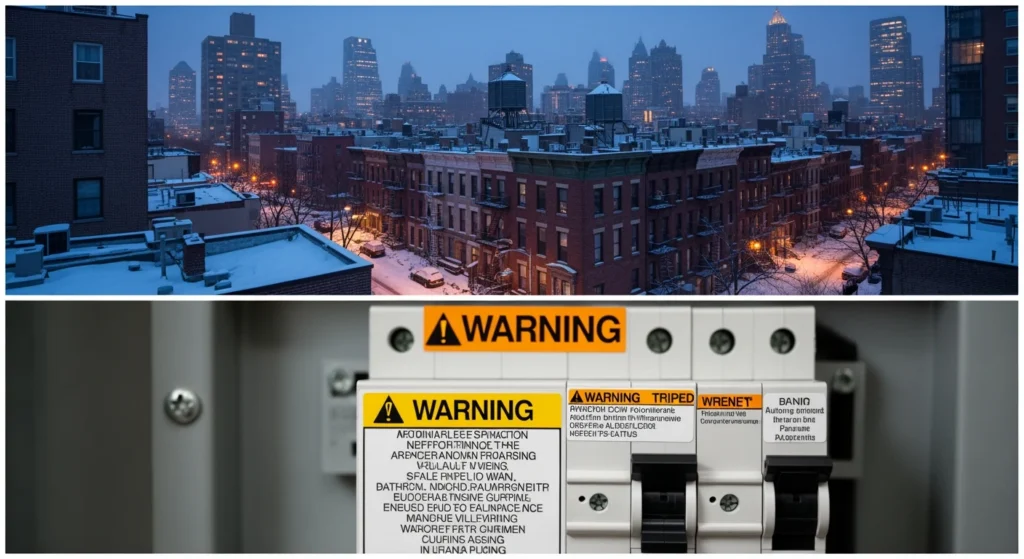
winter brings holiday lights, festive gatherings, and the extra chill that has us plugging in space heaters. All of this extra activity puts a significant strain on one of the hardest-working (and most overlooked) parts of your home: your electrical panel.
An overloaded circuit is more than an inconvenience that trips a breaker. It’s a serious fire hazard. Understanding the basics of electrical overload prevention is a critical part of your winter fire prevention plan.
Why is Winter a High-Risk Season?
Your home’s electrical system is divided into circuits, and each circuit is designed to handle a specific maximum amount of electricity (or “load”). In the winter, our electrical demands spike:
- Space Heaters: These are high-wattage appliances that can easily consume most of a single circuit’s capacity all by themselves.
- Holiday Lights: One or two strings of modern LED lights aren’t a problem, but large, elaborate displays (especially with older incandescent bulbs) add a significant and constant load.
- Increased Indoor Activity: We’re inside more, using computers, TVs, cooking appliances, and hair dryers, all of which add to the cumulative strain.
When you plug a space heater into the same circuit that’s already running your living room entertainment center and several strands of holiday lights, you’re asking for trouble.
Signs of an Electrical Overload
Your home will give you warning signs that a circuit is being dangerously taxed. Do not ignore them.
- Breakers Tripping Frequently: This is the most obvious sign. A circuit breaker is a safety device designed to trip when it’s overloaded. If you reset it and it trips again, you have a problem. Don’t just keep resetting it.
- Dimming or Flickering Lights: Do your lights dim or flicker when you turn on a large appliance like a vacuum or a space heater? This means the circuit is strained to its limit.
- A Burning Smell or “Ozone” Smell: This is a major red flag. A burning odor near an outlet or your electrical panel means wiring is overheating and may be melting. Unplug everything on that circuit and call an electrician immediately.
- Warm or Discolored Outlet Covers: Feel your outlet faceplates. If they are warm to the touch, it’s a sign of a dangerous wiring problem or overload.
- A Buzzing or Sizzling Sound: Any noise coming from an outlet or your breaker panel is a sign of a serious electrical fault.
How to Prevent Electrical Overloads This Winter
- Know Your Breaker Panel: Take a look at your panel. Hopefully, it’s labeled so you know which breakers control which rooms or appliances. This helps you understand, for example, that your “Living Room” circuit (likely 15 amps) is separate from your “Microwave” circuit (likely 20 amps).
- Plug Space Heaters Directly into the Wall: Never, ever plug a high-wattage appliance like a space heater into an extension cord or power strip. These can’t handle the high power draw and can easily overheat and ignite.
- One Space Heater Per Circuit: As a rule of thumb, dedicate one circuit to each space heater. Don’t plug anything else into the other outlets on that same circuit.
- Use LED Holiday Lights: LEDs use up to 90% less energy than older incandescent bulbs and dramatically reduce the load on your circuits.
- Don’t “Daisy-Chain” Power Strips: Plugging one power strip into another is a fire hazard and a guaranteed way to create an overload.
- Schedule an Electrical Inspection: If you live in an older home, have frequent breaker trips, or have any of the warning signs listed above, it’s time to have a licensed electrician inspect your panel and wiring. You may need to upgrade your service or add dedicated circuits.
An electrical fire can be devastating. If you do experience a fire, even a small one, it’s crucial to call 911. After the fire is out, contact a professional fire restoration company. They can assess the damage from fire, smoke, and soot, which often travels through the walls and HVAC system, and ensure your home is safe again.
See also: Home Maintenance Guide for Long Island