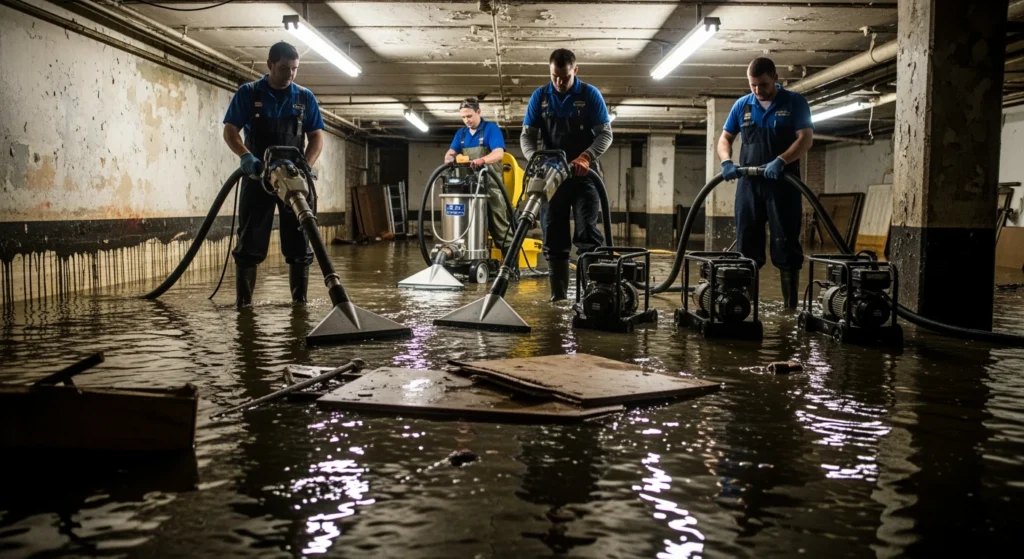
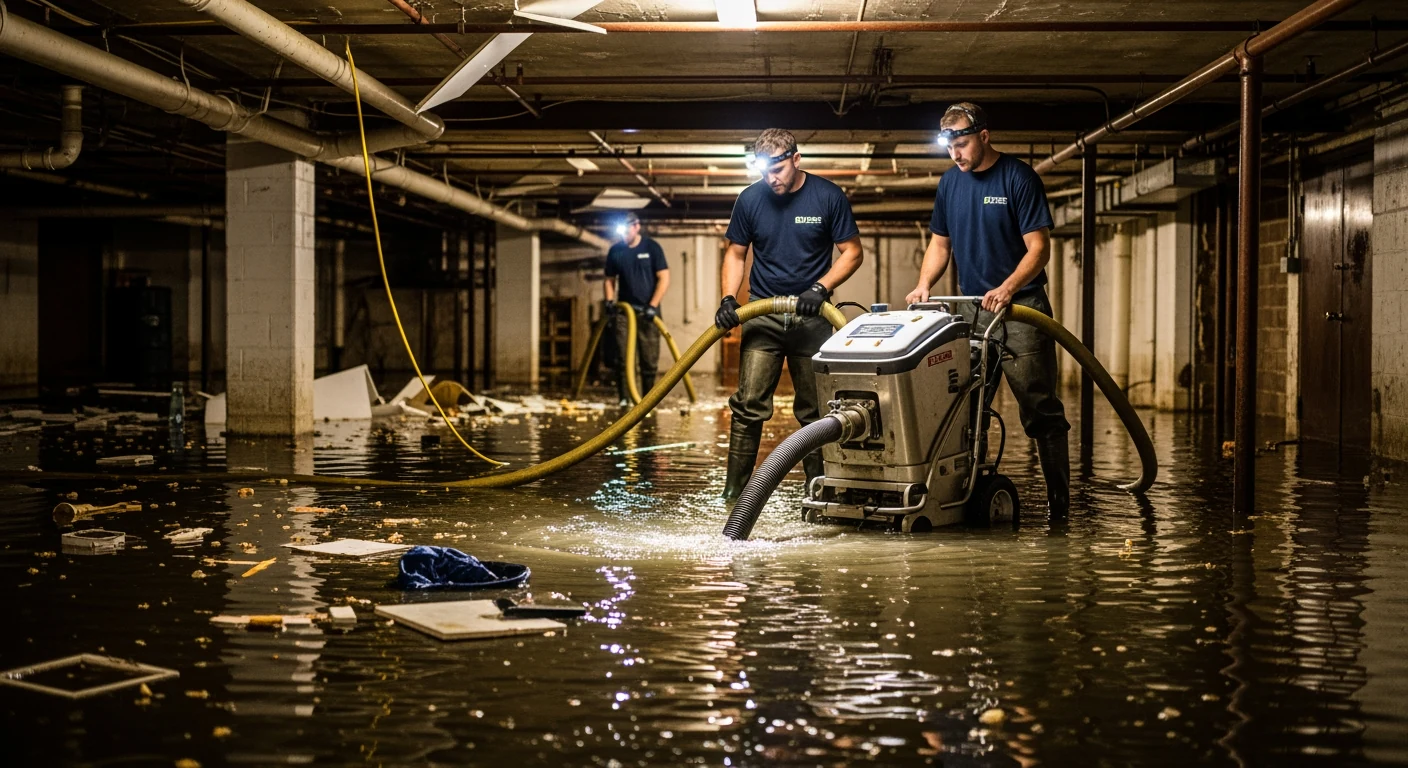
The demolish-versus-dry-in-place decision is the central scope question in every residential water damage restoration project. It determines whether a water damage event costs $5,000 or $20,000, whether the project takes one week or four, and whether mold appears in the wall cavity six months after the contractor leaves. The IICRC S500 provides a decision framework, but the correct answer depends on factors that vary by event — and Long Island’s specific conditions make demolition the correct answer more often than in many other markets.
When Drying in Place Is Appropriate
Standard gypsum board drywall with paper facing can be dried in place when all of the following conditions apply: the water source is Category 1 (clean water from a sanitary supply source); the elapsed time since wetting is less than 24 to 48 hours; the ambient conditions are favorable for drying (low enough humidity to support evaporation); moisture meter readings confirm that moisture has not wicked beyond the immediately affected area; and there is no pre-existing mold or contamination in the wall cavity. When all of these conditions are met, drying in place with targeted dehumidifier and air mover placement is the most efficient approach.
When Demolition Is Required
Demolition is required when: the water is Category 2 or Category 3 (mandatory for Category 3, recommended for Category 2 after 24 hours); elapsed time since wetting exceeds 48 to 72 hours; moisture meter readings show wetting has extended to wall framing or adjacent assemblies; the affected wall contains insulation (fiberglass batt insulation in a wet wall cavity cannot be effectively dried in place and retains moisture that sustains mold growth); or pre-existing conditions in the wall cavity create contamination or mold risk that makes drying in place unsafe.
The Long Island Context
On Long Island, demolition is required more frequently than in many other markets for two specific reasons. First, south shore flooding events are Category 3 — demolition is mandatory regardless of elapsed time. Second, Long Island’s summer ambient humidity (70%+ relative humidity) significantly compresses the Category 1 drying window. In a dry interior climate, a Category 1 wet wall discovered within 24 hours can often be dried in place with high confidence. In Long Island in July, the ambient humidity reduces the vapor pressure gradient available for drying and extends the time that materials remain above 16% moisture content — the mold risk threshold. Upper Restoration’s project decisions account for ambient conditions explicitly, not just water source and elapsed time.
Insurance Implications
Adjusters sometimes challenge demolition scope as unnecessary when the water appears to have been Category 1 and the contractor chose to demo rather than dry. Upper Restoration documents the rationale for all demolition decisions — moisture readings, ambient conditions, elapsed time, and any Category-elevating factors — so that demolition scope is defensible in claim negotiations.