Popcorn Ceiling Asbestos on Long Island: What You Need to Know
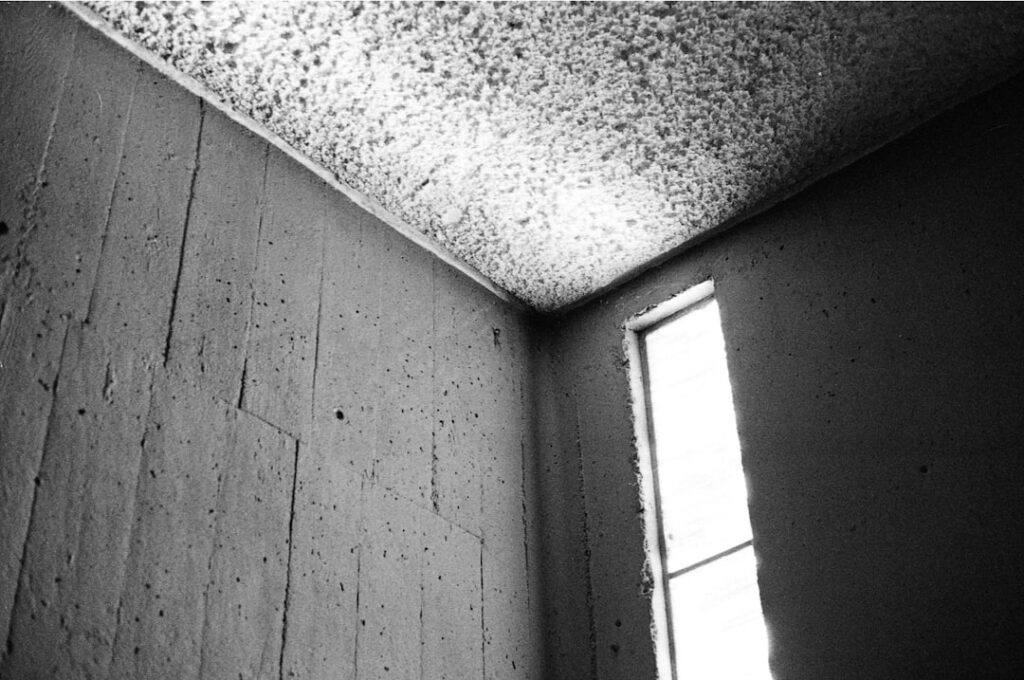
Nassau and Suffolk counties are dense with mid-century housing stock, including the postwar tract developments in places like Levittown, Hicksville, and Bay Shore. That means a large share of local homes fall squarely inside the decades when textured “popcorn” ceilings were standard and asbestos was a common additive in the spray mix. If you’re planning a repaint, water-damage repair, or ceiling tear-out in one of these homes, the ceiling texture deserves a look before anyone touches it.
This isn’t a reason to panic. Asbestos-containing material that’s intact and undisturbed generally isn’t releasing fibers into the air (Facebook community discussion, Dec 2024). The risk shows up when someone scrapes, sands, drills, or otherwise damages the material and turns it friable. On Long Island specifically, that scenario comes up constantly: storm-damaged ceilings after nor’easters, renovation projects on 1960s and 1970s ranch homes, and landlords updating multi-unit buildings between tenants.
The Timeline: When Were Popcorn Ceilings Installed With Asbestos?
Popcorn ceilings installed before the mid-1980s carry the highest asbestos risk, with elevated concern continuing into the early-to-mid 1990s in some products. Risk generally decreases the closer a home was built to 1990, but no visual cutoff is reliable enough to skip testing on its own.
Homes and apartments built before the mid-1980s are more likely to have popcorn ceilings made with asbestos (Mesothelioma Hope, July 2024). Asbestos is most often found in homes built before 1980, showing up not just in ceiling texture but in floor tiles, pipe insulation, attic insulation, and joint compound as well (Asbestos.com, 2026). That matters for renovation planning: if your ceiling has asbestos, there’s a reasonable chance other materials in the same house do too.
The federal restrictions that began phasing asbestos out of consumer products in the late 1970s didn’t end the practice overnight. Renovators should assume popcorn ceilings installed before the mid-1990s contain asbestos, since manufacturers continued adding it to spray-applied texture products even after initial restrictions took hold (Mesothelioma.com, April 2026). Anecdotal reporting from home inspectors echoes this: homes built as late as 1991 have tested positive, with likelihood dropping the later into the 1980s the home was constructed (Reddit r/HomeInspections, Nov 2022). If your Long Island home was built or last had its ceilings redone anytime before 1993, treat the texture as a testing candidate, not a guessing game.
You Can’t Tell by Looking, Why Visual Inspection Isn’t Enough
No visual characteristic, texture pattern, color, or age estimate can confirm whether a popcorn ceiling contains asbestos. Asbestos fibers are microscopic and mixed uniformly into the material, so two ceilings that look identical can have completely different compositions. Lab sampling is the only reliable method of confirmation.
Homeowners often ask whether a coarser, “chunkier” texture means asbestos, or whether a smoother spray pattern is safer. It doesn’t work that way. The composition depends on what the manufacturer mixed into that specific batch, not how it was sprayed or how it looks decades later. Asbestos-containing popcorn texture generally contained somewhere between 1 and 10 percent asbestos by volume (Brown Law Office, May 2026), a concentration far too low to detect visually even under close inspection. And there is no known safe level of asbestos exposure, which is exactly why guesswork isn’t an acceptable substitute for testing.
Testing Before You Renovate: The Only Reliable Way to Know
Confirming asbestos requires a physical sample sent to an accredited lab for polarized light microscopy analysis. EPA guidance directs homeowners to avoid disturbing suspect material and to rely on professional sampling before remodeling, rather than attempting DIY test kits or visual judgment calls.
The EPA’s official position is direct: don’t disturb suspect material, and get professional sampling before remodeling (EPA, “Asbestos in the Home”). That guidance exists because the act of collecting a sample, however small, involves cutting into or scraping the material. A trained technician knows how to do this while containing fiber release; an untrained homeowner with a retail test kit often doesn’t, and may create the exact exposure risk they’re trying to rule out.
There’s also a scope question worth understanding before you schedule anything. A thorough asbestos survey for a home renovation doesn’t stop at the ceiling. It ideally also samples wallboard, plaster, insulation, and roofing material, since older homes built or renovated in the same era frequently used asbestos-containing products throughout, not just overhead (YouTube, “How to Test For Asbestos,” Oct 2021). If you’re planning a full ceiling and wall renovation, ask your inspector to sample beyond just the popcorn texture so you’re not surprised by a second material later in the project.
Before you call anyone: Stop any scraping, sanding, drilling, or dry-scraping of the ceiling immediately. Close off the room if dust or debris is already visible. Don’t run fans or HVAC systems that could circulate fibers. Then schedule professional sampling before resuming work.
If It Tests Positive: Encapsulation vs. Professional Removal
A positive asbestos test doesn’t automatically mean the entire ceiling must be torn out. Encapsulation, sealing the material in place with a specialized coating, is often appropriate for intact ceilings that aren’t being renovated. Full removal is typically required when the ceiling is damaged, water-stained, or part of a renovation that requires demolition.
Encapsulation works by applying a sealant designed specifically for asbestos-containing material, locking fibers in place so the ceiling can remain untouched and safe. It’s usually the less invasive and less expensive option, and it makes sense for homeowners who just want to repaint or leave the ceiling alone going forward. The tradeoff is that encapsulation doesn’t remove the hazard, it contains it. If you plan to renovate that room down the road, or if water damage has already compromised the material, encapsulation just delays the eventual removal decision.
Removal is the more thorough path, and it’s the only real option once material is damaged, crumbling, or in the way of construction plans. It involves negative-air containment, HEPA filtration, wetting the material to suppress dust, and careful bagging and disposal following state waste-handling rules. It costs more and takes longer than encapsulation, but it eliminates the material from the property rather than sealing it in.
| Factor | Encapsulation | Removal |
|---|---|---|
| Best for | Intact ceilings, no renovation planned | Damaged material or full remodels |
| Relative cost | Lower | Higher |
| Timeline | Shorter | Longer, requires containment setup |
| Long-term outcome | Hazard sealed in place | Hazard removed from property |
| Who performs it | Licensed asbestos professional | Licensed asbestos abatement contractor |
New York’s Rules on Asbestos Work, Why Licensing Matters
New York State requires asbestos inspection, sampling, and abatement to be performed by contractors and individuals holding specific state certifications, not general contractors or handymen. Unlicensed asbestos work is both a legal liability and a safety risk, since improper handling can spread fibers throughout a property rather than contain them.
This licensing requirement exists because asbestos work is genuinely different from typical renovation work. It requires containment setup, air monitoring, specific respirator and PPE protocols, and disposal through approved waste streams. A contractor without that training, even a skilled and well-meaning one, isn’t equipped to prevent fiber release once material is disturbed. For homeowners, this means the person who tests your ceiling and the crew who eventually encapsulate or remove it should both be able to show current New York certification before any work begins. Ask for it directly. A legitimate abatement company will produce it without hesitation.
What to Do Right Now, and What Not to Do
If you suspect your popcorn ceiling contains asbestos, the immediate priority is to stop disturbing it and avoid DIY testing or removal. The correct next step is scheduling professional sampling, then waiting for lab results before making any renovation, repaint, or repair decisions involving that ceiling.
Don’t scrape a “test patch” yourself, even a small one. Don’t sand it down before painting, and don’t assume a fresh coat of paint seals anything, paint isn’t an asbestos-rated encapsulant. Don’t rely on a retail asbestos test kit as your final answer if you’re planning major work, since these kits vary widely in reliability and lab accreditation. Do close off the room if you’ve already caused any damage or see visible dust. Do photograph the ceiling’s condition for your records. Do call a licensed New York asbestos inspection company to schedule sampling before you touch anything else.
How Upper Restoration Handles Testing and Abatement on Long Island
Upper Restoration provides licensed asbestos testing, encapsulation, and removal services for Nassau and Suffolk County homeowners and property managers, coordinating sampling, lab analysis, and abatement under New York’s environmental remediation requirements. The company also handles the water damage, mold, and fire restoration work that often accompanies ceiling repairs.
Because Long Island’s older housing stock frequently combines asbestos concerns with water intrusion (a leaking roof that damages popcorn texture, for example, is a common call), having one company coordinate testing and remediation cuts down on the back-and-forth between separate contractors. Upper Restoration’s crews work under EPA and IICRC protocols and hold the New York State certifications required for asbestos inspection and abatement, so property owners aren’t left verifying credentials on their own mid-project.
Not sure if your ceiling needs testing before your next project?
Frequently Asked Questions
How old does my Long Island home need to be to worry about asbestos in the ceiling?
Homes built or last renovated before the early-to-mid 1990s carry the highest risk, with the likelihood increasing the closer construction dates fall to the 1960s and 1970s. Homes built before 1980 carry the most elevated risk. No age alone confirms or rules out asbestos, so testing is still required regardless of construction date.
Can a professional tell if my ceiling has asbestos just by looking at it?
No. Asbestos fibers are microscopic and mixed throughout the material, so visual inspection cannot confirm or rule out asbestos content regardless of texture, color, or apparent age. Confirmation requires a physical sample analyzed by an accredited lab using polarized light microscopy.
Is it safe to paint over a popcorn ceiling without testing it first?
Light painting with a roller generally doesn’t disturb the material significantly, but any sanding, scraping, or texture prep beforehand can release fibers if asbestos is present. The safer approach is testing before any surface preparation begins, since paint itself does not seal or neutralize asbestos-containing material.
Do I need a lab test, or can I use a DIY asbestos test kit?
Professional sampling is the more reliable option, since it involves controlled collection techniques that limit fiber release and lab analysis accredited to detect asbestos accurately. The EPA advises against disturbing suspect material yourself and recommends professional sampling before remodeling projects.
If my ceiling tests positive, do I have to remove the whole thing?
Not necessarily. Intact asbestos-containing ceilings that aren’t part of a renovation plan can often be encapsulated, sealing the material in place rather than removing it. Full removal is generally required when the material is damaged, water-stained, or standing in the way of planned demolition or construction work.
Who is legally allowed to test and remove asbestos in New York?
New York State requires asbestos inspection, sampling, and abatement to be performed by individuals and contractors holding specific state certifications. General contractors and handymen without this certification are not legally authorized to perform asbestos testing or removal work.
What should I do before calling a professional about a suspected asbestos ceiling?
Stop any scraping, sanding, or drilling of the ceiling immediately, and avoid running fans or HVAC systems that could circulate dust in the room. Close off the space if debris is visible, photograph the ceiling’s condition, and contact a licensed asbestos inspection company to schedule professional sampling.
Get a Professional Answer Before You Touch That Ceiling
Upper Restoration offers licensed asbestos testing and abatement across Long Island, Nassau, and Suffolk counties.
Sources
- Mesothelioma Hope, “How Can You Tell If Your Popcorn Ceiling Has Asbestos?” (July 26, 2024)
- Mesothelioma.com, “5 Things to Know About Popcorn Ceilings Before You Remodel” (April 29, 2026)
- Reddit r/HomeInspections, “Popcorn ceiling, house built in 1986” (Nov 17, 2022)
- Mesothelioma Hub, “Asbestos Risk in Popcorn Ceilings and Textured Paints” (July 22, 2025)
- Asbestos.com, “What Does Asbestos Look Like? Identifying Asbestos in Homes” (2026)
- Brown Law Office, “Asbestos in Popcorn Ceilings” (May 20, 2026)
- Facebook community discussion, “Popcorn ceiling asbestos testing and removal recommendations” (Dec 25, 2024)
- YouTube, “How to Test For Asbestos | Popcorn Ceiling and Flooring” (Oct 26, 2021)
- U.S. Environmental Protection Agency, “Asbestos in the Home,” epa.gov/asbestos/asbestos-home
This content is for general informational purposes only and is not legal, medical, or insurance advice. Remediation scope, timelines, and costs vary by site conditions. Contact Upper Restoration for a professional assessment. Licensing and certifications apply per jurisdiction.