The 24-48 Hour Window: Why Speed and Completeness Both Matter
Standing water and saturated materials need to be dry within 24 to 48 hours to prevent mold growth, according to the EPA. That window is the reason property owners reach for a shop-vac the moment a pipe bursts, and it’s also the reason a fast start doesn’t guarantee a finished job. Speed gets water off the floor. Completeness is what keeps it from coming back through your walls three weeks later.
Here’s the distinction that matters: the clock EPA describes isn’t just about how quickly you begin extraction, it’s about how quickly the entire structure, not just the visible surface, reaches a dry standard. A homeowner running a wet-vac over hardwood or carpet can hit that 48-hour mark for what they can see and still miss it entirely for what’s underneath. Subflooring, baseboards, and the inside of a wall cavity dry on a completely different timeline than an open floor, and nobody’s shop-vac reaches them.
This is the gap that separates a one-day inconvenience from a six-week remediation project. The next section walks through exactly what DIY extraction leaves behind and why.
What DIY Water Extraction Typically Misses (and Why)
DIY water extraction typically addresses surface water on floors and visible wet spots on walls, but rental-grade equipment lacks the suction capacity, moisture meters, and thermal imaging needed to find and dry water trapped in subflooring, wall cavities, and carpet padding, according to G.W. Savage.
A consumer shop-vac is built to pull water off a hard surface. It isn’t built to pull moisture out of a wet subfloor, out of insulation packed inside an exterior wall, or out from under carpet padding that looks dry on top but is still saturated three layers down. Household box fans and a rented dehumidifier move air around a room; they don’t target the specific pockets of trapped moisture that cause the real damage. G.W. Savage notes plainly that this consumer-grade equipment “simply won’t get the job done fast enough” once water has migrated past the surface.
The detection problem is just as significant as the extraction problem. Professionals use moisture meters and thermal imaging cameras specifically because water damage doesn’t announce itself. A wall can look dry, feel dry, and still be holding enough moisture behind the drywall to feed mold growth for weeks. Without that equipment, a homeowner is essentially guessing at when the job is done, and the most common guess, according to G.W. Savage, is stopping the drying process too early and overlooking carpet padding or wall cavities entirely.
None of this means DIY effort is wasted. Getting standing water up fast within that first day matters and it helps. It means the extraction phase most homeowners consider “done” is often only the first half of the job, and the second half is where mold takes hold if nobody looks for it.
Hidden Moisture, Hidden Mold: The Health Risk You Can’t See
Mold can grow behind drywall, under carpets, and inside wall cavities and HVAC systems, making visual inspection alone insufficient for confirming a space is safe, per the EPA. Exposure can trigger nasal irritation, coughing, wheezing, and more severe reactions in people with asthma or compromised immune systems, according to the CDC.
The severity of any reaction depends heavily on the mold species involved and how extensive the contamination has become, which is exactly why ATI Restoration emphasizes removing water and fully drying a structure before anyone attempts to treat visible mold. Treating the mold you can see while ignoring the moisture source behind the wall just gives it a reason to come back.
This is where “I don’t see any mold” becomes a misleading data point rather than a reassurance. Mold colonies inside a wall cavity or beneath carpet padding can establish well before any smell or surface discoloration reaches a room a person actually walks through. By the time it’s visible, the hidden contamination is usually already established.
We’re not going to tell you what your specific health risk is, that’s a conversation for a physician, particularly if anyone in the household has asthma or a compromised immune system. What we can tell you is that the EPA’s guidance is consistent on one point: full removal of contaminated materials and full reduction of moisture and humidity is what addresses the long-term risk, not surface cleaning. That’s the standard the next two sections build on.
From Wet Drywall to Structural Rot: How Small Leaks Become Big Repairs
Water damage left untreated or inadequately dried can progress to warped materials, structural rot, and mold growth requiring professional remediation, according to ATI Restoration. A leak that costs a few hundred dollars to address on day one can turn into a subfloor replacement or framing repair months later if moisture stays trapped inside building materials.
Wood framing and subflooring don’t need to be soaked to rot, they just need sustained moisture over time. A wall cavity that stays at elevated humidity for weeks because nobody ran a moisture meter over it is doing slow damage that’s invisible until someone finally opens the wall for an unrelated repair and finds soft, discolored wood. At that point, it’s not a drying job anymore, it’s a framing repair, and the cost difference between the two is not small.
Reliance Water Damage Restoration makes a related point about porous materials specifically: surface cleaning does not address contamination trapped inside carpet, drywall, and insulation, and inadequate antimicrobial treatment lets bacteria and mold persist inside the material itself rather than on top of it. That’s why the IICRC S500 standard directs restoration professionals to remove certain porous materials like saturated carpet padding and affected drywall, rather than attempt to clean and save them. It’s a judgment call based on category of water and extent of saturation, not a default to demolition, but it’s a call that requires training to make correctly.
The pattern to watch for: a leak that seemed minor and “handled” resurfaces weeks later as a musty smell, a soft spot in flooring, or peeling paint. That’s usually trapped moisture finishing what it started.
The Insurance Angle: Why Mitigation Method Can Affect Your Claim
Insurers generally expect water damage mitigation to follow recognized industry standards, such as the IICRC S500, and gaps in how a loss was documented or dried can complicate a claim. This isn’t a guarantee of denial, it’s a documentation and standards issue that professional mitigation is built to satisfy.
Here’s the practical mechanics of it: a claims adjuster reviewing a water damage loss wants to see that the water intrusion was stopped, that affected materials were properly assessed and dried or removed, and that the timeline matches recognized mitigation practices. When a homeowner has done their own extraction with a rented wet-vac and some fans, there’s typically no moisture-mapping documentation, no category-of-water assessment, and no record of what was checked and cleared. If mold or structural damage shows up later as a secondary claim, the insurer has to evaluate whether that damage resulted from the original covered event or from inadequate drying afterward, and that’s a harder case to make without documentation.
We’re not going to tell you how your specific carrier will handle your specific claim, that depends on your policy language and your adjuster, and that’s a conversation for your insurance professional. What we can say is that professional mitigation companies typically document moisture readings, drying logs, and equipment placement throughout the job specifically because that record is what supports a claim if secondary damage is disputed later. That paper trail is one of the quieter reasons professional mitigation tends to be the more cost-effective path even when the upfront rental cost looks cheaper.
What Professional Water Damage Restoration Actually Involves
Professional restoration follows the IICRC S500 standard, which includes categorizing water damage by contamination level (clean, gray, or black water), using commercial-grade extraction equipment and high-capacity dehumidifiers, and locating hidden moisture with moisture meters and thermal imaging before determining which materials must be dried in place versus removed.
The category assessment happens first because it changes everything downstream. Clean water from a supply line break is handled differently than gray water from an appliance overflow, which is handled differently than black water from sewage or flooding. EPA guidance is direct on this last category: if the damage involves sewage or other contaminated water, homeowners should call in professionals experienced in contaminated water cleanup rather than attempt it themselves. That’s not a judgment call homeowners are expected to make alone.
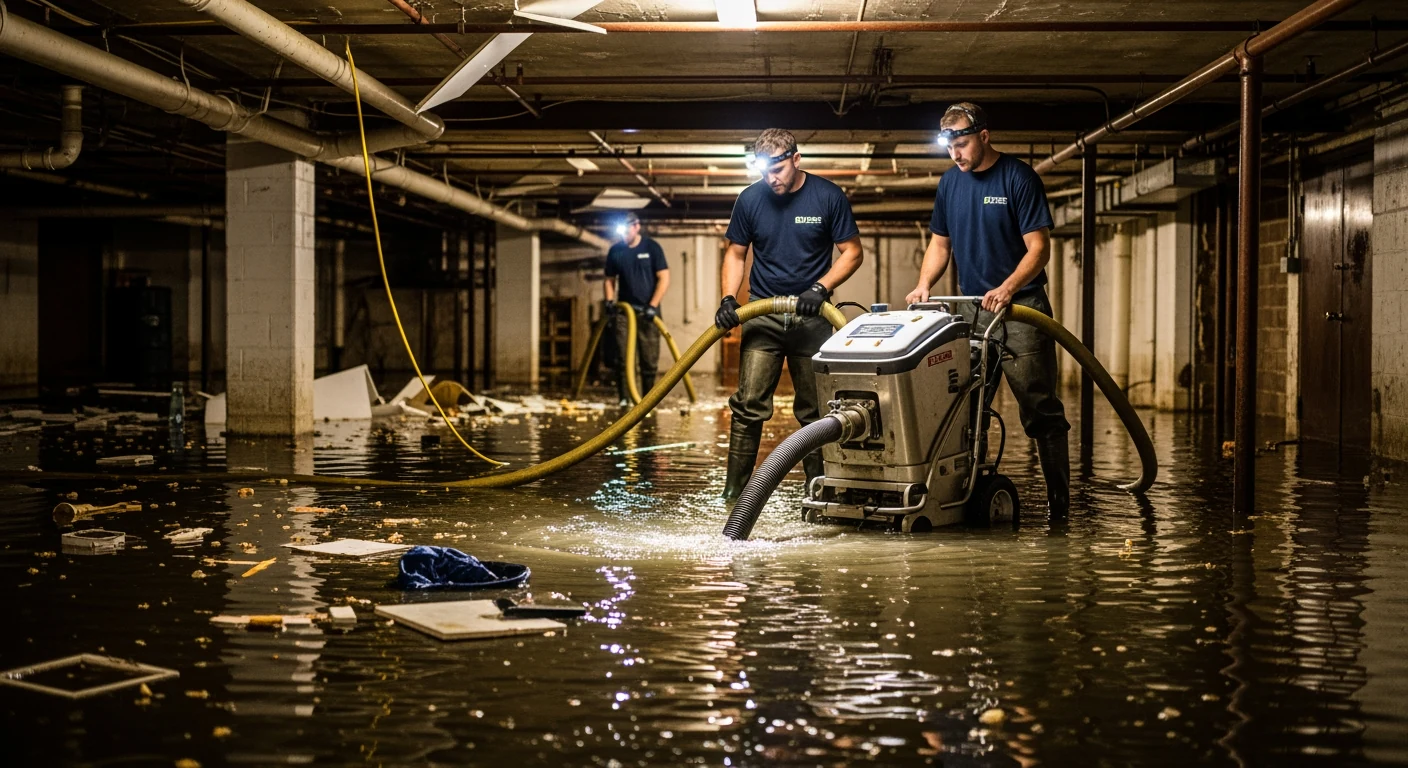
Once category is established, commercial extraction pulls far more water, far faster, than consumer equipment, and high-capacity dehumidifiers bring ambient humidity down to a level that actually dries structural materials instead of just circulating damp air. Moisture meters and thermal imaging then confirm, room by room and cavity by cavity, where moisture remains, which is how a technician knows whether a wall is actually dry or just looks dry. Where materials like carpet padding or sections of drywall are too saturated to salvage, IICRC protocol calls for removal rather than surface cleaning, addressing the contamination Reliance Water Damage Restoration describes rather than masking it.
Throughout the process, EPA also recommends that contractors performing remediation follow professional guidelines from bodies like IICRC and ACGIH, which is the certification framework Upper Restoration technicians work within on every job across the tri-state area.
Not sure if your situation needs professional drying equipment or documentation for a claim?
DIY vs. Professional: A Side-by-Side Comparison
The table below compares DIY water extraction and professional restoration across the factors that matter most: detection capability, equipment, material handling, and insurance documentation. The core difference is scope, DIY typically addresses visible surface water while professional mitigation is structured to find and resolve what’s hidden.
| Factor | DIY Extraction | Professional Restoration (IICRC S500) |
|---|---|---|
| Water categorization | Not assessed | Categorized as clean, gray, or black water before work begins |
| Extraction equipment | Rental shop-vac, household fans | Commercial extraction units, high-capacity dehumidifiers |
| Hidden moisture detection | None, visual inspection only | Moisture meters and thermal imaging locate trapped water |
| Porous material handling | Surface cleaning of carpet, drywall, padding | Removal of saturated porous materials per category assessment |
| Documentation for insurance | Typically none | Moisture logs, drying records, equipment placement |
| Contaminated water (sewage/flood) | Not recommended by EPA | Handled per contamination protocol |
The comparison isn’t an argument that DIY effort is worthless, getting water up fast within the first day genuinely helps limit the loss. It’s a reminder that “the water is gone from the floor” and “the structure is dry” are two different facts, and only one of them prevents mold.
When to Call a Professional Immediately (No Guesswork)
Call a professional immediately if the water source is sewage, flooding, or any contaminated water, per EPA guidance, or if water has reached wall cavities, subflooring, ceilings, or HVAC systems. Also call promptly if standing water hasn’t been fully removed within the first 24 to 48 hours, since that’s the window before mold risk increases.
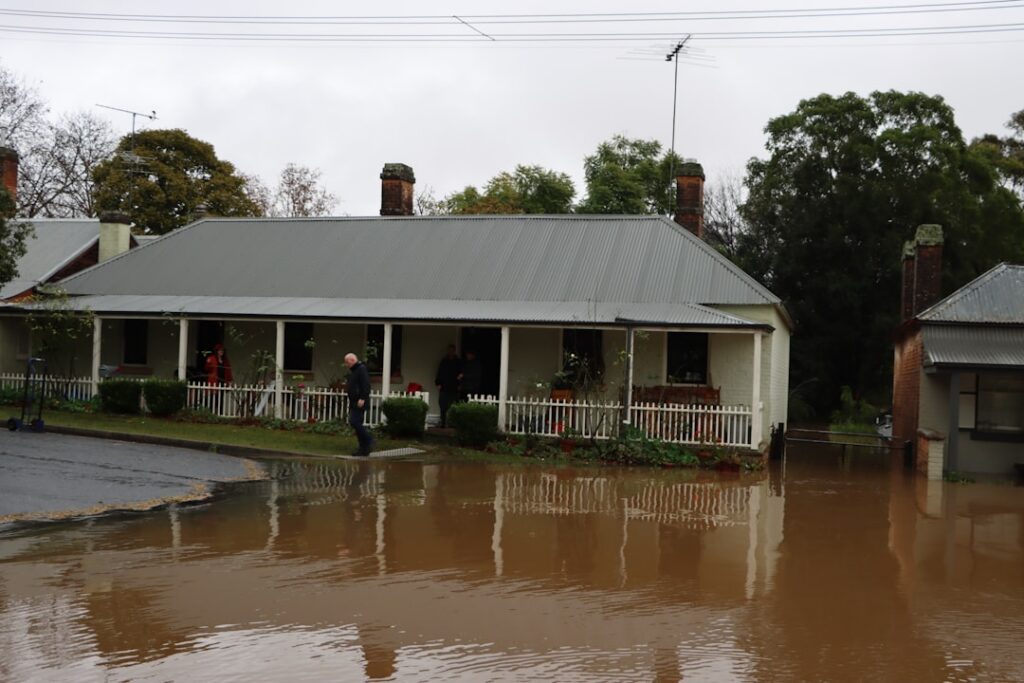
A few scenarios are clear-cut. Any backup involving a sewer line or septic system is contaminated water by definition, and EPA guidance is unambiguous that this calls for professionals experienced in contaminated water cleanup, not a homeowner with a wet-vac. Flooding from outside the home, storm surge, groundwater intrusion, carries similar contamination risk even when the water looks clear. Water that’s been sitting for more than a day or two before anyone addresses it has likely already migrated into subflooring or wall cavities, which moves it past what surface extraction can resolve.
The less clear-cut scenarios are the ones that actually cause the most damage, because they look manageable. A slow leak from a supply line that’s been running behind a wall for an unknown period. A dishwasher overflow that seemed contained to the kitchen floor but reached the subfloor underneath. An upstairs bathroom leak that stained a downstairs ceiling, which means it traveled through a floor cavity before anyone noticed. In each of these, the visible water is a small fraction of the actual moisture present, and that’s precisely the situation moisture meters and thermal imaging exist to solve.
If you’re mid-emergency right now and unsure which category you’re in, the safer default is to get an assessment before assuming you can handle it with rented equipment. Upper Restoration provides 24/7 response across NYC’s five boroughs, Long Island, New Jersey, Pennsylvania, and Connecticut specifically for this decision point.
Not Sure If This Needs a Professional?
Get a fast, no-pressure assessment before moisture becomes a bigger problem.
Frequently Asked Questions
Can I rent a wet-vac and handle water damage cleanup myself?
For small, clean-water spills you catch immediately, a wet-vac and fans can remove surface water. Rental equipment typically lacks the suction capacity and moisture-detection tools to reach water trapped in subflooring, wall cavities, or carpet padding, which is where mold risk usually originates according to EPA and industry sources.
How fast does mold grow after water damage?
The EPA states that standing water and wet materials should be dried within 24 to 48 hours to prevent mold growth. Mold can begin developing in that timeframe when moisture and organic material (like drywall paper or wood) are both present, particularly in areas with limited airflow.
Will my insurance company care how I cleaned up the water myself?
Insurers generally expect mitigation to follow recognized industry standards such as the IICRC S500. This doesn’t guarantee any specific claim outcome, but a lack of documentation (moisture readings, drying logs) can complicate claims involving secondary damage like mold. Consult your insurance provider or agent for guidance specific to your policy.
What’s the difference between clean water, gray water, and black water?
These are IICRC categories describing contamination level. Clean water comes from sources like a broken supply line. Gray water has some contamination, such as appliance discharge. Black water is grossly contaminated, including sewage and floodwater, and the EPA advises calling professionals experienced in contaminated water cleanup for this category.
Can mold hide behind walls even if I don’t see it?
Yes. The EPA notes mold can grow behind drywall, under carpets, and inside wall cavities and HVAC systems, making visual inspection alone insufficient to confirm a space is mold-free. Moisture meters and thermal imaging are used by restoration professionals to detect hidden moisture that could support mold growth.
Do professionals remove carpet padding and drywall instead of drying them?
Depending on the water category and extent of saturation, IICRC S500 protocol may call for removing porous materials like saturated carpet padding or affected drywall rather than attempting to dry and save them, since surface cleaning doesn’t address contamination trapped inside these materials.
When should I call a professional instead of doing it myself?
Call immediately for any sewage backup, flooding, or contaminated water, per EPA guidance. Also call if water reached wall cavities, subflooring, or ceilings, or if standing water wasn’t fully removed within 24 to 48 hours. These situations typically exceed what consumer-grade equipment can resolve.
Sources
- EPA, “Mold Cleanup in Your Home” — https://www.epa.gov/mold/mold-cleanup-your-home
- CDC, “Mold — General Information” — https://www.cdc.gov/mold/faqs.htm
- IICRC, S500 Standard and Reference Guide for Professional Water Damage Restoration — https://iicrc.org/s500/
- ATI Restoration, “Mold After Water Damage: Is It Dangerous?” (April 21, 2025; updated Oct. 27, 2025) — https://atirestoration.com/blog/mold-from-water-damage-dangers/
- G.W. Savage, “DIY Water Damage Cleanup: Don’t Make These 3 Mistakes” (April 16, 2015; updated Nov. 12, 2025) — https://www.gwsavage.com/2015/04/16/diy-water-damage-cleanup-dont-make-these-3-mistakes/
- Reliance Water Damage Restoration, “Risks of DIY Water Damage Cleanup”
This content is for general informational purposes only and is not legal, medical, or insurance advice. Remediation scope, timelines, and costs vary by site conditions. Contact Upper Restoration for a professional assessment. Licensing and certifications apply per jurisdiction.