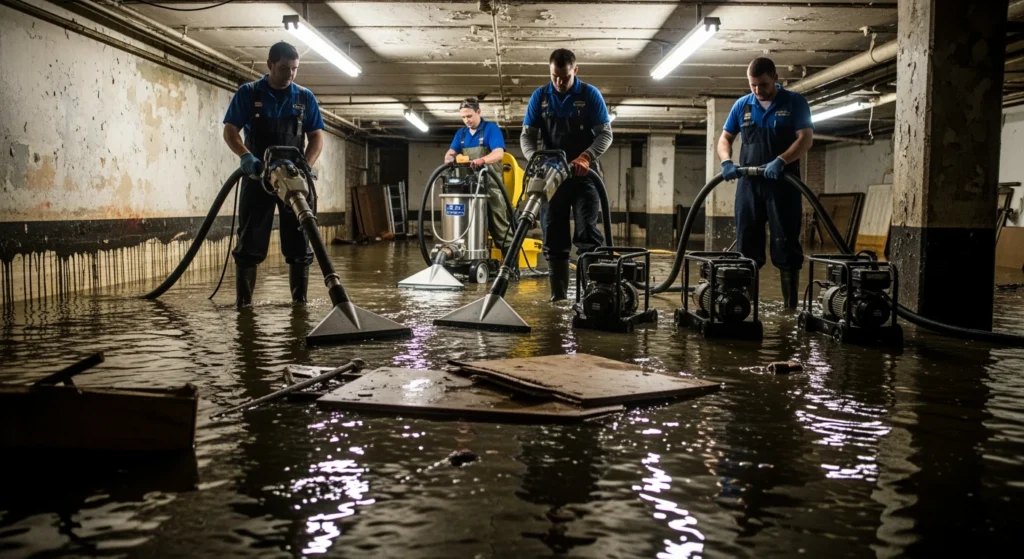
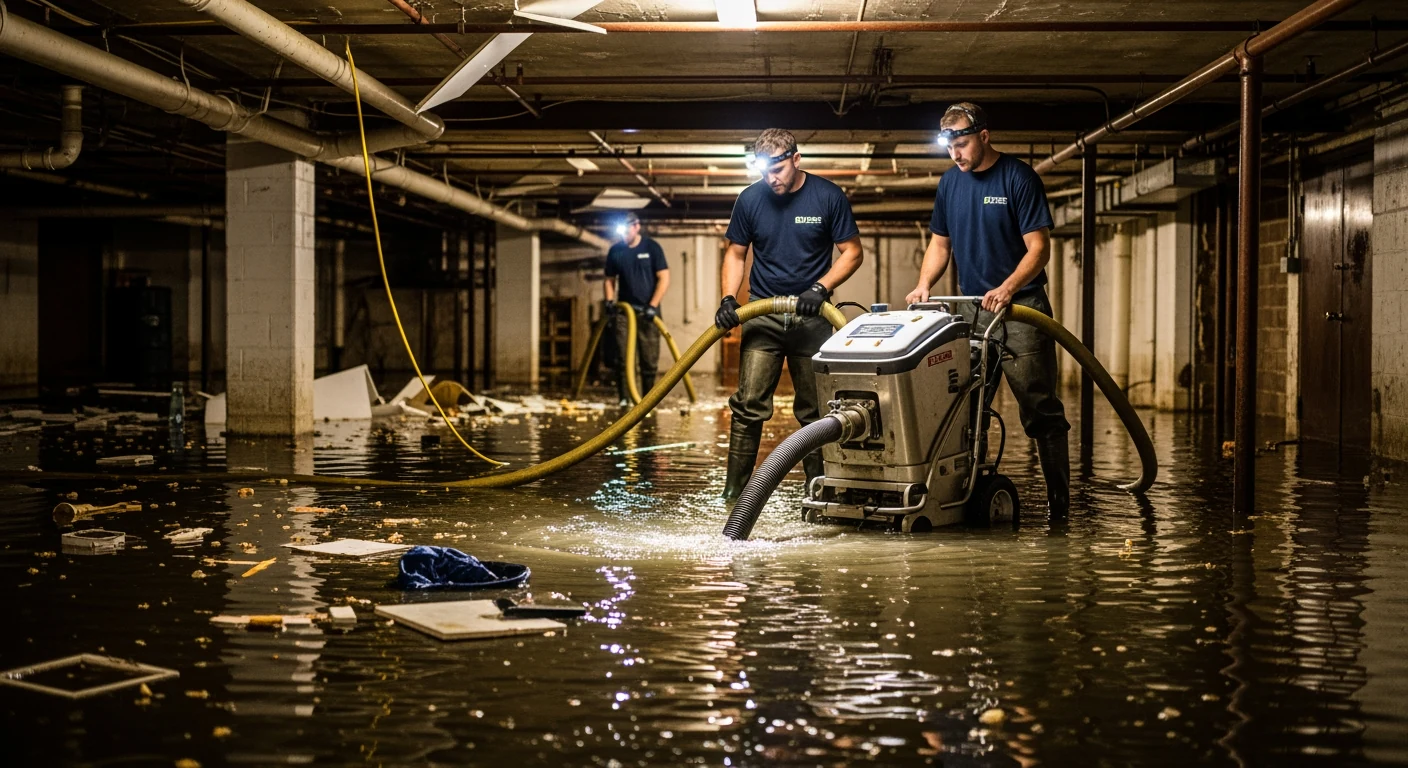
Commercial water damage restoration on Long Island is fundamentally a different operational category than residential, even when the physical restoration work — extraction, drying, demolition, reconstruction — is technically similar. The defining difference is the cost of business interruption: a restaurant on Long Island’s Restaurant Row in Garden City that closes for three weeks of water damage restoration loses revenue that a residential project simply does not have a direct equivalent for. Every commercial water damage project Upper Restoration manages on Long Island begins with the question of how to compress the restoration timeline to minimize operational downtime — not how to achieve the minimum compliant restoration at the minimum cost.
The Business Interruption Timeline
Commercial property insurance typically includes business interruption (BI) coverage that compensates the business owner for lost revenue during the restoration period. But BI coverage has limits — typically a defined period of indemnity — and the calculation of covered loss is complex. Upper Restoration works with commercial clients to document pre-loss revenue, project the restoration timeline, and provide the technical basis for the BI claim. Compressing the restoration timeline is not just operationally preferable — it directly reduces the BI claim exposure and demonstrates mitigation of loss, which is a policy obligation in most commercial property policies.
Scope Differences in Commercial Projects
Commercial water damage projects on Long Island involve scope considerations that rarely arise in residential restoration. Tenant-occupied commercial space requires coordination with multiple parties — building owner, property manager, affected tenants, and potentially unaffected tenants whose access is disrupted by restoration equipment and containment. Commercial HVAC systems are more complex than residential systems and may require separate HVAC contractor coordination for ductwork drying or replacement. Commercial kitchen water damage involves stainless steel equipment, floor drains, and food safety certification considerations that require health department documentation before the kitchen can reopen. Commercial electrical systems in flooded spaces must be cleared by a licensed electrician before any energization — OSHA electrical safety requirements apply to restoration worker access to commercial spaces where electrical hazards are present.
Commercial Asbestos Protocol
Commercial buildings on Long Island that predate 1987 — which includes the majority of Long Island’s existing commercial building stock — require the same Code Rule 56 pre-demolition asbestos survey as residential buildings. Commercial demolition scope in older Long Island commercial buildings frequently involves suspended ceiling tile (a common ACM in 1960s-1980s commercial construction), floor tile and mastic, and in some cases spray-applied fireproofing on structural steel members. Upper Restoration integrates asbestos survey coordination into commercial project planning from the initial assessment visit.