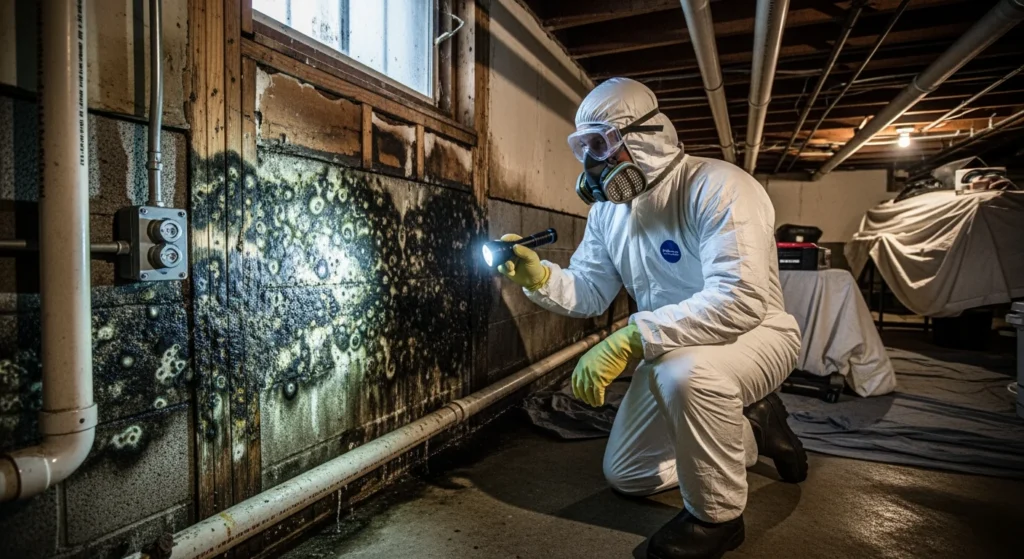
Commercial mold discovery in a Long Island business creates a multi-regulatory compliance event that has no direct residential equivalent. OSHA’s General Duty Clause requires employers to maintain a workplace free from recognized hazards — and mold in a commercial space is a recognized hazard. New York State’s Article 32 requires licensed assessment and remediation for mold of 10 square feet or more. The commercial property insurance policy may cover mold remediation costs under certain conditions and exclude them under others. Business interruption coverage may apply if the business must close during remediation. Managing these parallel obligations requires coordination that goes beyond the scope of residential mold remediation.
OSHA Compliance Obligations
OSHA does not have a specific mold standard, but the General Duty Clause (Section 5(a)(1) of the OSH Act) requires employers to address recognized hazards. OSHA’s guidance documents on indoor air quality recommend that employers address mold conditions promptly and provide appropriate worker protections during remediation activities. If mold is present in a Long Island commercial workplace and the employer fails to address it after becoming aware of the condition, OSHA citation risk exists under the General Duty Clause. Upper Restoration’s commercial mold projects are managed with OSHA-compliant worker protection throughout the remediation scope.
Insurance Coverage for Commercial Mold
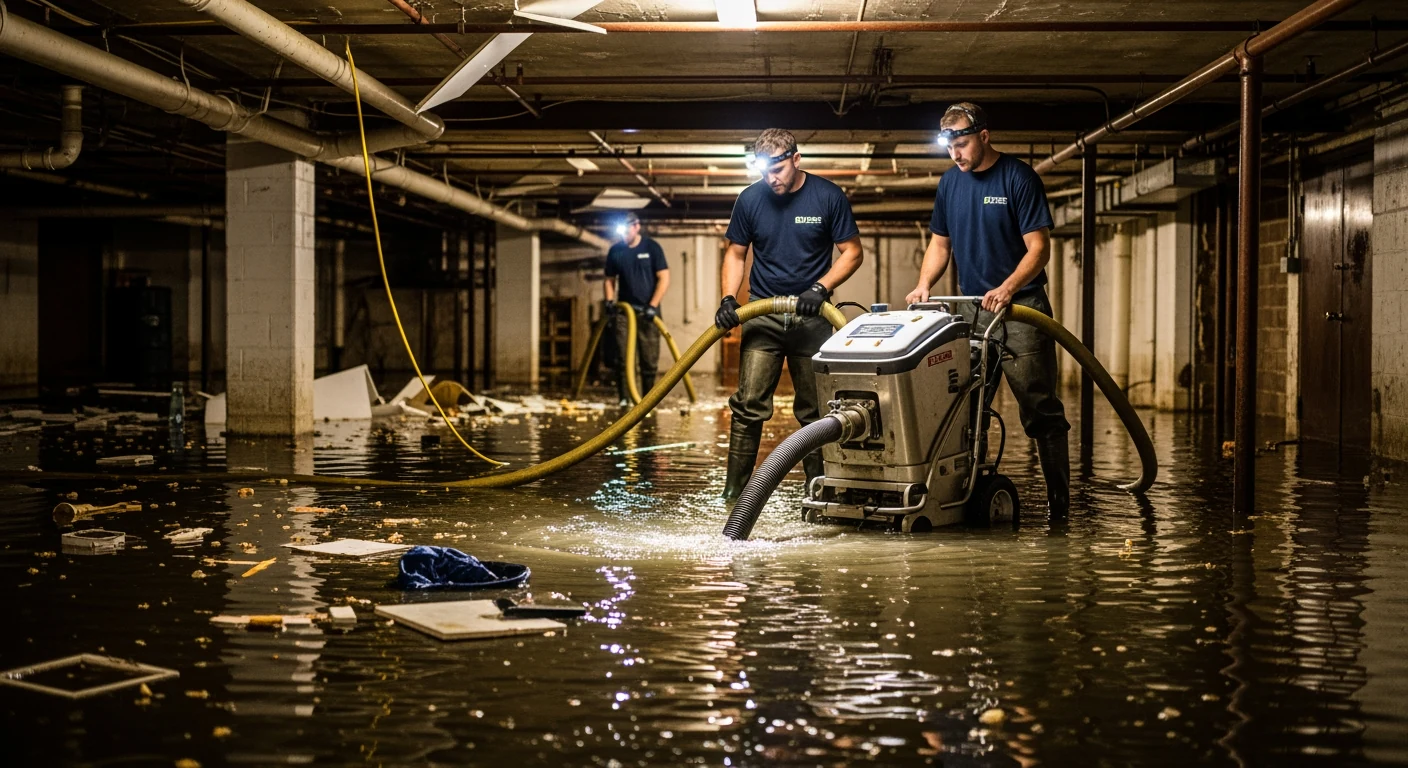
Commercial property insurance coverage for mold is frequently more restricted than for water damage. Many commercial policies have specific mold sublimits — coverage caps well below the full policy limit — or require that mold be caused by a covered water loss event (a pipe failure, roof leak, or other covered peril) rather than chronic moisture accumulation. Coverage disputes around commercial mold are more common than in residential claims. Upper Restoration’s commercial mold documentation — Article 32 work plan, daily remediation logs, clearance testing — provides the evidence base for insurance claim support regardless of carrier.
The ROI of Acting Within 48 Hours
Mold in a commercial space discovered at the beginning of a business week has a 48-hour window during which Article 32 assessment can be initiated, emergency containment can be established, and a remediation timeline that preserves most of the week’s business can be executed. Waiting until the situation is “confirmed” — or waiting for insurance approval before beginning assessment — compresses this window and frequently converts a manageable remediation into a multi-week closure. Upper Restoration’s commercial mold response prioritizes assessment scheduling within hours of initial contact for commercial clients.